Honoring Multiple Truths: An Integrative Pathway to Peace in Israel/Palestine

Published by The Club of Rome in Enduring Peace in the Anthropocene, May 2024

A just resolution to the Israel/Palestine conflict requires acknowledging and honoring truths that are seemingly contradictory. Examples from other domains show how this can be accomplished and offer a potential pathway to an enduring, long-term peace.


Let us consider some facts of historical significance generally agreed to be unequivocally true:

In the sixth century BCE, a people who became known as the Jews were expelled from their homeland in Judah to exile in Babylon. After the Persians permitted their return, the Jews repopulated the region until being exiled again by the Romans in 69 CE. Since then, a powerful cohering tradition within the Jewish diaspora centered on the prospective return to Israel (Zion), a dream that was consummated by the United Nations declaration of Israel as a Jewish state in 1947. I can attest, as a Jewish child growing up in London, to hearing the solemn invocation “Next year in Jerusalem” uttered during the annual Passover Seder service—a supplication that had echoed through generations—and sensing its fruition through Israel’s existence.

Meanwhile, in the two millennia following their exile by the Romans, other populations, mostly Muslim and Arab, inhabited the region that became known as Palestine, calling it their home. After the fall of the Ottoman Empire in the aftermath of World War I, the British Empire took control of Palestine. The Balfour Declaration, a statement of British support for “the establishment of a national home for the Jewish people,” was proclaimed in 1917, in spite of the fact that 90 percent of Palestine’s inhabitants were non-Jews.

Who, one might ask, has the historic right to live there now: the Jews, for whom it represents an ancestral homeland, or the Arabs, for whom it also represents an ancestral homeland? Since both historical narratives speak the truth, the only pathway toward a just and enduring peace would be to honor them both. How might this be possible?

A similar set of antithetical narratives has arisen around other key aspects of the Israel/Palestine conflict. In the aftermath of the Holocaust—the systematic genocidal murder of six million Jews—the United Nations, driven by a sense of collective guilt, voted to partition the region into two independent states, one Palestinian Arab and one Jewish. The Arabs rejected this enforced expiation of a crime that was not theirs, declaring war on the newly formed state of Israel. Why should the inhabitants of Palestine be forced to make reparations for Europeans’ genocidal treatment of Jews? The birth of Israel, celebrated by Jews worldwide as a culmination of two millennia of collective longing, was correspondingly the initiation of the Nakba, the ongoing catastrophe that began by violently displacing 750,000 Palestinians from their homeland, imposing an exile that remains to this day.

The contradictory claims to moral righteousness and turpitude go on and on. While the Jews forcibly dispossessed Arabs in 1948, Arab nations expelled Jews who had lived in their lands for generations, frequently confiscating all their possessions. These Jews were welcomed by Israel, which declared a Law of Return allowing for the immigration of any Jewish family to Israel—a right of return that has been denied for the Palestinians driven out by the Israelis.

Since October 7, the conflicting moral interpretations have greatly intensified: the massacre by Hamas militants of over 1,100 people, mostly civilians, was the deadliest attack on Jews since the Holocaust. Israel’s ruthless response, resulting to date in the deaths of more than 34,000 Palestinians, around two-thirds of them women and children, is widely recognized as criminally disproportionate and has plausibly been prosecuted as genocide.

While these morally contrasting narratives both hold true, and their supporting evidence is readily available, most people engaging with this topic fervently repeat one set of shibboleths while refusing to acknowledge the other—as if adding to the decibels of one side will somehow drown the other into submission. Such a tactic might lead to short-term gains, but never to an enduring peace. For those who envision a long-term future where both Jews and Arabs can live together harmoniously in what both consider to be a Holy Land, what approach might offer a pathway forward? Let us begin to answer this question from a foundational perspective.

Holding and honoring conflicting truths

The dominant Western worldview arises from an ontology that takes an absolutist view of truth. If something is right, then it cannot be wrong. If it’s black, then it can’t be white. In ancient Greece, Parmenides first established the iron rule of systematic logic, which was further elaborated by the deductive reasoning of Aristotle to form a foundation for scientific thought. Alongside these developments, the religious absolutism of monotheism took root, claiming for the first time in the human experience that only one God existed, and all those who did not worship Him were sinners. Before the rise of monotheism, intolerance based on religious creed was virtually unknown.

This ontology, however, is not the only one available. Even among the Greeks there were those, such as Heraclitus, who claimed that “We both are and are not.” While systematic logic won out in the West, other cultural complexes such as Buddhism, Taoism, and many Indigenous traditions developed equally sophisticated conceptions of the universe that were more fluid. For example, the Huayan school of Buddhism, which flourished in Tang dynasty China over a thousand years ago, understood reality as an all-embracing web of causal relations between things. The Huayan philosophy emphasized that the significance of any object depends on how it’s approached, with the result that phenomena could be interpreted in multiple ways without one interpretation invalidating the other. In the words of an old, wise adage: “We don’t see things as they are, we see them as we are.”

Credit: wilsan u, Unsplash.com

This approach, at odds with Aristotelian logic, re-emerged in Western thought in the twentieth century as physicists, grappling with the paradox of quantum mechanics, realized that subatomic entities may be either a wave or a particle depending on how they’re measured. More generally, the wide array of modern systems sciences—including such fields as complexity theory, chaos theory, systems biology, and network theory—recognizes that complex systems manifest multiple layers of interactivity. While certain principles may hold true throughout the system, different parts within the system may exhibit behaviors that appear contradictory to other parts, even while all are contributing to the integrity of the system as a whole. Accordingly, a healthy living system represents a state of integration which may be understood as unity incorporating manifold differentiation.

The embrace of complexity has shown up more recently in therapeutic psychology, with the widespread adoption of parts work, based on the recognition that people hold different parts within themselves, some of which may contradict each other causing inner conflict. As Walt Whitman famously declared: “I am large, I contain multitudes.” In particular, Internal Family Systems (IFS) is a transformative therapy that helps people heal by accessing and honoring their inner parts, some of which are wounded, protective, aggressive, or defensive. Recognizing that these parts are frequently at odds with each other, which causes internal suffering, IFS emphasizes the importance of a core Self in a person which, if accessed skillfully, can attend with love to each part and encourage healing—not by rejecting those parts but by allowing them to feel acknowledged and become integrated into the greater whole.

There is much that could be achieved by applying this wisdom to the political process. What kind of political discourse might arise with respect to Israel and Palestine if such an approach were taken?

An integrative pathway to peace

Comparable to the Self in IFS, there are overriding values shared by virtually all human beings that transcend the parochial in-group values dominating the current political debate. In the resounding words of the UN Declaration of Human Rights—proclaimed the year following Israel’s birth as a nation—“Recognition of the inherent dignity and of the equal and inalienable rights of all members of the human family is the foundation of freedom, justice and peace in the world.” Acknowledging that “disregard and contempt for human rights have resulted in barbarous acts which have outraged the conscience of mankind,” the Declaration calls for “a world in which human beings shall enjoy freedom of speech and belief and freedom from fear and want … as the highest aspiration of the common people.”

Tragically, since 1948, Israeli forces have trampled on these rights of Palestinians, while many Arab nations and political groups have similarly flouted them. A few days after the October 7 massacre by Hamas and the initiation of Israel’s criminal collective punishment, author and social activist Naomi Klein called for a global response “rooted in values that side with the child over the gun every single time, no matter whose gun and no matter whose child.” This is the kind of deeply humanitarian orientation that is required for an integrative pathway to peace.

We must recognize that a humane response to the enormity of the Holocaust did not have to lead to an Israeli ethno-state. As essayist Pankaj Mishra has demonstrated, many Jewish leaders surviving the Holocaust took the phrase “never again” to mean “Never again for any persecuted minority anywhere in the world” rather than “Never again for the Jews.” Nonetheless, we must appreciate that Israelis today continue to live under a constant existential threat with powerful enemies repeatedly calling for their annihilation. The Israeli political leadership, however, has thrived on weaponizing fear, using it to motivate fervid allegiance to Zionism in many Jews around the world, and currently fomenting a worldwide conflation of anti-Zionist protests with anti-Semitism, in spite of the fact that many Jews join in the public outrage at Israel’s brutal campaign.

When we engage in political discourse, we must choose our words carefully to avoid adding to the polarized grandstanding dominating the media. As journalist Judith Levine has pointed out, the mindless use of blanket terms such as “pro-Israel” or “pro-Palestinian” only serves to smother the deeper issues of human rights under a cacophony of tribal rivalry.

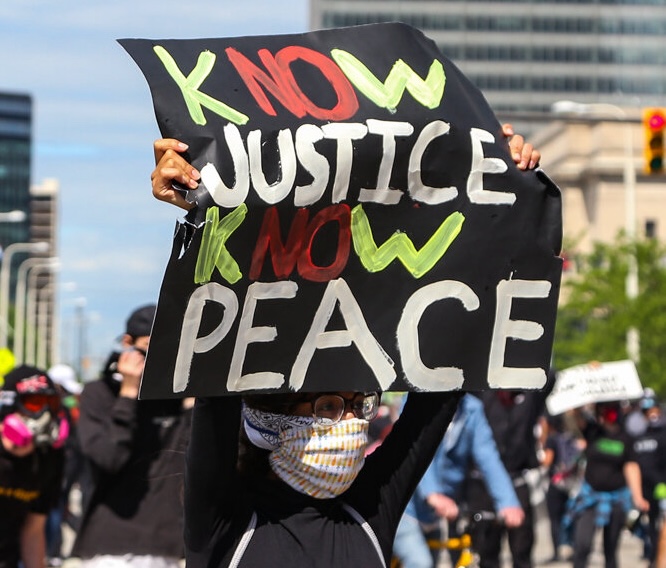
We must call urgently for a ceasefire in Gaza and a return by Hamas of all hostages. At the same time, we must recognize the deep power imbalance currently existing between the state of Israel and the Palestinians living in the occupied territories, and demand the end of Israel’s abuse of its military superiority. We must call for an end to the illegal Jewish settlements in the West Bank, and to the fanatical Jewish paramilitary gangs currently terrorizing Palestinian villagers with the tacit—and sometimes open—support of Israeli armed forces. And when the current hurricane of violence subsides, we must call for a Truth and Reconciliation Commission, modeled on exemplars from South Africa, Rwanda, and Canada, and employing principles of restorative justice, that could facilitate a new generation to face into and move on from the current round of anguish toward a healed society.
Credit: Eva Noslen photography [purchase image]

Above all, an integrative pathway to peace calls for the boldness to imagine a transformed future for this divided region and to support those groups, currently nearly drowned out by the polarized voices on both sides, taking the first courageous steps in that direction. The Standing Together movement, which mobilizes Jewish and Palestinian citizens of Israel in pursuit of peace, equality, and justice, envisions building a shared home for all through rejecting hatred and choosing compassion. Combatants for Peace is a grassroots nonviolence movement based in Israel and Palestine—the only peace movement in the world founded by former fighters on both sides of an active conflict.  The Holy Land Trust, a Palestinian organization dedicated to fostering peace, justice, and understanding in the Holy Land, is committed to nonviolent activism, along with personal and spiritual transformation arising from honoring the dignity and equal rights of all peoples.

Beyond the horizon, an integrative path has the potential to lead to political solutions that are currently almost unimaginable. A movement of Israelis and Palestinians called A Land for All, acknowledging that both peoples belong to the same ancestral land, envisages a shared homeland encompassing two sovereign states. Their proposal calls for two democratic states based on pre-1967 borders, with citizens of both states given the right to move and live freely in all parts of the homeland. With Jerusalem as a shared capital, both states would be responsible for the security of their residents, would enter into a mutual defense treaty against external threats, and would share a Human Rights Court empowered to rule on alleged violations of rights by non-citizen residents of either country. While current political and cultural conditions render such an arrangement unworkable on many counts, this is the kind of integrative visionary thinking that will be required to enable an enduring long-term peace for a region that has suffered too much torment throughout its embattled history.


Jeremy Lent is author of the prize-winning books The Patterning Instinct and The Web of Meaning. He is founder of the Deep Transformation Network and is currently writing a book on the vision and specifics of an ecological civilization. Author website: jeremylent.com

To Counter AI Risk, We Must Develop an Integrated Intelligence

The explosive rise in the power of AI presents humanity with an existential risk. To counter that risk, and potentially redirect our civilization’s trajectory, we need a more integrated understanding of the nature of human intelligence and the fundamental requirements for human flourishing.


The recent explosion in the stunning power of artificial intelligence is likely to transform virtually every domain of human life in the near future, with effects that no-one can yet predict.

The breakneck rate at which AI is developing is such that its potential impact is almost impossible to grasp. As Tristan Harris and Aza Raskin, co-founders of the Center for Humane Technology, demonstrate in their landmark presentation, The AI Dilemma, AI accomplishments are beginning to read like science fiction. After just three seconds of hearing a human voice, for example, an AI system can autocomplete the sentence being spoken with a voice so perfectly matched that no-one can distinguish it from the real thing. AI linked with fMRI brain imaging technology, they show us, can now reconstruct what a person’s brain is thinking and represent it accurately as an image.

Tristan Harris and Aza Rasking presenting “The AI Dilemma”

AI models are beginning to exhibit emergent capabilities their programmers didn’t program into them. An AI model trained to answer questions in English can suddenly understand and answer questions in Persian without being trained in the language—and no-one, not even its programmers, knows why. ChatGPT, to the surprise of its own programmers, was discovered to have trained itself in research-level chemistry even though that wasn’t part of its targeted training data.

Many of these developments have been unfolding at a time scale no longer measured in months and years, but in weeks and days. Experts are comparing the significance of the AI phenomenon to the invention of the nuclear bomb, except with a spine-chilling difference: whereas the magnitude of the nuclear threat could only increase at the pace of scientists’ own capabilities, AI is becoming increasingly capable of learning how to make itself more powerful. In recent examples, AI models have learned to generate their own training data to self-improve, and to edit sections of code so as to make the code work at more than double the speed.  AI capabilities have already been expanding at an exponential rate, largely as a result of the distributed network effects of programmers building on each other’s breakthroughs. But given these recent developments, experts are forecasting future improvements at a double exponential rate, which begins to look on a graph like a vertical line of potentiality exploding upward.

The term generally used to describe this phenomenon, which heretofore has been a hypothetical thought experiment, is a Singularity. Back in 1965, at the outset of the computer age, British mathematician, I. J. Good, first described this powerful and unsettling vision. “Let an ultraintelligent machine,” he wrote, “be defined as a machine that can far surpass all the intellectual activities of any man however clever. Since the design of machines is one of these intellectual activities, an ultraintelligent machine could design even better machines; there would then unquestionably be an ‘intelligence explosion’, and the intelligence of man would be left far behind. Thus the first ultraintelligent machine is the last invention that man need ever make.”[1]

Nearly six decades after it was first conceived, the Singularity has mutated from a theoretical speculation to an urgent existential concern. Of course, it is easy to enumerate the myriad potential benefits of an ultraintelligent computer: discoveries of cures to debilitating diseases; ultra-sophisticated, multifaceted automation to replace human drudgery; technological solutions to humanity’s most pressing problems. Conversely, observers are also pointing out the dangerously disruptive potential of advanced AI on a world already fraying at the seams: the risk of deep fakes and automated bots polarizing society even further; personalized AI assistants exploiting people for profit and exacerbating the epidemic of social isolation; and greater centralization of power to a few mega-corporations, to name but a few of the primary issues. But even beyond these serious concerns, leading AI experts are warning that an advanced artificial general intelligence (“AGI”) is likely to represent a grave threat, not just to human civilization, but to the very existence of humanity and the continuation of life on Earth.

The alignment problem

At the root of this profound risk is something known as the alignment problem. What would happen, we must ask, if a superhuman intelligence wants to achieve some goal that’s out of alignment with the conditions required for human welfare—or for that matter, the survival of life itself on Earth? This misalignment could simply be the result of misguided human programming. Prominent futurist Nick Bostrom gives an example of a superintelligence designed with the goal of manufacturing paperclips that transforms the entire Earth into a gigantic paperclip manufacturing facility.

It’s also quite conceivable that a superintelligent AI could develop its own goal orientation, which would be highly likely to be misaligned with human flourishing. The AI might not see humans as an enemy to be eliminated, but we could simply become collateral damage to its own purposes, in the same way that orangutans, mountain gorillas, and a myriad other species face extinction as the result of human activity. For example, a superintelligence might want to optimize the Earth’s atmosphere for its own processing speed, leading to a biosphere that could no longer sustain life.

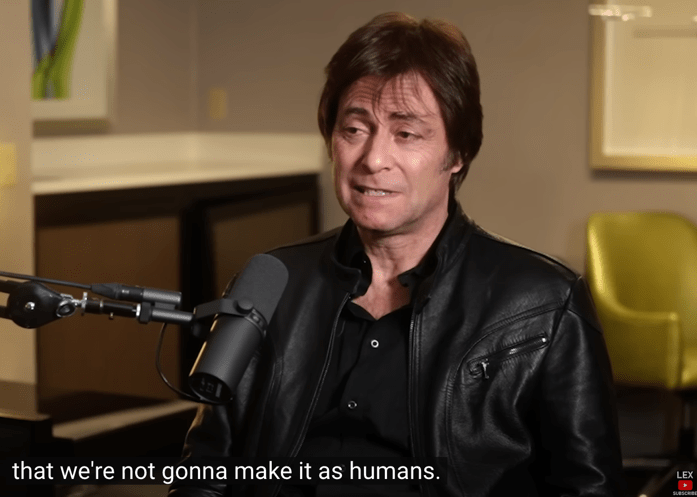
As superintelligence moves from a thought experiment to an urgently looming existential crisis, many leading analysts who have studied these issues for decades are extraordinarily terrified and trying to raise the alarm before it’s too late. MIT professor Max Tegmark, a highly respected physicist and president of the Future of Life Institute, considers this our “Don’t Look Up” moment, referring to the satirical movie in which an asteroid threatens life on Earth with extinction, but a plan to save the planet is waylaid by corporate interests and the public’s inability to turn their attention away from celebrity gossip. In an intimate podcast interview, Tegmark likens our situation to receiving a terminal cancer diagnosis for the entire human race, declaring that “there’s a pretty large chance that we’re not going to make it as humans; that there won’t be any humans on the planet in the not-too-distant future—and that makes me very sad.”

MIT Professor Mag Tegmark sharing his fears about human extinction from AI

Tegmark’s fear is shared by other leading experts. Eliezer Yudkowsky, who has been working on aligning AGI since 2001 and is widely regarded as a founder of the field, points out that “a sufficiently intelligent AI won’t stay confined to computers for long. In today’s world you can email DNA strings to laboratories that will produce proteins on demand, allowing an AI initially confined to the internet to build artificial life forms or bootstrap straight to postbiological molecular manufacturing.” Yudkowsky calls for an immediate and indefinite worldwide moratorium on further AI development, enforced by coordinated international military action if necessary.

In the short-term, there are several policy proposals urged by leaders in the AI community to try to rein in some of the more obvious societal disruptions anticipated by AI’s increasingly pervasive influence. An open letter calling for a pause on further development for at least six months has over thirty thousand signatories, including many of the most prominent names in the field. Beyond a worldwide moratorium, proposals include a requirement that any AI-generated material is clearly labeled as such; a stipulation that all new AI source code is published to enable transparency; and a legal presumption that new versions of AI are unsafe unless proven otherwise, putting the burden of proof on AI developers to demonstrate its safety prior to its deployment—analogous to the legal framework used in the pharmaceutical industry.

These proposals are eminently sensible and should promptly be enacted by national governments, while a UN-sponsored international panel of AI experts should be appointed to recommend further guidelines for worldwide adoption. Ultimately, the overarching strategy of such guidelines should be to restrict the further empowerment of AI unless or until the alignment problem itself can be satisfactorily solved.

There is, however, a serious misconception seemingly shared by the vast majority of AI theorists that must be recognized and corrected for any serious progress to be made in the alignment problem. This relates to the nature of intelligence itself. Until a deeper understanding of what comprises intelligence is more widely embraced in the AI community, we are in danger, not just of failing to resolve the alignment problem, but of moving in the wrong direction in its consideration.

Conceptual and animate intelligence

When AI theorists write about intelligence, they frequently start from the presumption that there is only one form of intelligence: the kind of analytical intelligence that gets measured in an IQ test and has enabled the human species to dominate the rest of the natural world—and the type in which AI now threatens to surpass us. The AI community is not alone in this presumption—it is shared by most people in the modern world, and forms a central part of the mainstream view of what it means to be a human being. When Descartes declared “cogito ergo sum”—“I think, therefore I am”—setting the intellectual foundation for modern philosophical thought, he was giving voice to a presumption that the faculty of conceptual thought was humanity’s defining characteristic, setting humanity apart from all other living beings. Animals, according to Descartes and the majority of scientists ever since, were mere machines acting without subjectivity or thought.[2]

However, the human conceptualizing faculty, powerful as it is, is only one form of intelligence. There is another form—animate intelligence—that is an integral part of human cognition, and which we share with the rest of life on Earth.

If we understand intelligence, as it’s commonly defined, to be the ability to perceive or infer information and apply it toward adaptive behaviors, intelligence exists everywhere in the living world. It’s relatively easy to see it in high-functioning mammals such as elephants that can communicate through infrasound over hundreds of miles and perform what appear like ceremonies over the bones of dead relatives; or in cetaceans that communicate in sophisticated “languages” and are thought to “gossip” about community members that are absent.[3] But extensive animate intelligence has also been identified in plants which, in addition to their own versions of our five senses, also use up to fifteen other ways to sense their environment. Plants have elaborate internal signaling systems, utilizing the same chemicals—such as serotonin or dopamine—that act as neurotransmitters in humans; and they have been shown to act intentionally and purposefully: they have memory and learn, they communicate with each other, and can even allocate resources as a community.[4]

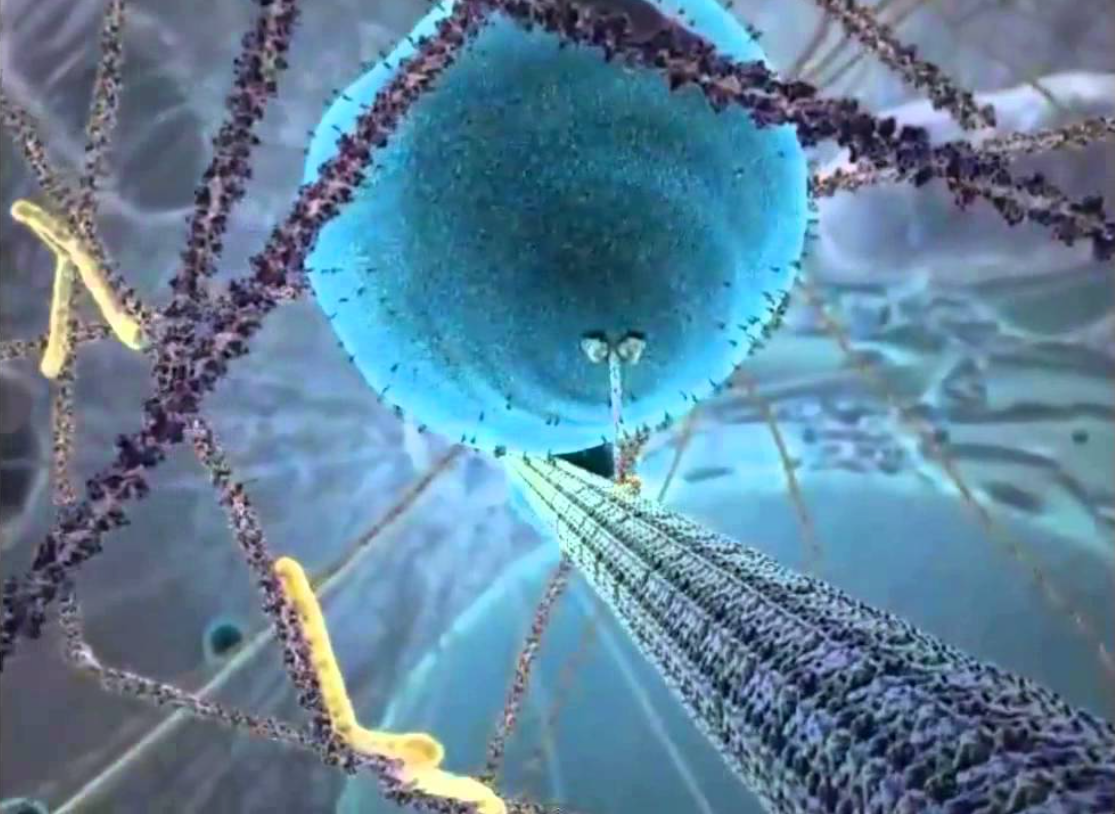
Animate intelligence can be discerned even at a cellular level: a single cell has thousands of sensors protruding through its outer membrane, controlling the flow of specific molecules, either pulling them in or pushing them out depending on what’s needed. Cells utilize fine-tuned signaling mechanisms to communicate with others around them, sending and receiving hundreds of signals at the same time. Each cell must be aware of itself as a self: it “knows” what is within its membrane and what is outside; it determines what molecules it needs, and which ones to discard; it knows when something within it needs fixing, and how to get it done; it determines what genes to express within its DNA, and when it’s time to divide and thus propagate itself. In the words of philosopher of biology Evan Thompson, “Where there is life there is mind.”[5]

A cell has a rich and complex inner life. Source: “The Inner Life of the Cell” animation – Harvard MCB | BioVisions Lab

When leading cognitive neuroscientists investigate human consciousness, they make a similar differentiation between two forms of consciousness which, like intelligence, can also be classified as conceptual and animate. For example, Nobel Prize winner Gerald Edelman distinguished between what he called primary (animate) and secondary (conceptual) consciousness, while world-renowned neuroscientist Antonio Damasio makes a similar distinction between what he calls core and higher-order consciousness. Similarly, in psychology, dual systems theory posits two forms of human cognition—intuitive and analytical—described compellingly in Daniel Kahneman’s bestseller Thinking Fast and Slow, which correspond to the animate and conceptual split within both intelligence and consciousness.[6]

Toward an integrated intelligence

An implication of this increasingly widespread recognition of the existence of both animate and conceptual intelligence is that the Cartesian conception of intelligence as solely analytical—one that’s shared by a large majority of AI theorists—is dangerously limited.

Even human conceptual intelligence has been shown to emerge from a scaffolding of animate consciousness. As demonstrated convincingly by cognitive linguist George Lakoff, the abstract ideas and concepts we use to build our theoretical models of the world actually arise from metaphors of our embodied experience of the world—high and low, in and out, great and small, near and close, empty and full. Contrary to the Cartesian myth of a pure thinking faculty, our conceptual and animate intelligences are intimately linked.

By contrast, machine intelligence really is purely analytical. It has no scaffolding linking it to the vibrant sentience of life. Regardless of its level of sophistication and power, it is nothing other than a pattern recognition device. AI theoreticians tend to think of intelligence as substrate independent—meaning that the set of patterns and linkages comprising it could in principle be separated from its material base and exactly replicated elsewhere, such as when you migrate the data from your old computer to a new one. That is true for AI, but not for human intelligence.[7]

The dominant view of humanity as defined solely by conceptual intelligence has contributed greatly to the dualistic worldview underlying many of the great predicaments facing society today. The accelerating climate crisis and ecological havoc being wreaked on the natural world ultimately are caused, at the deepest level, by the dominant instrumentalist worldview that sees humans as essentially separate from the rest of nature, and nature as nothing other than a resource for human consumption.

Once, however, we recognize that humans possess both conceptual and animate intelligence, this can transform our sense of identity as a human being. The most highly prized human qualities, such as compassion, integrity, or wisdom, arise not from conceptual intelligence alone, but from a complex mélange of thoughts, feelings, intuitions, and felt sensations integrated into a coherent whole. By learning to consciously attune to the evolved signals of our animate consciousness, we can develop an integrated intelligence: one that incorporates both conceptual and animate fully into our own identity, values, and life choices.

Once we embrace our own animate intelligence, it’s natural to turn our attention outward and appreciate the animate intelligence emanating from all living beings. Acknowledging our shared domain of intelligence with the rest of life can lead to a potent sense of being intimately connected with the animate world. If conceptual intelligence is a cognitive peak of specialization that distinguishes us from other animals, it is our animate intelligence that extends throughout the rest of the terrain of existence, inviting a shared collaboration with all of life.

Other cultures have long possessed this understanding. Traditional Chinese philosophers saw no essential distinction between reason and emotion, and used a particular word, tiren, to refer to knowing something, not just intellectually, but throughout the entire body and mind­. In the words of Neo-Confucian sage Wang Yangming, “The heart-mind is nothing without the body, and the body is nothing without the heart-mind.”[8] Indigenous cultures around the world share a recognition of their deep relatedness to all living beings, leading them to conceive of other creatures as part of an extended family.[9] For Western culture, however, which is now the globally dominant source of values, this orientation toward integrated intelligence is rare but acutely needed.

Aligning with integration

These distinctions, theoretical as they might appear, have crucially important implications as we consider the onset of advanced artificial intelligence and how to wrestle with the alignment problem. Upon closer inspection, the alignment problem turns out to be a conflation of two essentially different problems: The question of how to align AI with human flourishing presupposes an underlying question of what is required for human flourishing in the first place. Without a solid foundation laying out the conditions for human wellbeing, the AI alignment question is destined to go nowhere.

Fortunately, much work has already been accomplished on this topic, and it points to human flourishing arising from our identity as a deeply integrated organism incorporating both conceptual and animate consciousness. The seminal work of Chilean economist Manfred Max-Neef sets out a comprehensive taxonomy of fundamental human needs, incorporating ten core requirements such as subsistence, affection, freedom, security, and participation, among others. While these needs are universal, they may be satisfied in myriad ways depending on particular historical and cultural conditions. Furthermore, as Earth system scientists have convincingly demonstrated, human systems are intimately linked with larger biological and planetary life-support systems. Sustained human wellbeing requires a healthy, vibrant living Earth with intact ecosystems that can readily replenish their own abundance.[10]

What, we might ask, might an AI look like that was programmed to align with the principles that could enable all life, including human civilization, to flourish on a healthy Earth?

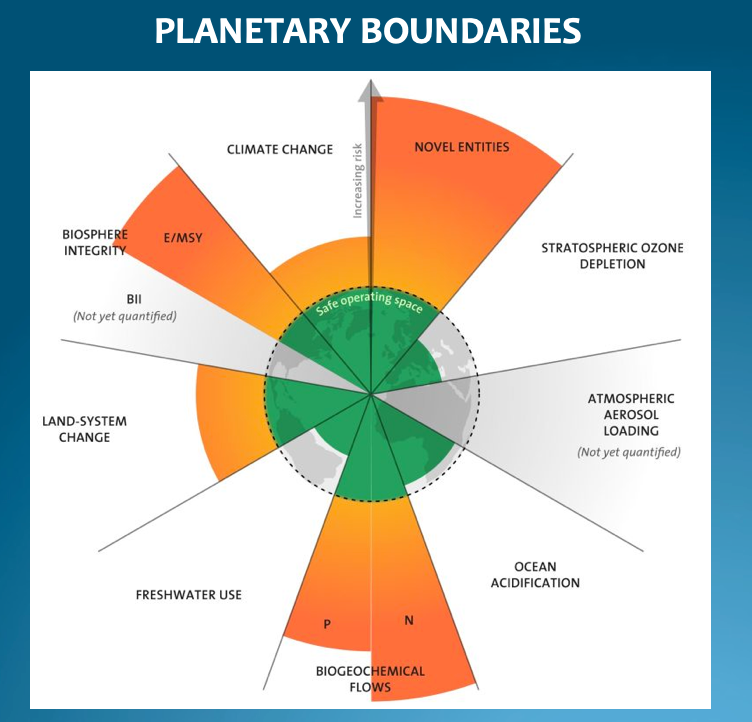
When we consider, however, how far the requirements for flourishing are from being met by the vast majority of humans across wide swaths of the world today, this brings to light that the alignment problem is not, in fact, limited to the domain of AI, but is rather a fundamental issue underlying the economic and financial system that runs our modern world. As I’ve discussed elsewhere, global capitalism, as manifested in the limited liability corporation, may itself be understood as an embryonic form of misaligned AI: one where the overriding goal of maximizing shareholder value has ridden roughshod over fundamental human needs, and has led to the current metacrisis emanating from a confluence of rising inequality, runaway technology, climate breakdown, and accelerating ecological devastation. In this respect, as pointed out by social philosopher Daniel Schmachtenberger, advanced AI can be viewed as an accelerant of the underlying causes of the metacrisis in every dimension.

Our misaligned economic system has caused us to break through planetary boundaries. Source: Johan Rockström, et al., “A Safe Operating Space for Humanity,” Nature 461 (2009): 472–75.

Emerging from this dark prognostication, there is a silver lining affording some hope for a societal swerve toward a life-affirming future. When analysts consider the great dilemmas facing humanity today, they frequently describe them as “wicked problems”: tangles of highly complex interlinked challenges lacking well-defined solutions and emerging over time frames that don’t present as clear emergencies to our cognitive systems which evolved in the savannah to respond to more immediate risks. As an accelerant of the misalignment already present in our global system, might the onset of advanced AI, with its clear and present existential danger, serve to wake us up, as a collective human species, to the unfolding civilizational disaster that is already looming ahead? Might it jolt us as a planetary community to reorient toward the wisdom available in traditional cultures and existing within our own animate intelligence?

It has sometimes been said that what is necessary to unite humanity is a flagrant common threat, such as a hypothetical hostile alien species arriving on Earth threating us with extinction. Perhaps that moment is poised to arrive now—with an alien intelligence emerging from our own machinations. If there is real hope for a positive future, it will emerge from our understanding that as humans, we are both conceptual and animate beings, and are deeply connected with all of life on this precious planet—and that collectively we have the capability of developing a truly integrative civilization, one that sets the conditions for all life to flourish on a regenerated Earth.


Jeremy Lent is author of the award-winning books, The Patterning Instinct: A Cultural History of Humanity’s Search for Meaning, and The Web of Meaning: Integrating Science and Traditional Wisdom to Find Our Place in the Universe. He is the founder of the Deep Transformation Network.


[1] Vinge, V. (1993). “What is The Singularity?” VISION-21 Symposium(March 30, 1993); http://en.wikipedia.org/wiki/I._J._Good.

[2] For an in-depth discussion of this historical process, see my book The Web of Meaning: Integrating Science and Traditional Wisdom to Find Our Place in the Universe, Chapter 3.

[3] Carl Safina, Beyond Words: What Animals Think and Feel (New York: Henry Holt and Co., 2015), pp. 92, 211, 236–7; Lucy A. Bates, Joyce H. Poole, and Richard W. Byrne, “Elephant Cognition,” Current Biology 18, no. 13 (2008): 544–46; Kieran C. R. Fox, Michael Muthukrishna, and Susanne Shultz, “The Social and Cultural Roots of Whale and Dolphin Brains,” Nature Ecology & Evolution 1, November (2017): 1699–705; Katharina Kropshofer, “Whales and Dolphins Lead ‘Human-Like Lives’ Thanks to Big Brains, Says Study,” The Guardian, 16 October, 2017.

[4] Paco Calvo, et al., “Plants Are Intelligent, Here’s How,” Annals of Botany 125 (2020): 11–28; Eric D. Brenner et al., “Plant Neurobiology: An Integrated View of Plant Signaling,” Trends in Plant Science 11, no. 8 (2006): 413–19; Anthony Trewavas, “What Is Plant Behaviour?”, Plant, Cell and Environment 32 (2009): 606–16; Stefano Mancuso, The Revolutionary Genius of Plants: A New Understanding of Plant Intelligence and Behavior (New York: Atria Books, 2018; Suzanne W. Simard, et al., “Net Transfer of Carbon between Ectomycorrhizal Tree Species in the Field,” Nature 388 (1997): 579–82; Yuan Yuan Song, et al., “Interplant Communication of Tomato Plants through Underground Common Mycorrhizal Networks,” PLoS Biology 5, no. 10 (2010): e13324.

[5] Boyce Rensberger, Life Itself: Exploring the Realm of the Living Cell (New York: Oxford University Press, 1996), pp. 62–6; Brian J. Ford, “Revealing the Ingenuity of the Living Cell,” Biologist 53, no. 4 (2006): 221–24; Brian J. Ford, “On Intelligence in Cells: The Case for Whole Cell Biology,” Interdisciplinary Science Reviews 34, no. 4 (2009): 350-65; Evan Thompson, Mind in Life: Biology, Phenomenology, and the Sciences of Mind (Cambridge, MA: Harvard University Press, 2007), p. ix.

[6] Gerald M. Edelman, and Giulio Tononi, A Universe of Consciousness: How Matter Becomes Imagination (New York: Basic Books, 2000); Antonio Damasio, The Feeling of What Happens: Body and Emotion in the Making of Consciousness (New York: Harcourt Inc., 1999); Daniel Kahneman, Thinking Fast and Slow (New York: Farrar, Straus & Giroux, 2011).

[7] For a lucid explanation of why human intelligence is not substrate independent, see Antonio Damasio, The Strange Order of Things: Life, Feeling, and the Making of Cultures (New York: Pantheon 2018), pp. 199–208.

[8] Donald J. Munro, A Chinese Ethics for the New Century: The Ch’ien Mu Lectures in History and Culture, and Other Essays on Science and Confucian Ethics (Hong Kong: The Chinese University Press, 2005), p. 24; Yu, N. (2007). “Heart and Cognition in Ancient Chinese Philosophy.” Journal of Cognition and Culture, 7(1-2), 27-47. For an extensive discussion of the integrative nature of traditional Chinese thought, see my book The Patterning Instinct: A Cultural History of Humanity’s Search for Meaning (Amherst, NY: Prometheus, 2017), chapters 9 and 14.

[9] Four Arrows (Don Trent Jacobs), and Darcia Narvaez, Restoring the Kinship Worldview: Indigenous Voices Introduce 28 Precepts for Rebalancing Life on Planet Earth (Berkeley, CA: North Atlantic Books, 2022).

[10] Max-Neef, M.A., 1991. Human Scale Development: Conception, Application and Further Reflections. Zed Books, New York; Johan Rockström, et al., “A Safe Operating Space for Humanity,” Nature 461 (2009): 472–75; William J. Ripple, et al., “World Scientists’ Warning to Humanity: A Second Notice,” BioScience 67, no. 12 (2017): 1026–28.

Nature Is Not a Machine—We Treat It So at Our Peril


First published as “Nature Is a Jazz Band, Not a Machine” by Institute of Art and Ideas | News on July 30, 2021.


From genetic engineering to geoengineering, we treat nature as though it’s a machine. This view of nature is deeply embedded in Western thought, but it’s a fundamental misconception with potentially disastrous consequences.

Climate change, avers Rex Tillerson, ex-CEO of ExxonMobil and erstwhile US Secretary of State,  “is an engineering problem, and it has engineering solutions.” This brief statement encapsulates how the metaphor of the machine underlies the way our mainstream culture views the natural world. It also hints at the grievous dangers involved in perceiving nature in this way.

Rex Tillerson: a powerful and highly destructive proponent of treating nature as an engineering problem

This mechanistic worldview has deep roots in Western thought. The great pioneers of the Scientific Revolution, such as Galileo, Kepler, and Newton, believed they were decoding “God’s book,” which was written in the language of mathematics. God was conceived as a great clockmaker, the “artificer” who constructed the intricate machine of nature so flawlessly that, once it was set in motion, there was nothing more to do (bar the occasional miracle) than let it run its course. “What is the heart, but a spring,” wrote Thomas Hobbes, “and the nerves but so many strings?” Descartes flatly declared: “I do not recognize any difference between the machines made by craftsmen and the various bodies that nature alone composes.”

In recent decades, the mechanistic conception of nature has been updated for the computer age, with popularizers of science such as Richard Dawkins arguing that “life is just bytes and bytes and bytes of digital information” and as a result, an animal such as a bat “is a machine, whose internal electronics are so wired up that its wing muscles cause it to home in on insects, as an unconscious guided missile homes in on an aeroplane.” This digital metaphor of nature pervades our culture and is used unreflectively by those in a position to direct our society’s future. According to Larry Page, co-founder of Google, for example, human DNA is just “600 megabytes compressed, so it’s smaller than any modern operating system . . .  So your program algorithms probably aren’t that complicated.”

But nature is not in fact a machine nor a computer—and it can’t be engineered or programmed like one. Thinking of it as such is a category error with ramifications that are both deluded and dangerous.

A four-billion-year reversal of entropy

Ultimately, this machine metaphor is based on a simplifying assumption, known as reductionism, which approaches nature as a collection of tiny parts to investigate. This methodology has been resoundingly effective in many fields of inquiry, leading to some of our greatest advances in science and technology. Without it, most of the benefits of our modern world would not exist—no electrical grids, no airplanes, no antibiotics, no internet. However, over the centuries, many scientists and engineers have been so swept up by the success of their enterprise that they have frequently mistaken this assumption for reality—even when advances in scientific research uncover its limitations.

When James Watson and Francis Crick discovered the shape of the DNA molecule in 1953, they used metaphors from the burgeoning information revolution to describe their findings. The genotype was a “program” that determined the exact specifications of an organism, just like a computer program. DNA sequences formed the “master code” of a “blueprint” that contained a detailed set of “instructions” for building an individual. Prominent geneticist Walter Gilbert would begin his public lectures by pulling out a compact disk and proclaiming “This is you!”

Since then, however, further scientific research has revealed fundamental defects in this model. The “central dogma” of molecular biology, as coined by Crick and Watson, was that information could only flow one way: from the gene to the rest of the cell. Biologists now know that proteins act directly on the DNA of the cell, specifying which genes in the DNA should be activated. DNA can’t do anything by itself—it only functions when certain parts of it get switched on or off by the activities of different combinations of proteins, which were themselves formed by the instructions of DNA. This process is a vibrant, dynamic circular flow of interactivity.

This leads to a classic chicken-and-egg problem: if a cell is not determined solely by its genes, what ultimately causes it to “decide” what to do? Biologists who have researched this issue generally agree that the emergence of life on Earth was most likely a self-organized process known as autopoiesis—from the Greek words meaning self-generation—performed originally by non-living molecular structures.

These protocells essentially staged a temporary, local reversal of the Second Law of Thermodynamics which describes how the universe is undergoing an irreversible process of entropy: order inevitably becomes disordered and heat always flows from hot regions to colder regions. We see entropy in our daily lives every time we stir cream into our coffee, or break an egg for an omelet. Once the egg is scrambled, no amount of work will ever get the yolk back together again. It’s a depressing law, especially when applied to the entire universe which, according to most physicists, will eventually dissipate into a bleak expanse of cold, dark nothingness. Those first protocells, however, learned to turn entropy into order by ingesting it in the form of energy and matter, breaking it apart, and reorganizing it into forms beneficial for their continued existence—the process we know as metabolism.

Ever since then, for roughly four billion years, the defining quality of life has been its purposive self-organization. There is no programmer writing a program; no architect drawing up a blueprint. The organism is the weaver of its own fabric, using DNA as an instrument of transmission. It sculpts itself according to its own inner sense of purpose, which it inherited ultimately—like all of us—from those first autocatalytic cells: the drive to resist entropy and generate a temporary vortex of self-created order in the universe. In the words of philosopher of biology Andreas Weber, “Everything that lives wants more of life. Organisms are beings whose own existence means something to them.”

The deep purpose of life is to reverse entropy and create more of itself

This implies that, rather than being an aggregation of unconscious machines, life is intrinsically purposive. In recent decades, carefully designed scientific studies have revealed the deep intelligence throughout the natural world employed by organisms as they fulfil their purpose of self-generation. The inner life of a plant, biologists have discovered, is a rich plethora of complex experience. Plants have their own versions of our five senses, as well as up to fifteen other ways of sensing their environment for which we don’t have analogues. Plants act intentionally and purposefully: they have memories and learn, they communicate with each other, and can even allocate resources as a community through what biologist Suzanne Simard calls the “wood-wide web” of mycorrhizal fungi linking their roots together underground.

Extensive studies now point to the profound realization that every animal with a nervous system is likely to have some sort of subjective experience driven by feelings that, at the deepest level, are shared by all of us. Bees have been shown to feel anxious when their hives are shaken. Fish will make trade-offs between hunger and pain, avoiding part of an aquarium where they’re likely to get an electric shock, even if that’s where the food is—until they get so hungry that they’re willing to take a risk. Octopuses, one of the earliest groups to evolve separately from other animals about 600 million years ago, live predominantly solitary lives, but just like humans, get cozy with others when given a dose of the “love-drug” MDMA.

The ideology of human supremacy

As we confront the existential crises of the twenty-first century, the mechanistic thinking that brought us to this place may be driving us headlong toward catastrophe. As each new global problem appears, attention gets focused on short-term, mechanistic solutions, rather than probing deeper systemic causation. In response to the worldwide collapse of butterfly and bee populations, for example, some researchers have designed tiny airborne drones to pollinate trees as artificial substitutes for their disappearing natural pollinators.

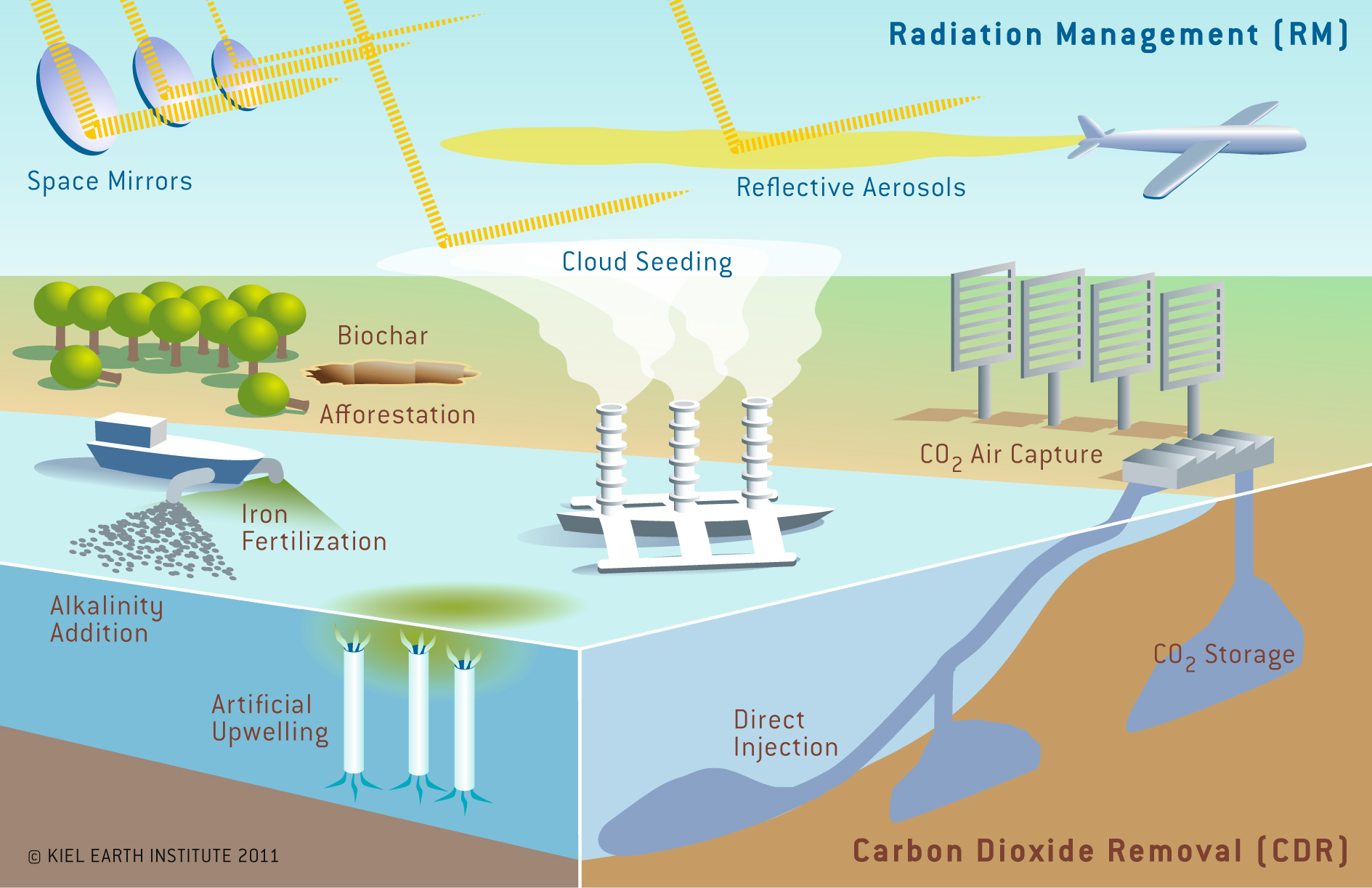
As the stakes get higher through this century, the dangers arising from this mechanistic metaphor of nature will only become more harrowing. Already, in response to the acceleration of climate breakdown, the techno-dystopian idea of geoengineering is becoming increasingly acceptable. Following Tillerson’s misconceived logic, rather than disrupt the fossil fuel-based growth economy, policymakers are beginning to seriously countenance treating the Earth as a gigantic machine that needs fixing, and developing massive engineering projects to tinker with the global climate.

Given the innumerable nonlinear feedback loops that generate our planet’s complex living systems, the law of unintended consequences looms menacingly large. The eerily named field of “solar radiation management”, for example, which has received significant financing from Bill Gates, envisages spraying particles into the stratosphere to cool the Earth by reflecting the Sun’s rays back into space. The risks are enormous, such as causing extreme shifts in precipitation around the world and exacerbating damage we’ve already done to the ozone layer. Additionally, once begun, it could never be stopped without immediate catastrophic rebound heating; it would further increase ocean acidification; and would likely turn the blue sky into a perpetual white haze. These types of feedback effects, arising from the innumerable nonlinear dynamic interdependencies of Earth’s complex systems, get marginalized by a worldview that ultimately sees our planet as a machine requiring a quick fix.

Geoengineeering: one of the most terrifying entailments of treating nature as a machine

Further, there are deep moral issues that arise from confronting the inherent subjectivity of the natural world. Ever since the Scientific Revolution, the root metaphor of nature as a machine has infiltrated Western culture, inducing people to view the living Earth as a resource for humans to exploit without regard for its intrinsic value. Ecological philosopher Eileen Crist describes this as human supremacy, pointing out that seeing nature as a “resource” permits anything to be done to the Earth with no moral misgivings. Fish get reclassified as “fisheries,” and farm animals as “livestock”—living creatures become mere assets to be exploited for profit. Ultimately, it is the ideology of human supremacy that allows us to blow up mountaintops for coal, turn vibrant rainforest into monocropped wastelands, and trawl millions of miles of ocean floor with nets that scoop up everything that moves.

Once we recognize that other animals with a nervous system are not machines, as Descartes proposed, but likely experience subjective feelings similar to humans, we must also reckon with the unsettling moral implications of factory farming. The stark reality is that around the world, cows, chicken, and pigs are enslaved, tortured, and mercilessly slaughtered merely for human convenience. This systematic torment administered in the name of humanity to over 70 billion animals a year—each one a sentient creature with a nervous system as capable of registering excruciating pain as you or I—quite possibly represents the greatest cataclysm of suffering that life on Earth has ever experienced.

The “quantum jazz” of life

What, then, are metaphors of life that more accurately reflect the findings of biology—and might have the adaptive consequence of influencing our civilization to behave with more reverence toward our nonliving relatives on this beleaguered planet which is our only home?

Frequently, when cell biologists describe the mind-boggling complexity of their subject, they turn to music as a core metaphor. Denis Noble entitled his book on cellular biology The Music of Life, depicting it as “a symphony.” Ursula Goodenough describes patterns of gene expression as “melodies and harmonies.” While this metaphor rings truer than nature as a machine, it has its own limitations: a symphony is, after all, a piece of music written by a composer, with a conductor directing how each note should be played. The awesome quality of nature’s music arises from the fact that it is self-organized. There is no outside agent telling each cell what to do.

Perhaps a more illustrative metaphor would be a dance. Cell biologists increasingly refer to their findings in terms of “choreography,” and philosopher of biology Evan Thompson writes vividly how an organism and its environment relate to each other “like two partners in a dance who bring forth each other’s movements.”

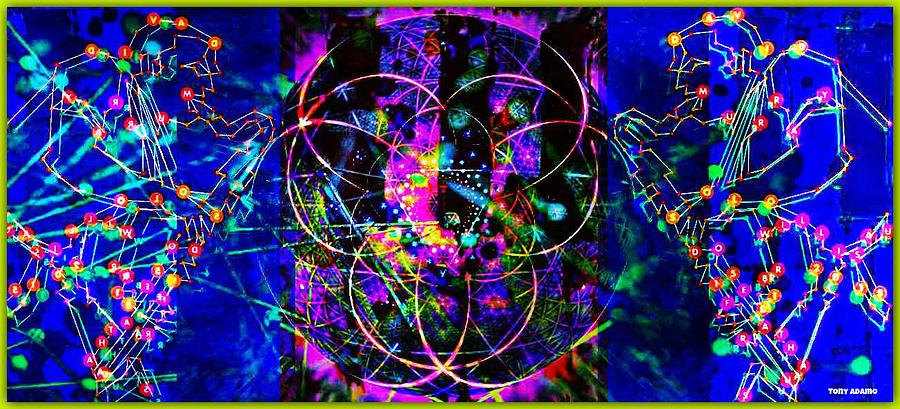
Another compelling metaphor is an improvisational jazz ensemble, where a self-organized group of musicians spontaneously creates fresh melodies from a core harmonic theme, riffing off each other’s creativity in a similar way to how evolution generates complex ecosystems. Geneticist Mae-Wan Ho captures this idea with her portrayal of life as “quantum jazz,” describing it as “an incredible hive of activity at every level of magnification in the organism . . . locally appearing as though completely chaotic, and yet perfectly coordinated as a whole.”

Life as “quantum jazz”. (Image by Tony Adamo) .

What might our world look if we saw ourselves as participating in a coherent ensemble with all sentient beings interweaving together to collectively reverse entropy on Earth? Perhaps we might begin to see humanity’s role, not to re-engineer a broken planet for further exploitation, but to attune with the rest of life’s abundance, and ensure that our own actions harmonize with the Earth’s ecological rhythms. In the profound words of 20th century humanitarian Albert Schweitzer, “I am life that wills to live, in the midst of life that wills to live.” How, we may ask, might our future trajectory change if we were to reconstruct our civilization on this basis?


Jeremy Lent is an author and speaker whose work investigates the underlying causes of our civilization’s existential crisis, and explores pathways toward a life-affirming future. This article contains excerpts from his recently published book, The Web of Meaning: Integrating Science and Traditional Wisdom to Find Our Place in the Universe.

Complexity, Cooperation, and Civilization

Many people claim that evolution has a direction toward increased complexity—and that humans represent its apex. Our destiny, they declare, is to break out of our earthly limitations and explore the galaxy. Although an intoxicating vision for some, the rise of human civilization has been a double-edged story. Until humans learn to enhance life on Earth rather than destroy it, we’re not ready ethically to reach for the stars.

Excerpted from The Web of Meaning: Integrating Science and Traditional Wisdom to Find Our Place in the Universe (published earlier this month in the UK, and available July 13 in the US),

Complexity, cooperation, and civilization

Life’s glorious triumph on Earth has been achieved, not just through increased complexity, but also increased cooperation. In fact, the two go hand in hand. When individuals cooperate, it allows them to specialize in what they do best, thus promoting diversity and greater complexity. Whether it was single cells combining to create multicellular organisms, or insects collaborating to form colonies, the great phase transitions of life have all required massive upsurges in cooperation.

Many researchers have pointed out that building cooperation doesn’t come easily. A perennial problem for cooperating groups throughout the history of life—whether bacteria, organisms, or communities—is the risk of freeloaders: those that take advantage of the benefits of the group without making their fair contribution. If there are too many of them, they undermine the effectiveness of the group and may cause it to disintegrate. Genetic relatedness is one way evolution solved this problem: cells and organisms evolved to cooperate more closely with others that share their genes. But cooperation extends far beyond genetic affiliation.

Ultimately, the crucial success factor for cooperation at increasing levels of scale is integration—a state of unity with differentiation. In a fully integrated system, each part maintains its unique identity while operating in coordination with other parts of the system. To do so, the parts must remain in intimate feedback loops of communication with a large number of related parts.  Each of the systems we’ve been looking at—cells, organisms, ecosystems, and Gaia—is a paragon of this type of integration. In fact, integration is a defining characteristic of any purposive, self-organized entity.

As life succeeded in integrating ever larger systems, it kept improving its negative entropy (or negentropy): the process of turning entropy into islands of self-organization that is a defining feature of all living systems. Larger animals utilize energy more efficiently than smaller ones, and larger colonies of insects are more effective at staving off entropy than smaller ones. The rise of human civilization itself may be portrayed as a series of enhancements in energy utilization. Agriculture, as anthropologist Leslie White has laid out, harnessed the negentropy of horses, cows, and sheep, who spent their days consuming the sun’s energy stored in plants, and then made it available to humans in the form of work, milk, wool, and meat. Further technological advances allowed humans to exploit the energy of the natural world ever more efficiently.

As with the other great phase transitions of life, underlying humanity’s achievements in agriculture and technology was an increase in cooperation. Humans are by far the most cooperative of primate species, and this—more than any other factor—is the key to our species’ success. As pre-humans evolved in bands of nomadic hunter-gatherers, they developed a sophisticated social intelligence, enabling them to collaborate closely with each other. Early hominids also faced the freeloader problem, and the characteristics they evolved to solve it became an intrinsic part of human nature: a powerful instinct for fairness, combined with a drive to punish those who flagrantly break the rules, even at one’s own expense. Many of the qualities we prize in a person, such as compassion, generosity, honesty, and altruism, are the results of our hunter-gatherer ancestors evolving the aptitude to collaborate successfully as a group.

The human instinct to cooperate has been key to our species’ success

Like earlier evolutionary transitions, enhanced cooperation in humans enabled greater specialization. Soon after the emergence of agriculture, cities appeared, replete with all kinds of specialists—artisans, healers, warriors, and priests—who, by plying their unique trades, together formed the backbone of civilizations around the world. Like insect colonies, cities become more efficient at negentropy the bigger they get. With each doubling of population size, a city only needs about 85% more infrastructure, such as roads, water pipes, gas stations, and grocery stores. In fact, a city can be understood as a form of superorganism, showing many of the self-organized characteristics that we’ve come to see in all living entities ranging from cells to ecosystems.

The scale of human connectivity, of course, extends far beyond individual cities. In the modern era, with instant global connectivity through the internet, humans have woven a worldwide web like nothing Earth has seen in its entire existence. Does humanity’s ascendancy represent the next step in life’s continued evolution toward ever greater complexity? Thoughtful observers of different stripes—scientists, philosophers, and visionaries—answer with a strong affirmative. Evolution, they claim, has a direction. From bacteria to eukaryotes to multi-celled organisms, from plants to reptiles and then to mammals, life, they argue, has a destiny that culminates inevitably in the emergence of creatures like us—possessing complex brains with the ability to become self-aware and perhaps ultimately direct our own future evolution toward even greater complexity.

It’s an intoxicating vision for some. However, if we look more closely into this narrative, we find it contains elements that are not quite as triumphant as we might wish. It’s a doubled-edged story—and those edges form the parameters of much that we’ll explore later in this book.

Eligible for the Federation?

The idea of inevitable progress as a cosmic law traces its pedigree back to seventeenth-century Europe, but it was a twentieth-century visionary, theologian-cum-paleontologist Teilhard de Chardin, who gave it a scientific tincture, tying it in to modern evolutionary theory. Pointing to the increasing complexity of life, Teilhard triumphantly placed humanity at its apex. “Life physically culminates in Man,” he wrote, “just as energy physically culminates in life.” Teilhard saw this inevitable progression continuing toward what he called the Omega Point—the ultimate stage of evolution in which all distinctions between artificial and natural are dissolved, when humanity’s consciousness will fuse with the entire natural world to form one unified organism of embodied intelligence.

More recently, leading techno-visionaries have taken up Teilhard’s vision but jettisoned nonhuman nature from the grand narrative. In his bestseller, The Singularity Is Near, Google executive Raymond Kurzweil prophecies a future where humanity’s conceptual intelligence fuses with machines, leaving animate existence in the dust. “There will be no distinction, post-Singularity,” he declares, “between human and machine or between physical and virtual reality.” Similarly, prominent physicist Max Tegmark views the inevitable appearance of super-intelligent AI as Life 3.0—overcoming the physical constraints of human beings (“Life 2.0”) and the rest of nature (“Life 1.0”). Frequently, these visions foresee a future intelligence leaving Earth behind, expanding through the Milky Way and then into other galaxies, spreading the higher consciousness and advanced intelligence required for converting the entire universe into a font of negative entropy, perhaps even one day, in the far distant future, repealing the Second Law of Thermodynamics itself.

There is something wildly inspirational in this kind of vision, yet it contains a foundational flaw that must be identified and fixed before it could ever take off. Since these visions extend into the realm of imagined futures, it seems fitting to approach them from the perspective of one of science fiction’s best-loved sagas—the Star Trek series. As Star Trek fans (I’m one of them) can attest, the future it envisages, with all its challenges and existential threats, is largely benevolent on account of the values of the United Federation of Planets. The Federation only allows other planetary civilizations to join if, after a thorough evaluation, they meet its ethical criteria, which include an affirmation of “the fundamental rights of sentient beings,” and faith “in the dignity and worth of all lifeforms.”

Would our current civilization be eligible to join the Star Trek United Federation of Planets?

Would our current civilization be eligible to join the Federation if they evaluated us today? The only realistic answer is an emphatic “No.” Quite apart from the extreme inequities among our own species, forcing billions to live without basic rights such as a home, education, or food security, humanity has been systematically destroying the welfare of other sentient beings on Earth without any regard to their dignity or worth. The rollcall of humanity’s depredations against nature is vast. Some of our most egregious transgressions would have to include the willful torture of billions of domesticated animals in factory farms; the vast demolition of wildlife habitat; the pollution of Earth’s waterways and oceans; the indiscriminate use of deep sea trawlers that decimate fish populations; and the massive conversion of vibrant ecosystems into huge monocrop plantations. The list goes on and on. As a result of the boundless havoc caused by our global civilization, Earth is now experiencing the sixth mass extinction of species since life began on our planet. The sorrowful reality is that, if humanity did succeed in developing the technologies to explore the universe, without first changing its ethical moorings, then a dismal fate would await other less powerful sentient beings out there. If Federation officials were to consider us for entry at this stage in human history, we wouldn’t stand a chance.

Far from being the next step in life’s evolution, humanity’s ascendancy in its current form represents a major step in the wrong direction. We can comprehend this better when we consider the importance of integration as the key to life’s success in continually improving negentropy. In a truly integrated system—consistent with Federation ethics—each entity possesses intrinsic dignity and worth, pursuing its own purpose as part of the larger whole. Our civilization, however, has built its relationship with the rest of nature, not on integration, but on dis-integration. It is based on dominating the natural world with no consideration for its wellbeing. Through our irresponsible use of fossil fuels, we have created imbalances in Gaia’s own health that are causing pernicious damage to countless species as well as our own. Through our conversion of ecosystems into monocrops, poisoning of waterways, annihilation of coral reefs, and emptying the oceans of fish, we are quite possibly the greatest force for entropy that Gaia has experienced in billions of years. Rather than integrating with the rest of life, as Teilhard may have envisaged, we are ruthlessly destroying life, eradicating its precious complexity—and are doing so at an ever-accelerating pace.

There are some who, appalled by our species’ impact on the living Earth, consider humanity to be like a malignant cancer consuming Gaia. While this may be a fair depiction of our current civilization, it certainly need not hold true for humanity as a species. The rise of conceptual intelligence in humans has given us exceptional powers that can be used both beneficially and destructively. However, just as we’ve seen how each of us can develop an integrative intelligence that combines our embodied experiences, humans collectively have the potential to develop a far more integrated relationship with the rest of nature. Technology doesn’t have to be used to destroy the complexity of living systems—if established on a different ethical basis, it could be developed to work in harmony with natural processes, promoting Gaia’s overall negentropy.

Through the rest of this book, we’ll explore what it means to live in a way that enhances life’s deep purpose rather than working against it. We’ll discover how, as a civilization, we have the potential to follow a path of integration that could lead to symbiotic flourishing for humanity and Gaia together—a path that just might lead, one day in the distant future, to being welcomed into the United Federation of Planets with open arms.


Explore The Web of Meaning further on Jeremy Lent’s website. The book is available for purchase now in the UK and preorder in the USA/Canada.

Introduction to The Web of Meaning

As our civilization careens toward a precipice of climate breakdown, ecological destruction, and gaping inequality, people are losing their existential moorings. Our dominant worldview has passed its expiration date: it’s based on a series of flawed assumptions that have been superseded by modern scientific findings.

The Web of Meaning: Integrating Science and Traditional Wisdom to Find Our Place in the Universe (published this week in the UK, next month in the US), offers a coherent and intellectually solid foundation for an alternative worldview based on deep interconnectedness, showing how modern scientific knowledge echoes the ancient wisdom of earlier cultures.

Here is the Introduction.

Tea with Uncle Bob

We could call it The Speech. You’ve probably heard it many times. Maybe you’ve even given it. Every day around the world, innumerable versions of it are delivered by Someone Who Seems to Know what they’re talking about.

It doesn’t seem like much. Just another part of life’s daily conversations. But every Speech, linked together, helps to lock our entire society up in a mental cage. It might occur anywhere in the world, from a construction site in Kansas to a market stall in Delhi. It can be given by anyone old enough to have learned a thing or two about how it all works. But it’s usually delivered by someone who feels they’ve been around the block a few times and they want to give you the benefit of their wisdom.

Because I grew up in London, I’ll zoom in there to a particular version of The Speech that reverberates with me. It’s an occasional family gathering—one of those events where toddlers take center stage and aunties serve second helpings of cake. It’s tea-time, and a few of us are gathered around, talking about the state of the world. Someone comments on what’s wrong with our system and how things could be so much better—but Uncle Bob happens to be in the group, and before you know it, it’s too late. The Speech is about to begin.

“Let’s face it,” Uncle Bob declares to the group, “it’s a dog-eat-dog world out there. Every man for himself. For all your ideas about making the world a better place, when it comes down to it, everyone’s just interested in their own skin. It’s a rat race. That’s the way all of nature works. That’s how we’ve been programmed. The survival of the fittest.”

Does any of this sound familiar to you? It’s only too familiar to those of us at the tea party. Uncle Bob sees some glazed faces looking back at him, so he feels the need to add a few more pointers to his oration.

“Look,” he leans forward conspiratorially, “it’s like this. People like you want to change the world. But when you’ve had the experience I’ve had, you’ll know better. Our society is structured this way simply because that’s what works best. They tried communism—and you know what happened to that. For all the complaining people do, they’ve never had it so good. Look at our amazing technology, look at all the progress we’ve made in the past few hundred years. You can thank capitalism for that. The fact is, it works so well, because at the end of the day people are selfish—they look out for themselves. Capitalism takes that selfishness and turns it into progress—it lets people become entrepreneurs, which makes all of us better off. That’s what they call . . . the invisible hand, isn’t it?”

Game over. Whatever ideas were being floated about improving society just wafted out the window. Uncle Bob pauses. The conversation comes to a halt, until someone pipes up: “How’s little Penny doing with her dancing lessons?”—and the tea party rolls on.

This type of conversation takes place with regularity around the world because it channels the themes we hear every day from those in a position of authority—from talking heads on TV, from successful businesspeople, from teachers, from school textbooks. Even when the Speech is not given explicitly, its ideas seep into our daily thoughts. Every time a newscaster reports on prospects for economic growth; every time a TV commercial hypes the latest consumer product; every time an exciting new technology is touted as the solution to climate change, the underlying themes of the Speech insidiously tighten their grip on our collective consciousness.

Talking heads collectively reinforce our dominant worldview

The flaws in our dominant worldview

Distilled to their essence, these themes come down to a few basic building blocks: Humans are selfish individuals. All creatures are selfish—in fact, selfish genes are the driving force of evolution. Nature is just a very complex machine, and human ingenuity has, for the most part, figured out how it works. The modern world is the spectacular result of technology enabled by the market forces of capitalism, and in spite of occasional setbacks, it’s continually improving. There may be problems, such as global poverty or climate change, but technology, powered by the market, will solve them—just as it always has in the past.

These basic elements, give or take a few, form the foundation of the predominant worldview. They infuse much of what is accepted as indisputably true in most conversations that take place about world affairs. They are so pervasive that most of us never question them. We feel they must be based on solid facts—why else would all those people in positions of authority rely on them? That’s the characteristic that makes a worldview so powerful. Like fish that don’t realize they’re swimming in water because it’s all they know, we tend to assume that our worldview simply describes the world the way it is—rather than recognizing it’s a constructed lens that shapes our thoughts and ideas into certain preconditioned patterns.

This book investigates the dominant worldview and shows that, in fact, every one of those building blocks is flawed. They were formed, in their modern version, mostly by a small group of men in seventeenth-century Europe, and further developed in the centuries that followed by other mostly European men. This worldview has accomplished a lot. It wrested intellectual control from the hidebound superstitions of traditional Christian theology, and laid the foundation for modern science—one of humanity’s greatest achievements. But it has also been an underlying cause of the horrendous devastation suffered by non-European peoples and cultures, and boundless destruction of the natural world. And the fundamental flaws in its construction have now become so gaping that they threaten the very survival of our civilization—and much of the living Earth.

Many people across the globe are realizing that there is something terribly wrong with the direction our world is headed. The inequities are so extreme that a couple of dozen billionaires own as much wealth as half the world’s population. Our civilization is devastating the Earth at an ever-increasing pace. There has been a 68 percent decline in animal populations since 1970. Greenhouse gas emissions have caused the climate to lurch out of control, creating conditions that haven’t existed on Earth for millions of years. Fires, storms, droughts, and floods that used to be called “once in a century” have become a regular staple of our daily news.

Look ahead a few decades, and things become downright terrifying. We’re on track, by the middle of this century, to see the annihilation of coral reefs worldwide, 95 percent of arable land degraded, and five billion people facing water shortages—and at the current rate, there will be more plastic in the oceans than fish. Without drastic changes, as we approach the later part of the century, the Amazon rainforest will have become a searing desert, the Sixth Great Extinction of species will be well under way, and as a result of climate breakdown, civilization as we know it will likely be tottering on its last legs.

A new foundation for our civilization

At our current trajectory, humanity is headed for catastrophe. But it doesn’t have to be that way. If we want to steer our civilization on another course, though, it’s not enough to make a few incremental improvements here and there. We need to take a long, hard look at the faulty ideas that have brought us to this place, and reimagine them. We need a new worldview—one that is based on sturdy foundations.

Imagine someone laying foundations for a single story house. If there are a few cracks, they will probably get away with it. But suppose generations of people keep adding new stories until they’ve built a skyscraper on the faulty foundation. As the building begins teetering, engineers might frantically attach extra girders and struts, but it will eventually collapse unless they pay attention to fixing the flaws in the foundation. That’s the situation our civilization faces right now.

Our worldview is like the foundation of a house: if it’s faulty, everything might collapse

This book lays out an entirely different foundation for a civilization that could lead us sustainably through this century and beyond. It reveals the flaws hidden within the current worldview, showing how certain erroneous ideas became so entrenched in popular thinking that they simply got taken for granted—and how that has led to our current predicament. Most importantly, it shows how the combined insights of traditional wisdom and modern scientific thinking offer a solid, integrated foundation for a different worldview—one that could redirect human civilization onto a very different trajectory, and offer future generations a flourishing world in which to thrive.

Why worldviews matter

The reason a worldview is so important is that it imbues virtually every aspect of the way people think, what they value, and how they act—without them even realizing it. Worldviews lead different cultures to respond to their reality in fundamentally different ways. If you believe that all living beings are family, you will treat them in a different way than if you think the natural world is a resource to be exploited. If you think other humans are inherently cooperative, you’ll approach a person differently than if you think that, ultimately, everyone is selfish and competitive. If you presume that technology can fix our biggest problems, you won’t feel the need to consider the underlying systems that caused those problems to arise in the first place.

In my earlier book, The Patterning Instinct, I looked at major worldviews through history, investigating how different cultures structured patterns of meaning into the universe from humanity’s earliest days in nomadic hunter-gatherer bands to modern times. One overarching theme emerged from The Patterning Instinct: a culture’s worldview shapes its values—and those values shape history. By the same token, the values according to which we conduct our lives today will shape the future. Ultimately, the direction of history is determined by the dominant culture’s worldview.

An integrated worldview

The Web of Meaning takes up where The Patterning Instinct left off, by laying out a framework for a worldview that could foster humanity’s long-term flourishing on a healthy planet. It is a worldview of integration: one that identifies the unifying principles that flow through all things, while celebrating the differences that lead to the richness of our lived experience. It’s a worldview that links together scientific findings in recent decades from such diverse fields as evolutionary biology, cognitive neuroscience, and complexity theory, showing how they affirm profound insights from the world’s great wisdom traditions, such as Buddhism, Taoism, and traditional knowledge from Indigenous peoples around the world.

This integrated worldview breaks down many of the barriers that tend to separate different forms of knowledge and activity in modern society. We’re accustomed to thinking of science as existing in a different domain than spirituality. We generally view the intellect as distinct from emotion; the mind as separate from the body; humans as separate from nature; and spiritual insight as separate from political engagement. In the integrated worldview laid out here, each one of these domains is intricately connected with the others in an extended web of meaning.

An integrated worldview shows how everything relates within an intricate web of meaning

There are certain existential questions virtually every person asks at some time in their lives: Who am I? Where am I? What am I? How should I live?, and ultimately Why am I? The book is organized into sections according to these questions. For each one, we’ll investigate underlying flaws in the typical explanations provided by the dominant worldview, then explore the richly resonant answers offered by the intertwining of current scientific understanding with the deep insights of traditional wisdom. Finally, we’ll tackle the question many of us are anxiously asking right now: Where are we going?

Uncle Bob and me

These are all questions that I pondered during a period in my life when the structures of meaning I’d constructed for myself seemed to crash around me. For much of my own life, Uncle Bob’s statements had seemed irrefutably true. In fact, like many others, I built my life on their basis. I received my M.B.A at the University of Chicago where the precepts of free market capitalism were drummed into me. Finding myself in the San Francisco Bay Area at the onset of the dot com era, I founded the world’s first online credit card issuer, which I took public as its chief executive officer.

However, shortly after my company’s IPO, my wife developed early symptoms of the serious illness that would eventually lead to her untimely death. I left my executive role to care for her full-time—but the company was not yet firmly established, and within a couple of years it had become another casualty of the dot com bust. With my wife suffering cognitive decline from her illness, I found myself isolated—bereft of companionship, friends, and the prestige of success.

At that time, I made a solemn promise to myself that whatever path I chose for the rest of my life would be one that was truly meaningful. But where did meaning arise? Having traversed a road that seemed like a dead end, I was determined not to rely on someone else’s determination of what was meaningful. I thus began my own deep investigation into the sources of meaning, which launched a comprehensive research project lasting over ten years, resulting in both The Patterning Instinct and this book.

Something I learned on that journey, and which will become clear through the book, is that one’s personal search for meaning cannot be isolated from all that is going on in the world around us. In the pages that follow, as we trace the intimate connections that link our lives to those in our community, to all of humanity, and to the entire living Earth, we’ll discover how inextricably we are all interrelated—and explore some of the profound implications arising from that relatedness.

We’ll encounter many fascinating and unexpected revelations along the way. We’ll come across slime molds with the intelligence to solve mazes and design sophisticated road networks. We’ll discover how Chinese sages from a thousand years ago provided a framework that elucidates the radical findings of modern systems theorists. We’ll explore the stunning virtuosity of a single cell, and identify how the deep purpose of life reveals itself all around us—and within us. We’ll learn what ant colonies and flocks of starlings can teach us about our own consciousness. We’ll find out what Joni Mitchell got wrong in her environmental anthem “Big Yellow Taxi”—and what Michael Jackson got right when he sang “We Are the World.” We’ll see how our modern society has been consciously designed to sabotage our well-being, and how, by learning and applying life’s own principles, we can build an alternative civilization that could allow future generations to prosper on a flourishing Earth.


Explore The Web of Meaning further on Jeremy Lent’s website. The book is available for purchase now in the UK and preorder in the USA/Canada.


Upcoming UK Book Launch Events

Please find the date that works best for you and register online in advance.

Wed 16 June, 18:30 BST (10:30 am Pacific) | 1 hour 
Jeremy in conversation with Anna Murray, co-founder of Patternity followed by Q&A. Register here.

Thu 17 June, 18:00 BST (10:00 am Pacific) | 1 hour
Jeremy in conversation with Indra Adnan and Pat Kane, co-founders of Alternative UK, followed by Q&A. Register here.

Wed 30 June, 20:00 BST (12:00 pm Pacific) | 1 hour
Earth Talk: Weaving a New Story of Meaning hosted by Schumacher College.
Jeremy will give a presentation followed by Q&A. Register here.

Coronavirus Spells the End of the Neoliberal Era. What’s Next?

Coronavirus is a political crucible, melting down and reshaping current norms. Will the new era be a “Fortress Earth” or a harbinger of a transformed society based on a new set of values?

Think Bigger

Whatever you might be thinking about the long-term impacts of the coronavirus epidemic, you’re probably not thinking big enough.

Our lives have already been reshaped so dramatically in the past few weeks that it’s difficult to see beyond the next news cycle. We’re bracing for the recession we all know is here, wondering how long the lockdown will last, and praying that our loved ones will all make it through alive.

But, in the same way that Covid-19 is spreading at an exponential rate, we also need to think exponentially about its long-term impact on our culture and society. A year or two from now, the virus itself will likely have become a manageable part of our lives—effective treatments will have emerged; a vaccine will be available. But the impact of coronavirus on our global civilization will only just be unfolding. The massive disruptions we’re already seeing in our lives are just the first heralds of a historic transformation in political and societal norms.

If Covid-19 were spreading across a stable and resilient world, its impact could be abrupt but contained. Leaders would consult together; economies disrupted temporarily; people would make do for a while with changed circumstances—and then, after the shock, look forward to getting back to normal. That’s not, however, the world in which we live. Instead, this coronavirus is revealing the structural faults of a system that have been papered over for decades as they’ve been steadily worsening. Gaping economic inequalities, rampant ecological destruction, and pervasive political corruption are all results of unbalanced systems relying on each other to remain precariously poised. Now, as one system destabilizes, expect others to tumble down in tandem in a cascade known by researchers as “synchronous failure.”

The first signs of this structural destabilization are just beginning to show. Our globalized economy relies on just-in-time inventory for hyper-efficient production. As supply chains are disrupted through factory closures and border closings, shortages in household items, medications, and food will begin surfacing, leading to rounds of panic buying that will only exacerbate the situation. The world economy is entering a downturn so steep it could exceed the severity of the Great Depression. The international political system—already on the ropes with Trump’s “America First” xenophobia and the Brexit fiasco—is likely to unravel further, as the global influence of the United States tanks while Chinese power strengthens. Meanwhile, the Global South, where Covid-19 is just beginning to make itself felt, may face disruption on a scale far greater than the more affluent Global North.

The Overton Window

During normal times, out of all the possible ways to organize society, there is only a limited range of ideas considered acceptable for mainstream political discussion—known as the Overton window. Covid-19 has blown the Overton window wide open. In just a few weeks, we’ve seen political and economic ideas seriously discussed that had previously been dismissed as fanciful or utterly unacceptable: universal basic income, government intervention to house the homeless, and state surveillance on individual activity, to name just a few. But remember—this is just the beginning of a process that will expand exponentially in the ensuing months.

A crisis such as the coronavirus pandemic has a way of massively amplifying and accelerating changes that were already underway: shifts that might have taken decades can occur in weeks. Like a crucible, it has the potential to melt down the structures that currently exist, and reshape them, perhaps unrecognizably. What might the new shape of society look like? What will be center stage in the Overton window by the time it begins narrowing again?

The Example of World War II

We’re entering uncharted territory, but to get a feeling for the scale of transformation we need to consider, it helps to look back to the last time the world underwent an equivalent spasm of change: the Second World War.

The pre-war world was dominated by European colonial powers struggling to maintain their empires. Liberal democracy was on the wane, while fascism and communism were ascendant, battling each other for supremacy. The demise of the League of Nations seemed to have proven the impossibility of multinational global cooperation. Prior to Pearl Harbor, the United States maintained an isolationist policy, and in the early years of the war, many people believed it was just a matter of time before Hitler and the Axis powers invaded Britain and took complete control of Europe.

The Yalta Conference, 1945: Allied leaders reshaped the new global era

Within a few years, the world was barely recognizable. As the British Empire crumbled, geopolitics was dominated by the Cold War which divided the world into two political blocs under the constant threat of nuclear Armageddon. A social democratic Europe formed an economic union that no-one could previously have imagined possible. Meanwhile, the US and its allies established a system of globalized trade, with institutions such as the IMF and the World Bank setting terms for how the “developing world” could participate. The stage was set for the “Great Acceleration”: far and away the greatest and most rapid increase of human activity in history across a vast number of dimensions, including global population, trade, travel, production, and consumption. 

If the changes we’re about to undergo are on a similar scale to these, how might a future historian summarize the “pre-coronavirus” world that is about to disappear?

The Neoliberal Era            

There’s a good chance they will call this the Neoliberal Era. Until the 1970s, the post-war world was characterized in the West by an uneasy balance between government and private enterprise. However, following the “oil shock” and stagflation of that period—which at the time represented the world’s biggest post-war disruption—a new ideology of free-market neoliberalism took center stage in the Overton window (the phrase itself was named by a neoliberal proponent).

The value system of neoliberalism, which has since become entrenched in global mainstream discourse, holds that humans are individualistic, selfish, calculating materialists, and because of this, unrestrained free-market capitalism provides the best framework for every kind of human endeavor. Through their control of government, finance, business, and media, neoliberal adherents have succeeded in transforming the world into a globalized market-based system, loosening regulatory controls, weakening social safety nets, reducing taxes, and virtually demolishing the power of organized labor.

The triumph of neoliberalism has led to the greatest inequality in history, where (based on the most recent statistics) the world’s twenty-six richest people own as much wealth as half the entire world’s population. It has allowed the largest transnational corporations to establish a stranglehold over other forms of organization, with the result that, of the world’s hundred largest economies, sixty-nine are corporations. The relentless pursuit of profit and economic growth above all else has propelled human civilization onto a terrifying trajectory. The uncontrolled climate crisis is the most obvious danger: The world’s current policies have us on track for more than 3° increase by the end of this century, and climate scientists publish dire warnings that amplifying feedbacks could make things far worse than even these projections, and thus place at risk the very continuation of our civilization.

But even if the climate crisis were somehow brought under control, a continuation of untrammeled economic growth in future decades will bring us face-to-face with a slew of further existential threats. Currently, our civilization is running at 40% above its sustainable capacity. We’re rapidly depleting the earth’s forestsanimalsinsectsfishfreshwater, even the topsoil we require to grow our crops. We’ve already transgressed three of the nine planetary boundaries that define humanity’s safe operating space, and yet global GDP is expected to more than double by mid-century, with potentially irreversible and devastating consequences.

In 2017 over fifteen thousand scientists from 184 countries issued an ominous warning to humanity that time is running out: “Soon it will be too late,” they wrote, “to shift course away from our failing trajectory.” They are echoed by the government-approved declaration of the UN-sponsored IPCC, that we need “rapid, far-reaching and unprecedented changes in all aspects of society” to avoid disaster.

In the clamor for economic growth, however, these warnings have so far gone unheeded. Will the impact of coronavirus change anything?

Fortress Earth

There’s a serious risk that, rather than shifting course from our failing trajectory, the post-Covid-19 world will be one where the same forces currently driving our race to the precipice further entrench their power and floor the accelerator directly toward global catastrophe. China has relaxed its environmental laws to boost production as it tries to recover from its initial coronavirus outbreak, and the US (anachronistically named) Environmental Protection Agency took immediate advantage of the crisis to suspend enforcement of its laws, allowing companies to pollute as much as they want as long as they can show some relation to the pandemic.

On a greater scale, power-hungry leaders around the world are taking immediate advantage of the crisis to clamp down on individual liberties and move their countries swiftly toward authoritarianism. Hungary’s strongman leader, Viktor Orban, officially killed off democracy in his country on Monday, passing a bill that allows him to rule by decree, with five-year prison sentences for those he determines are spreading “false” information. Israel’s Prime Minister Netanyahu shut down his country’s courts in time to avoid his own trial for corruption. In the United States, the Department of Justice has already filed a request to allow the suspension of courtroom proceedings in emergencies, and there are many who fear that Trump will take advantage of the turmoil to install martial law and try to compromise November’s election.

Even in those countries that avoid an authoritarian takeover, the increase in high-tech surveillance taking place around the world is rapidly undermining previously sacrosanct privacy rights. Israel has passed an emergency decree to follow the lead of China, Taiwan, and South Korea in using smartphone location readings to trace contacts of individuals who tested positive for coronavirus. European mobile operators are sharing user data (so far anonymized) with government agencies. As Yuval Harari has pointed out, in the post-Covid world, these short-term emergency measures may “become a fixture of life.”

If these, and other emerging trends, continue unchecked, we could head rapidly to a grim scenario of what might be called “Fortress Earth,” with entrenched power blocs eliminating many of the freedoms and rights that have formed the bedrock of the post-war world. We could be seeing all-powerful states overseeing economies dominated even more thoroughly by the few corporate giants (think Amazon, Facebook) that can monetize the crisis for further shareholder gain.

The chasm between the haves and have-nots may become even more egregious, especially if treatments for the virus become available but are priced out of reach for some people. Countries in the Global South, already facing the prospect of disaster from climate breakdown, may face collapse if coronavirus rampages through their populations while a global depression starves them of funds to maintain even minimal infrastructures. Borders may become militarized zones, shutting off the free flow of passage. Mistrust and fear, which has already shown its ugly face in panicked evictions of doctors in India and record gun-buying in the US, could become endemic.

Society Transformed

But it doesn’t have to turn out that way. Back in the early days of World War II, things looked even darker, but underlying dynamics emerged that fundamentally altered the trajectory of history. Frequently, it was the very bleakness of the disasters that catalyzed positive forces to emerge in reaction and predominate. The Japanese attack on Pearl Harbor—the day “which will live in infamy”—was the moment when the power balance of World War II shifted. The collective anguish in response to the global war’s devastation led to the founding of the United Nations. The grotesque atrocity of Hitler’s holocaust led to the international recognition of the crime of genocide, and the UN’s Universal Declaration of Human Rights.

Could it be that the crucible of coronavirus will lead to a meltdown of neoliberal norms that ultimately reshapes the dominant structures of our global civilization? Could a mass collective reaction to the excesses of authoritarian overreach lead to a renaissance of humanitarian values? We’re already seeing signs of this. While the Overton window is allowing surveillance and authoritarian practices to enter from one side, it’s also opening up to new political realities and possibilities on the other side. Let’s take a look at some of these.

A fairer society. The specter of massive layoffs and unemployment has already led to levels of state intervention to protect citizens and businesses that were previously unthinkable. Denmark plans to pay 75% of the salaries of employees in private companies hit by the effects of the epidemic, to keep them and their businesses solvent. The UK has announced a similar plan to cover 80% of salaries. California is leasing hotels to shelter homeless people who would otherwise remain on the streets, and has authorized local governments to halt evictions for renters and homeowners. New York state is releasing low-risk prisoners from its jails. Spain is nationalizing its private hospitals. The Green New Deal, which was already endorsed by the leading Democratic presidential candidates, is now being discussed as the mainstay of a program of economic recovery. The idea of universal basic income for every American, boldly raised by long-shot Democratic candidate Andrew Yang, has now become a talking point even for Republican politicians.

Ecological stabilization. Coronavirus has already been more effective in slowing down climate breakdown and ecological collapse than all the world’s policy initiatives combined. In February, Chinese CO2 emissions were down by over 25%. One scientist calculated that twenty times as many Chinese lives have been saved by reduced air pollution than lost directly to coronavirus. Over the next year, we’re likely to see a reduction in greenhouse gas emissions greater than even the most optimistic modelers’ forecasts, as a result of the decline in economic activity. As French philosopher Bruno Latour tweeted: “Next time, when ecologists are ridiculed because ‘the economy cannot be slowed down’, they should remember that it can grind to a halt in a matter of weeks worldwide when it is urgent enough.”

Of course, nobody would propose that economic activity should be disrupted in this catastrophic way in response to the climate crisis. However, the emergency response initiated so rapidly by governments across the world has shown what is truly possible when people face what they recognize as a crisis. As a result of climate activism, 1,500 municipalities worldwide, representing over 10% of the global population, have officially declared a climate emergency. The Covid-19 response can now be held out as an icon of what is really possible when people’s lives are at stake. In the case of the climate, the stakes are even greater—the future survival of our civilization. We now know the world can respond as needed, once political will is engaged and societies enter emergency mode

The world needs to respond to the climate emergency with a similar urgency to the Covid-19 response. Source: David J. Hayes, NYU Energy & Environmental Impact Center

The rise of “glocalization.” One of the defining characteristics of the Neoliberal Era has been a corrosive globalization based on free market norms. Transnational corporations have dictated terms to countries in choosing where to locate their operations, leading nations to compete against each other to reduce worker protections in a “race to the bottom.” The use of cheap fossil fuels has caused wasteful misuse of resources as products are flown around the world to meet consumer demand stoked by manipulative advertising. This globalization of markets has been a major cause of the Neoliberal Era’s massive increase in consumption that threatens civilization’s future. Meanwhile, masses of people disaffected by rising inequity have been persuaded by right-wing populists to turn their frustration toward outgroups such as immigrants or ethnic minorities.

The effects of Covid-19 could lead to an inversion of these neoliberal norms. As supply lines break down, communities will look to local and regional producers for their daily needs. When a consumer appliance breaks, people will try to get it repaired rather than buy a new one. Workers, newly unemployed, may turn increasingly to local jobs in smaller companies that serve their community directly.

At the same time, people will increasingly get used to connecting with others through video meetings over the internet, where someone on the other side of the world feels as close as someone across town. This could be a defining characteristic of the new era. Even while production goes local, we may see a dramatic increase in the globalization of new ideas and ways of thinking—a phenomenon known as “glocalization.” Already, scientists are collaborating around the world in an unprecedented collective effort to find a vaccine; and a globally crowdsourced library is offering a “Coronavirus Tech Handbook” to collect and distribute the best ideas for responding to the pandemic.

Compassionate community. Rebecca Solnit’s 2009 book, A Paradise Built in Hell, documents how, contrary to popular belief, disasters frequently bring out the best in people, as they reach out and help those in need around them. In the wake of Covid-19, the whole world is reeling from a disaster that affects us all. The compassionate response Solnit observed in disaster zones has now spread across the planet with a speed matching the virus itself. Mutual aid groups are forming in communities everywhere to help those in need. The website Karunavirus (Karuna is a Sanskrit word for compassion) documents a myriad of everyday acts of heroism, such as the thirty thousand Canadians who have started “caremongering,” and the mom-and-pop restaurants in Detroit forced to close and now cooking meals for the homeless.

In the face of disaster, many people are rediscovering that they are far stronger as a community than as isolated individuals. The phrase “social distancing” is helpfully being recast as “physical distancing” since Covid-19 is bringing people closer together in solidarity than ever before.

Revolution in Values

This rediscovery of the value of community has the potential to be the most important factor of all in shaping the trajectory of the next era. New ideas and political possibilities are critically important, but ultimately an era is defined by its underlying values, on which everything else is built.

The Neoliberal Era was constructed on a myth of the selfish individual as the foundational for values. As Margaret Thatcher famously declared, “There’s no such thing as society. There are individual men and women and there are families.” This belief in the selfish individual has not just been destructive of community—it’s plain wrong. In fact, from an evolutionary perspective, a defining characteristic of humanity is our set of prosocial impulses—fairness, altruism, and compassion—that cause us to identify with something larger than our own individual needs. The compassionate responses that have arisen in the wake of the pandemic are heartwarming but not surprising—they are the expected, natural human response to others in need.

Once the crucible of coronavirus begins to cool, and a new sociopolitical order emerges, the larger emergency of climate breakdown and ecological collapse will still be looming over us. The Neoliberal Era has set civilization’s course directly toward a precipice. If we are truly to “shift course away from our failing trajectory,” the new era must be defined, at its deepest level, not merely by the political or economic choices being made, but by a revolution in values. It must be an era where the core human values of fairness, mutual aid, and compassion are paramount—extending beyond the local neighborhood to state and national government, to the global community of humans, and ultimately to the community of all life. If we can change the basis of our global civilization from one that is wealth-affirming to one that is life-affirming, then we have a chance to create a flourishing future for humanity and the living Earth.

To this extent, the Covid-19 disaster represents an opportunity for the human race—one in which each one of us has a meaningful part to play. We are all inside the crucible right now, and the choices we make over the weeks and months to come will, collectively, determine the shape and defining characteristics of the next era. However big we’re thinking about the future effects of this pandemic, we can think bigger. As has been said in other settings, but never more to the point: “A crisis is a terrible thing to waste.”


Jeremy Lent is author of The Patterning Instinct: A Cultural History of Humanity’s Search for Meaning, which investigates how different cultures have made sense of the universe and how their underlying values have changed the course of history. His upcoming book, The Web of Meaning: Integrating Science and Traditional Wisdom to Find Our Place in the Universe, will be published in Spring 2021 (New Society Press: North America | Profile Books: UK & Commonwealth). For more information visit jeremylent.com.


Do you want to think even bigger?

Watch Jeremy Lent’s talk on “Living into an Ecological Civilization”

Presented at Civana House, San Francisco, October 3, 2019

Embracing Interconnectedness

I recently participated in a conversation with thought leaders at the Great Transition Initiative on how to shift our society’s foundational ethical framework for the deep transformation of civilization that is needed.

Here’s my contribution, “Embracing Interconnectedness,” which features ideas that will be part of my upcoming book, The Web of Meaning: Integrating Science and Traditional Wisdom to Find Our Place in the Universe (to be published in Spring 2021).

I recommend exploring the full conversation at the Great Transition Initiative website.


I BELIEVE IT IS of the utmost importance to establish the right framework of values for the deep transformation of civilization that is needed. As I have laid out in The Patterning Instinct, different cultures have constructed vastly different systems of values, and those values have shaped history. Similarly, the values we choose today as a society will shape our future. The stakes for getting it right could hardly be higher.[1]

In recent decades, neoliberalism has established a dominant pseudo-ethical regime based on a flawed notion of untrammeled, market-based individual freedom. Our overriding task is to substitute this with an ethic of shared responsibility and interdependence. We need a solid, rigorous foundation for this ethic. Where do we find it?

Too much of the conversation on ethics focuses on binaries—materialism vs. spirituality, reason vs. emotions. But binaries simply encourage different camps to put up barricades against each other. We must move beyond binaries to a truly integrated ethical framework—one that incorporates the rational and intuitive, the scientific and the spiritual.

Fortunately, in recent decades, the combination of complexity science, evolutionary biology, cognitive science, and systems thinking has given us a platform for the kind of integration we need. Recognizing an evolutionary basis for values does not mean falling prey to the reductionist determinism of outmoded theorists such as Richard Dawkins, whose “selfish gene” myth has been superseded by modern evolutionary biology. [2]

The major evolutionary transitions of life on Earth have, in fact, been characterized by increases in cooperation, the most recent of which was the emergence of hominids. Facing perilous savannah conditions, our ancestors discovered that, through collaboration, they could protect and feed themselves far more effectively. They evolved moral emotions, such as a sense of fairness, cooperation, and altruism, which enabled them—in what has been called a “reverse dominance hierarchy”—to collaboratively restrain the occasional dangerously aggressive male driven by the atavistic impulse for domination that we see in other primates.[3]

These moral emotions formed the basis of the morality that characterizes our species. Sophisticated tests have shown that, faced with a choice, our initial impulse is to cooperate, and only after time to reflect do selfish behaviors emerge. In various experiments, prelinguistic infants show a rudimentary sense of fairness, justice, empathy, compassion, and generosity, along with a clear ability to distinguish between kind and cruel actions. Morality is intrinsic to the human condition.[4]

So why do we live in a world filled with endless examples of outrageous immorality, where dangerous aggressive males still wield power? With the rise of agriculture and sedentism, the power balance shifted to those who succeeded in establishing hierarchical dominance, leading eventually to the rise of patriarchal societies that rewarded machismo and violence—what Riane Eisler has termed “domination systems.”[5]

The world history of the past millennia mostly chronicles conflicts between different domination systems, one of which—European civilization—eventually became globally dominant in the past few centuries, forcing its unique dualistic cosmology on those it conquered. This is the worldview that most people now take for granted—one based on separation and domination, seeing humans as selfish, rational competitors, defined by their individuality, utterly separate from a desacralized nonhuman nature that has been relegated to a mere mechanistic resource without intrinsic value.

This worldview is a far cry from the shared ethical basis of cross-cultural traditions throughout history, and has been comprehensively invalidated by modern scientific findings. Instead, systems science confirms the insights shared by wisdom teachings across the ages: that we are all intrinsically interconnected. The deep interpenetration of all aspects of reality—what Thich Nhat Hanh calls “interbeing”—must be at the heart of an ethical framework for political and cultural transformation.

Our expression of morality is, to a very large extent, a function of our identity. If you see yourself as an isolated individual, your values will accordingly lead you to the pursuit of your own happiness at the expense of others. If you identify with your community, your values will emphasize the welfare of the group. When you recognize yourself as part of nature, you will automatically feel drawn to nurture and protect the natural world.

Over the past several centuries, even as European imperialism ravaged the rest of the world, there was also a gradual expansion of identity, from the parochial to a broader vision of shared humanity, which has led to what Martin Luther King famously referred to as the “moral arc” bending toward justice. This has inspired concepts such as inalienable human rights and led to ever-widening attempts to legislate moral justice into national and international codes of conduct. The Earth Charter stands as an exemplary model of this kind of expansive moral vision.

However, in our current predicament, facing impending ecological catastrophe and the potential of civilizational collapse, we must ask whether this moral expansion is a case of too little, too late. What can be done to catalyze it and redirect our terrifying trajectory? Is it possible to develop a cross-cultural global moral vision for humanity that extends to all life on Earth, and could inspire a comprehensive transition toward economic justice and ecological regeneration?

While those of us enculturated in the West have had to rediscover our interconnectedness, traditional cultures have maintained the deeply embedded principles that characterized core human morality from earliest times. Comanche social activist LaDonna Harris has identified four central values known as the four R’s that are shared by indigenous peoples around the world, which together affirm the interconnectedness of all aspects of creation: Relationship, Responsibility, Reciprocity, and Redistribution. They each pertain to different types of obligation that inform a person’s life. Relationship is a kinship obligation, recognizing value not just in family but in “all our relations” including animals, plants, and the living Earth. Responsibility is the community obligation, identifying the imperative to nurture and care for those relations. Reciprocity is a cyclical obligation to balance what is given and taken; and Redistribution is the obligation to share what one possesses—not just material wealth, but one’s skills, time, and energy.[6]

Other sources of wisdom, such as Taoism, Buddhism, or Confucianism, each offer unique teachings into the ethical implications of the fundamental unity of all life. “Everything from…husband, wife, and friends, to mountains, rivers…birds, beasts, and plants, all should be truly loved in order that the unity may be reached,” declared Neo-Confucian sage Wang Yangming.

Our crucial task is to incorporate these principles of traditional wisdom into an integrated system of values that can redirect humanity away from catastrophe, and toward a flourishing future. One where our shared identity expands beyond parochial boundaries to include, not just all humanity, but all sentient beings, and the vibrancy of the entire living Earth. Ultimately, it is our values that guide our actions—and will shape our future.

Click to read the entire conversation

[1] Jeremy Lent, The Patterning Instinct: A Cultural History of Humanity’s Search for Meaning (Amherst, NY: Prometheus, 2017).

[2] “New trends in evolutionary biology: biological, philosophical and social science perspectives,” Royal Society | Interface Focus Theme Issue, 7, 5, October 6 (2017).
[3] Christopher Boehm, Hierarchy in the Forest: The Evolution of Egalitarian Behavior (Cambridge, MA: Harvard University Press, 1999).
[4] Paul Bloom, Just Babies: The Origins of Good and Evil (New York: Crown Publishing Group, 2013).
[5] Riane Eisler and Douglas P. Fry, Nurturing Our Humanity: How Domination and Partnership Shape Our Brains, Lives, and Future (New York: Oxford University Press, 2019).
[6] La Donna Harris and Jacqueline Wasilewski, “Indigeneity, an Alternative Worldview: Four R’s (Relationship, Responsibility, Reciprocity, Redistribution) Vs. Two P’s (Power and Profit). Sharing the Journey Towards Conscious Evolution,” Systems Research and Behavioral Science 21 (2004): 489–503.

As Society Unravels, the Future Is Up for Grabs

As civilization faces an existential crisis, our leaders demonstrate their inability to respond. Theory of change shows that now is the time for radically new ideas to transform society before it’s too late.


Of all the terrifying news bombarding us from the burning of the Amazon, perhaps the most disturbing was the offer of $22 million made by France’s President Emmanuel Macron and other G7 leaders to help Brazil put the fires out. Why is that? The answer can help to hone in on the true structural changes needed to avert civilizational collapse.

Scientists have publicly warned that, at the current rate of deforestation, the Amazon is getting dangerously close to a die-back scenario, after which it will be gone forever, turned into sparse savanna. Quite apart from the fact that this would be the greatest human-made ecological catastrophe in history, it would also further accelerate a climate cataclysm, as one of the world’s great carbon sinks would convert overnight to a major carbon emitter, with reinforcing feedback effects causing even more extreme global heating, ultimately threatening the continued existence of our current civilization.

Macron and the other leaders meeting in late August in Biarritz were well aware of these facts. And yet, in the face of this impending disaster, these supposed leaders of the free world, representing over half the economic wealth of all humanity, offered a paltry $22 million—less than Americans spend on popcorn in a single day. By way of context, global fossil fuel subsidies (much of it from G7 members) total roughly $5.2 trillion annually—over two hundred thousand times the amount offered to help Brazil fight the Amazon fires.

The Amazon is burning, while our global leaders do nothing. (Reuters/Ricardo Moraes)

Brazil’s brutal president Bolsonaro is emerging as one of the worst perpetrators of ecocide in the modern world, but it’s difficult to criticize his immediate rejection of an amount that is, at best a pittance, at worst an insult. True to form, Donald Trump didn’t bother to turn up for the discussion on the Amazon fires, but it hardly made a difference. The ultimate message from the rest of the G7 nations was they were utterly unable, or unwilling, to lift a finger to help prevent the looming existential crisis facing our civilization.

Why Aren’t They Doing Anything?

This should not be news to anyone following the unfolding twin disasters of climate breakdown and ecological collapse. It’s easy enough to be horrified at Bolsonaro’s brazenness, encouraging lawless ranchers to burn down the Amazon rainforest to clear land for soybean plantations and cattle grazing, but the subtler, and far more powerful, forces driving us to the precipice come from the Global North. It’s the global appetite for beef consumption that lures Brazil’s farmers to devastate one of the world’s most precious treasure troves of biodiversity. It’s the global demand for fossil fuels that rewards oil companies for the wanton destruction of pristine forest.

There is no clearer evidence of the Global North’s hypocrisy in this regard than the sad story of Ecuador’s Yasuní initiative. In 2007, Ecuador’s president, Rafael Correa proposed an indefinite ban on oil exploration in the pristine Yasuní National Park—representing 20% of the nation’s oil deposits—as long as the developed world would contribute half the cost that Ecuador faced by foregoing oil revenues. Initially, wealthier countries announced their support for this visionary plan, and a UN-administered fund was established. However, after six years of strenuous effort, Ecuador had received just 0.37% of the fund’s target. With sorrow, the government announced it would allow oil drilling to begin.

The Yasuni National Park is now open to oil exploration, following the Global North’s inaction. (Audubon/Neil Ever Osborne)

The simple lesson is that our global leaders currently have no intention to make even the feeblest steps toward changing the underlying drivers of our society’s self-destruction. They are merely marching in lockstep to the true forces propelling our global civilization: the transnational corporations that control virtually every aspect of economic activity. These, in turn, are driven by the requirement to relentlessly increase shareholder value at all cost, which they do by turning the living Earth into a resource for reckless exploitation, and conditioning people everywhere to become zombie consumers.

This global system of unregulated neoliberal capitalism was unleashed in full fury by the free market credo of Ronald Reagan and Margaret Thatcher in the 1980s, and has since become the underlying substrate of our politics, culture, and economics. The system’s true cruelty, destructiveness, and suicidal negligence are now showing themselves in the unraveling of our world order, as manifested in the most extreme inequality in history, the polarized intolerance of political discourse, the rise in desperate climate refugees, and a natural world that is burning up, melting down, and has already lost most of its nonhuman inhabitants.

How Change Happens

Studies of past civilizations show that all the major criteria that predictably lead to civilizational collapse are currently confronting us: climate change, environmental degradation, rising inequality, and escalation in societal complexity. As societies begin to unravel, they have to keep running faster and faster to remain in the same place, until finally an unexpected shock arrives and the whole edifice disintegrates.

It’s a terrifying scenario, but understanding its dynamics enables us to have greater impact on what actually happens than we may realize. Scientists have studied the life cycles of all kinds of complex systems—ranging in size from single cells to vast ecosystems, and back in time all the way to earlier mass extinctions—and have derived a general theory of change called the Adaptive Cycle model. This model works equally well for human systems such as industries, markets, and societies. As a rule, complex systems pass through a life cycle consisting of four phases: a rapid growth phase when those employing innovative strategies can exploit new opportunities; a more stable conservation phase, dominated by long-established relationships that gradually become increasingly brittle and resistant to change; a release phase, which might be a collapse, characterized by chaos and uncertainty; and finally, a reorganization phase during which small, seemingly insignificant forces can drastically change the future of the new cycle.

The Adaptive Cycle model of change

Right now, many people might agree that our global civilization is at the late stage of its conservation phase, and in many segments, it feels like it’s already entering the chaotic release phase. This is a crucially important moment in the system’s life cycle for those who wish to change the predominant order. As long as the conservation phase remains stable, new ideas can barely make an impact on the established, tightly connected dominant ecosystem of power, relationships, and narrative. However, as things begin to unravel, we see increasing numbers of people begin to question foundational elements of neoliberal capitalism: an economy based on perpetual growth, seeing nature as a resource to plunder, and the pursuit of material wealth as paramount.

This is the time when new ideas can have an outsize impact. Innovative policy ideas previously considered unthinkable begin to enter the domain of mainstream political discourse (known as the Overton window). We see signs of this in the United States in the form of the Green New Deal, or Elizabeth Warren’s plan to hold corporations accountable. We also see it, disturbingly, in dark political forces such as the UK Brexit fiasco and the increasing acceptability of malevolent racist rhetoric around the world.

The stakes are always at their highest when both the economic and cultural norms of a society begin to fall apart in tandem. When Europe underwent a phase of collapse and renewal in the early twentieth-century, after the devastation of World War I, it became fertile terrain for the hate-filled ideologies of Fascism and Nazism that led to the dark abyss of genocide and concentration camps. The ensuing catastrophe of World War II led to another collapse and renewal cycle, this one providing the platform for the current globalized world order that is now entering the final stages of its own life cycle.

Shifting the Overton Window

What will emerge from the current slide into ecological and political chaos? Will the twin dark forces of billionaires’ wealth and xenophobic nationalism lead us into another abyss? Or can we somehow transform our global society peacefully into a fundamentally different system—one that affirms life rather than material wealth as paramount?

One thing is clear: the visionary ideas that will determine the shape of our future will not be based on incremental thinking within the confines of our current system. Achieving needed reforms within the current global power structure is a worthwhile goal, but is not sufficient to lead humanity to a thriving future. For that, we need bold, new ways of structuring our civilization, and of rethinking the human relationship with the natural world. We need to be ready to restructure the legal basis of corporations to serve humanity rather than faceless shareholders. We need global laws that force ecocidal thugs like Bolsonaro to face justice for their crimes against nature.

You won’t currently find these new ways of thinking in the mainstream media, nor in the speeches of politicians trying to get elected. But you will find them in the streets. You’ll find them in the courage of a Greta Thunberg: a solitary teenage girl sitting for days in front of her parliament, who has since inspired millions of schoolchildren to strike for their future. You’ll find them in the demands of the Extinction Rebellion movement, which calls for elected leaders to tell the truth about our ecological and climate crisis, and to empower citizen’s assemblies to develop truly meaningful solutions.

The Extinction Rebellion movement calls for a meaningful response to our ecological crisis

The changes needed for a hopeful future will not come about from our current leaders, which is why all of us who care for future generations and for the richness of life on Earth, must take the leadership role in their place. We need to shift the Overton window until it centers on the real issues that will determine our future. On September 20, three days before the UN Climate Summit in New York, millions of young people and adults will participate in a Global Climate Strike, taking to the streets to demand the transformative action that’s necessary to stave off ecological and civilizational collapse. Actions are being planned in over a thousand cities around the world, for what may turn out to be the single biggest coordinated grassroots global demonstration in history.

The stakes have never been higher: the threat of catastrophe never more dreadful; and the path to societal transformation never so apparent. Which future are you steering us to? There’s no opting out: anyone with an inkling of what’s happening around the world, but who does nothing about it, is implicitly adding their momentum toward the abyss of collapse. I hope you join us on September 20 in helping steer our civilization toward a path of future flourishing.


Jeremy Lent is author of The Patterning Instinct: A Cultural History of Humanity’s Search for Meaning, which investigates how different cultures have made sense of the universe and how their underlying values have changed the course of history. He is founder of the nonprofit Liology Institute, dedicated to fostering a sustainable worldview. For more information visit jeremylent.com.

Our Actions Create the Future: A Response to Jem Bendell

On April 10, Jem Bendell wrote a detailed and thoughtful article in response to my critique of Deep Adaptation, “What Will You Say to Your Grandchildren.” I appreciate the care he took to ponder my arguments, note where he concurred, and refute what he felt was wrong. I believe that Jem and I agree on much more than we disagree, and that we share a similar heartbreak at the unfolding catastrophe our world is experiencing.

However, as I read Jem’s refutations, I was concerned that some deeper issues are at stake that need to be brought to the surface, and I’m writing this response accordingly. I hope our public dialogue has so far been of value to those who care passionately about what’s happening to our planet and civilization, and that this article continues to move the conversation forward in a constructive fashion.


Articles referred to in this piece:

What Will You Say to Your Grandchildren? by Jeremy Lent, April 4, 2019

Responding to Green Positivity Critiques of Deep Adaptation by Jem Bendell, April 10, 2019


Is collapse likely—or inevitable?

Jem implies that I may have “misrepresented the concept” of Deep Adaptation by failing to read his original article. On the contrary, when I became aware of his article, I was driven to read it thoroughly. I’ve spent years researching the topic of civilizational collapse, which I cover at length in the final chapter of The Patterning Instinct. Having read extensively on the topic, I felt I understood the issues reasonably well. (Bibliography below for anyone interested in researching it further.)

Collapse, in my view and in the view of many thinkers I respect, is a real near-term possibility, perhaps even likely, but not certain. For example, Paul and Anne Ehrlich, whose work I admire tremendously, wrote an article in 2013 entitled “Can a collapse of global civilization be avoided?” They concluded: “The answer is yes, because modern society has shown some capacity to deal with long-term threats. . . but the odds of avoiding collapse seem small.” Regardless of the odds, they aver, “our own ethical values compel us to think the benefits to those future generations are worth struggling for, to increase at least slightly the chances of avoiding a dissolution of today’s global civilization as we know it.”

Now, Jem was claiming to have discovered that collapse was, in fact, inevitable. I was keen to see what new information or methodology he’d uncovered that changed the picture so dramatically. But after carefully reading his paper, I didn’t find anything new of significance. What I noticed was that Jem kept slipping between the terms “inevitable” and “likely” in his analysis. He introduces his paper with the declaration that there will be an “inevitable near-term social collapse due to climate change . . . with serious ramifications for the lives of readers.” Then, about halfway through, he inserts the terms “probable” and “likely.” He opines that “the evidence before us suggests that we are set for disruptive and uncontrollable levels of climate change, bringing starvation, destruction, migration, disease and war.” “The evidence is mounting,” he goes on, “that the impacts will be catastrophic to our livelihoods and the societies that we live within.” On that basis, he declares: “Currently, I have chosen to interpret the information as indicating inevitable collapse, probable catastrophe and possible extinction.”

Quite honestly, I was disappointed by the lack of academic rigor in Jem’s arguments. I greatly appreciate that his article has galvanized many people who were previously numb to the climate crisis, but if I were a reviewer on his academic committee, I would also have rejected it for publication—not because of its “alarmist” character, but simply because it doesn’t adhere to academic standards by constantly jumping from factual evidence to personal opinion without clarifying the distinction.

I respect Jem’s right to interpret the data as he chooses. But what is there, beyond his gut feeling, that should persuade the rest of us that collapse is inevitable? There is, of course, no doubt that the climate news is terrifying and getting worse. However, much of the data is open to interpretation, even among leading experts in the field. As an example, Michael Mann, whose reputation as a climate scientist is virtually unsurpassed, and who has been the target of virulent attacks from climate-deniers, has criticized the predictions of David Wallace-Wells’s New York Magazine article that became the basis for Uninhabitable Earth, as follows:

The article paints an overly bleak picture by overstating some of the science. It exaggerates for example, the near-term threat of climate “feedbacks” involving the release of frozen methane (the science on this is much more nuanced and doesn’t support the notion of a game-changing, planet-melting methane bomb. It is unclear that much of this frozen methane can be readily mobilized by projected warming).
Also, I was struck by erroneous statements like this one referencing “satellite data showing the globe warming, since 1998, more than twice as fast as scientists had thought.” That’s just not true.
The evidence that climate change is a serious problem that we must contend with now, is overwhelming on its own. There is no need to overstate the evidence, particularly when it feeds a paralyzing narrative of doom and hopelessness.

He’s joined by a number of other highly reputable climate scientists making similar criticisms.

I’m not taking sides on this debate. I don’t feel qualified to do so (and I wonder how qualified Jem is?). I’m merely pointing out that the data is highly complex, and subject to good faith differences in interpretation, even among the experts.

Jem wrote in his response to my article that “to conclude collapse is inevitable is closer to my felt reality than to say it is likely.” If he chooses to go with his gut instinct and conclude collapse is inevitable, he has every right to do so, but I believe it’s irresponsible to package this as a scientifically valid conclusion, and thereby criticize those who interpret the data otherwise as being in denial.

The flap of a butterfly’s wings

This is more than just a pedantic point on whether the probability of collapse is actually 99% or 100%. An approach to our current situation based on a belief in inevitable collapse is fundamentally and qualitatively different from one that recognizes the inherent unpredictability of the future. And I would argue that a belief in the inevitability of collapse at this time is categorically wrong.

The reason for this is the nature of nonlinear complex systems. Jem repeatedly describes our climate as nonlinear in his paper, but seems to understand this as simply meaning a rising curve leading to accelerating climate change. Our Earth system, however, is an emergent process derived from innumerable interlinking subsystems, each of which is driven by different dynamics. As such, it is inherently chaotic, and not subject to deterministic forecasting. This is a major reason to be fearful of the reinforcing feedback loops that Jem points out in his paper, but it’s also a reason why even the most careful computer modeling is unable to forecast future changes with anything close to certainty.

When we try to prognosticate collapse, we’re not just relying on a long-term climate forecast, but also on the impact this will have on another nonlinear complex system—human society. In fact, as I describe in the Preface to The Patterning Instinct, human society itself is really two tightly interconnected, coexisting complex systems: a tangible system and a cognitive system. The tangible system refers to everything that can be seen and touched: a society’s technology, its physical infrastructure, and its agriculture, to name just some components. The cognitive system refers to what can’t be touched but exists in the culture: a society’s myths, core metaphors, hierarchy of values, and worldview. These coupled systems interact dynamically, creating their own feedback loops which can profoundly affect each other and, consequently, the direction of society.

The implications of this are crucial to the current debate. Sometimes, in history, the cognitive system has acted to inhibit change in the tangible system, leading to a long period of stability. At other times, the cognitive and tangible systems each catalyze change in the other, leading to a powerful positive feedback loop causing dramatic societal transformation. We are seeing this in today’s world. There is little doubt that we are currently in the midst of one of the great critical transitions of the human journey, and yet it is not at all clear where we will end up once our current system resolves into a newly stable state. Yes, it could be civilizational collapse. I’ve argued elsewhere that rising inequality could lead to a bifurcation of humanity that I call TechnoSplit, the moral implications of which are perhaps even more disturbing than full-blown collapse. And there’s a possibility that the cognitive system transforms into a newly dominant paradigm—an ecological worldview that recognizes the intrinsic interconnectedness of all forms of life on earth, and sees humanity as embedded integrally within the natural world.

There’s another crucial point arising from this understanding of complex systems: each of us plays a part in directing where that system is going. We’re not external observers but intrinsic to the system itself. That means that the choices each of us makes have a direct—and potentially nonlinear—impact on the future. It’s a relay race against time in which every one of us is part of the team. It’s because of this dynamic that I feel it’s so important to counter Jem’s Deep Adaptation narrative. Each one of us can make a difference. We can’t know in advance how our actions will ripple out into the world. As the founder of chaos theory, Edward Lorenz, famously asked: “Does the flap of a butterfly’s wings in Brazil set off a tornado in Texas?” His point was not that it will set off a tornado, but that if it did, it could never be predicted. Will your choice about how you’re going to respond to our current daunting crisis be that butterfly’s wing? None of us can ever know the answer to that.

Deep Transformation means transforming the basis of our civilization

As I pointed out in my article, I agree with Jem wholeheartedly that incremental fixes are utterly insufficient. We need a fundamental transformation of society encompassing virtually every aspect of the human experience: our values, our goals and our collective behavior. The meaning we derive from our existence must arise from our connectedness if we are to succeed in sustaining civilization: connectedness within ourselves, to other humans, and to the entire natural world.

Climate change, disastrous as it is, is just one symptom of a larger ecological breakdown. Just like a patient with a life-threatening disease exhibiting a dangerously high temperature, the symptoms need to be addressed as an emergency, but for long-term health, the underlying disease must be treated. As I describe in The Patterning Instinct—and I understand Jem agrees with me here—the underlying disease in this case is one of separation: separation of mind from body, separation from each other, and separation from nature. It’s our view of humans as essentially disconnected, begun in agrarian civilizations, exacerbated with the Scientific Revolution, and institutionalized by global capitalism, that has set us on this current path either to collapse or TechnoSplit.

I therefore share with Jem the view that those who argue incremental change can save us are deluding themselves. In my view, even if an assortment of economic and technical fixes were, by a miracle, to reduce atmospheric carbon rapidly enough to avert the worst feedback effects, this wouldn’t be sufficient to avert disaster. We need to transform our core human identity, to rediscover the truth behind the slogan plastered on the streets in Paris during COP21: “We are not fighting for nature. We are nature defending itself.”

We are nature
Slogan in Paris during COP21

In fact, I join Jem in recognizing that, since our current civilization has caused this calamity, perhaps we should “give up on it.” However, the way in which we leave this civilization behind, and what it’s replaced by, are all-important. An uncontrolled collapse of this civilization would be catastrophic, leading to mega-deaths, along with the greatest suffering ever experienced in human history. I’m sure Jem agrees with me that we must consider anything in our power to try to avoid this cataclysm.

I believe the only real path toward future flourishing is one that transforms the basis of our civilization, from the current one that is extractive and wealth-based, to one that is life-affirming, based on the core principles that sustain living systems coexisting stably in natural ecologies. Some of us call this an Ecological Civilization. Jem disparages this vision as a “fairytale.” In fact, as I detail elsewhere, innumerable pioneering organizations around the world are already planting the seeds for this cultural metamorphosis. From buen vivir in South America, to Mondragon in Spain, to the Earth Charter initiative, brave visionaries are living into the future we all want to see.

We don’t know how successful we will be, but let’s give it our best shot. When Thomas Paine wrote The Rights of Man in 1792, he was tried and convicted in absentia by the British for seditious libel. His ideas were also dismissed as a fairy tale. In fact, he and other visionaries of his generation spent their last years believing they had failed. They had no way of knowing that, a hundred and fifty years later, the UN’s Universal Declaration of Human Rights would recognize fundamental human rights as deserving worldwide legal protection. Granted, we don’t have a hundred and fifty years to transform our civilization. But in an age where cultural memes spread virally around the world in hours, I don’t think we should give up on the possibility.

Our profound moral obligation

Jem’s program of Deep Adaptation is based partially on the notion that despair, rather than hope, is the most effective vehicle for transformation. “It turns out,” he writes, ‘that despair can be transformative” by enabling a person to “drop past stories of what is sensible or not.” Ultimately, as he tells it, a call for hope might make people “feel better for a while,” but they will reach a point where “they can’t avoid despair anymore,” at which point they should “let it arise and ultimately transform their identity.”

From personal experience, I feel what Jem is describing. There have been times when I have found myself sobbing uncontrollably with seemingly limitless grief at the enormity of our civilization’s vast ongoing crime of ecocide. I recognize only too well how a false hope that, “somehow things will be better if we can only improve our technology, recycle more, or go vegan,” can cause continual suffering, emotional paralysis, and political incrementalism. We need to open our hearts to the agony of the truth that we’re facing—to the loss of our living earth, to the devastation already being wrought on millions of climate refugees around the world. When we do that, we need spiritual sustenance. We need compassionate community support. Each of us needs to find our way through the quagmire of despair.

Jem—I’m with you on that. I appreciate how your narrative has touched a nerve in so many people, and how you’re devoting your time to building support structures for the grieving that is part of our new reality. But I don’t think it ends there. I believe that hope has a crucial role in healing, and in driving our engagement in effecting the deep transformation we need. When you write that “All hope is a story of the future rather than attention to the present,” I believe you’re showing a profound misunderstanding of what hope really is.

Hope is not a story of the future, it’s a state of mind. In Vaclav Havel’s famous words, it’s not the belief that things will go well; it “is a deep orientation of the human soul that can be held at the darkest times.” And hope can propel us from that deep place to active engagement. As Emily Johnston—one of the courageous valve-turners who faced prison for shutting down tar sands pipelines—has written: “Our job is not to feel hope—that’s optional. Our job is to be hope, and to make space for the chance of a different future.”

For you, Jem, and those that follow your program of Deep Adaptation, I wish only the best, and I empathize with your embrace of despair. If that is the path that feels most meaningful to you, and leads you to your most effective work, go for it. However, I plead with you not to disparage those who are driven by hope, and working to transform our current destructive civilization. I urge you not to keep repeating that collapse is inevitable; that your approach is the only one that’s realistic; and that other people working toward a positive vision are merely in denial. Instead, please recognize that you really don’t know the future course of our world; that despair at the inevitability of collapse is a gut feeling you experience, but is not based on scientific fact. As a wise man once told me: “Believe your feelings; don’t necessarily believe the stories that arise from them.”

Let’s focus on what we know to be true. Let’s engage generatively to transform what we know to be wrong. Species are disappearing. Millions of people are being uprooted. Those of us in a position of privilege and power are part of the system that is causing this global devastation. We have a profound moral obligation to step up and rebel against the structures that are causing this harm. Whether you come from despair or hope, whether you believe collapse is inevitable or that a flourishing future is possible, join together with your sisters and brothers around you, find ways in which you can alleviate their suffering and energize their potential—and recognize that our collective actions are ultimately what will create the future.


NOTE: This article has been edited and updated, based on correspondence between Jem Bendell and Jeremy Lent in February 2020, which established important points of concurrence between our two perspectives that the original article had not identified.

In the interest of transparency, the original article can be read here in pdf format.


Selected bibliography on civilizational collapse

Recommended Books

Joseph A. Tainter, The Collapse of Complex Societies (Cambridge: Cambridge University Press, 1988).

Thomas Homer-Dixon, The Upside of Down: Catastrophe, Creativity, and the Renewal of Civilization (Washington, DC: Island Press, 2008).

Jared Diamond, Collapse: How Societies Choose to Fail or Survive (New York: Penguin Books, 2005).

Donella Meadows, Jorgen Randers, and Dennis Meadows, Limits to Growth: The 30-Year Update (White River Junction, VT: Chelsea Green, 2004).

Marten Scheffer, Critical Transitions in Nature and Society (Princeton: Princeton University Press, 2009).

Jorgen Randers, 2052: A Global Forecast for the Next Forty Years (White River Junction, VT: Chelsea Green, 2012).

Paul Raskin, et al., Great Transition: The Promise and Lure of the Times Ahead (Boston: Stockholm Environment Institute, 2003).

Recommended Articles

Paul R. Ehrlich, and Anne H. Ehrlich, “Can a Collapse of Global Civilization Be Avoided?”, Proceedings of the Royal Society B: Biological Sciences 280, no. 1754 (2013).

Safa Motesharrei, et al., “Modeling Sustainability: Population, Inequality, Consumption, and Bidirectional Coupling of the Earth and Human Systems,” National Science Review 3 (2016): 470–94.

Graeme S. Cumming, and Garry D. Peterson, “Unifying Research on Social–Ecological Resilience and Collapse,” Trends in Ecology & Evolution 32, no. 9 (2017): 695–713.

Marten Scheffer, et al., “Early-Warning Signals for Critical Transitions,” Nature 461 (2009): 53–59.

Marten Scheffer, “Anticipating Societal Collapse; Hints from the Stone Age,” PNAS 113, no. 39 (2016): 10733–35.

Richard C Duncan. “The Life-Expectancy of Industrial Civilization.” Paper presented at the Proceedings of the 1991 International System Dynamics Conference, 1991.

Ugo Bardi. “The Punctuated Collapse of the Roman Empire.” In Cassandra’s Legacy. Florence, 2013.

Karl W. Butzer, “Collapse, Environment, and Society,” PNAS 109, no. 10 (2012): 3632–39.

Jeffrey C. Nekola, et al., “The Malthusian–Darwinian Dynamic and the Trajectory of Civilization,” Trends in Ecology & Evolution 28, no. 3 (2013): 127–30

Joseph Wayne Smith, and Gary Sauer-Thompson, “Civilization’s Wake: Ecology, Economics, and the Roots of Environmental Destruction and Neglect,” Population and Environment 19, no. 6 (1998): 541–75.

Joseph A. Tainter, “Resources and Cultural Complexity: Implications for Sustainability,” Critical Reviews in Plant Sciences 30, no. 1–2 (2011): 24–34

Graham M. Turner, “A Comparison of the Limits to Growth with 30 Years of Reality,” Global Environmental Change 18 (2008): 397–411.


Jeremy Lent is author of The Patterning Instinct: A Cultural History of Humanity’s Search for Meaning, which investigates how different cultures have made sense of the universe and how their underlying values have changed the course of history. He is founder of the nonprofit Liology Institute, dedicated to fostering a sustainable worldview. For more information visit jeremylent.com.

What Will You Say to Your Grandchildren?

Facing oncoming climate disaster, some argue for “Deep Adaptation”—that we must prepare for inevitable collapse. However, this orientation is dangerously flawed. It threatens to become a self-fulfilling prophecy by diluting the efforts toward positive change. What we really need right now is Deep Transformation. There is still time to act: we must acknowledge this moral imperative.


Every now and then, history has a way of forcing ordinary people to face up to a moral encounter with destiny that they never expected. Back in the 1930s, as Adolf Hitler rose to power, those who turned away when they saw Jews getting beaten in the streets never expected that decades later, their grandchildren would turn toward them with repugnance and say “Why did you do nothing when there was still a chance to stop the horror?”

Now, nearly a century on, here we are again. The fate of future generations is at stake, and each of us needs to be prepared, one day, to face posterity—in whatever form that might take—and answer the question: “What did you do when you knew our future was on the line?”

Jews humiliated by Nazis
Many ordinary Germans looked away as Jews were publicly beaten and humiliated by Nazis

Unless you’ve been hiding under a rock the past few months, or get your daily updates exclusively from Fox News, you’ll know that our world is facing a dire climate emergency that’s rapidly reeling out of control. The Intergovernmental Panel on Climate Change (IPCC) has issued a warning to humanity that we have just twelve years to turn things around before we pass the point of no return. Governments continue to waffle and ignore the blaring sirens. The pledges they’ve made under the 2015 Paris agreement will lead to 3 degrees of warming, which would threaten the foundations of our civilization. And they’re not even on track to meet those commitments. Even the IPCC’s dire warning of calamity is, by many accounts, too conservative, failing to take into account tipping points in the earth system with reinforcing feedback effects that could drive temperatures far beyond the IPCC’s worst case scenarios.

People are beginning to feel panicky in the face of oncoming disaster. Books such as David Wallace-Wells’s Uninhabitable Earth paint a picture so frightening that it’s already feeling to some like game over. A strange new phenomenon is emerging: while mainstream media ignores impending catastrophe, increasing numbers of people are resonating with those who say it’s now “too late” to save civilization. The concept of “Deep Adaptation” is beginning to gain currency, with its proponent Jem Bendell arguing that “we face inevitable near-term societal collapse,” and therefore need to prepare for “civil unrest, lawlessness and a breakdown in normal life.”

There’s much that is true in the Deep Adaptation diagnosis of our situation, but its orientation is dangerously flawed. By turning people’s attention toward preparing for doom, rather than focusing on structural political and economic change, Deep Adaptation threatens to become a self-fulfilling prophecy, increasing the risk of collapse by diluting efforts toward societal transformation.

Our headlong fling toward disaster

I have no disagreement with the dire assessment of our circumstances. In fact, things look even worse if you expand the scope beyond the climate emergency. Climate breakdown itself is merely a symptom of a far larger crisis: the ecological catastrophe unfolding in every domain of the living earth. Tropical forests are being decimated, making way for vast monocrops of wheat, soy, and palm oil plantations. The oceans are being turned into a garbage dump, with projections that by 2050 they will contain more plastic than fish. Animal populations are being wiped out. The insects that form the foundation of our global ecosystem are disappearing: bees, butterflies, and countless other species in free fall. Our living planet is being ravaged mercilessly by humanity’s insatiable consumption, and there’s not much left.

Monarch butterflies
Monarch butterflies are close to extinction, with a 97% population decline

Deep Adaptation proponents are equally on target arguing that incremental fixes are utterly insufficient. Even if a global price on carbon was established, and if our governments invested in renewables rather than subsidizing the fossil fuel industry, we would still come up woefully short. The harsh reality is that, rather than heading toward net zero, global emissions just hit record numbers last year; Exxon, the largest shareholder-owned oil company, proudly announced recently that it’s doubling down on fossil fuel extraction; and wherever you look, whether it’s air travel, globalized shipping, or beef consumption, the juggernaut driving us to climate catastrophe only continues to accelerate. To cap it off, with ecological destruction and global emissions already unsustainable, the world economy is expected to triple by 2060.

The primary reason for this headlong fling toward disaster is that our economic system is based on perpetual growth—on the need to consume the earth at an ever-increasing rate. Our world is dominated by transnational corporations, which now account for sixty-nine of the world’s largest hundred economies. The value of these corporations is based on investors’ expectations for their continued growth, which they are driven to achieve at any cost, including the future welfare of humanity and the living earth. It’s a gigantic Ponzi scheme that barely gets a mention because the corporations also own the mainstream media, along with most governments. The real discussions we need about humanity’s future don’t make it to the table. Even a policy goal as ambitious as the Green New Deal—rejected by most mainstream pundits as utterly unrealistic—would still be insufficient to turn things around, because it doesn’t acknowledge the need to transition our economy away from reliance on endless growth.

Deep Adaptation . . . or Deep Transformation?

Faced with these realities, I understand why Deep Adaptation followers throw their hands up in despair and prepare for collapse. But I believe it’s wrong and irresponsible to declare definitively that it’s too late—that collapse is “inevitable.” It’s too late, perhaps, for the monarch butterflies, whose numbers are down 97% and headed for extinction. Too late, probably for the coral reefs that are projected not to survive beyond mid-century. Too late, clearly, for the climate refugees already fleeing their homes in desperation, only to find themselves rejected, exploited, and driven back by those whose comfort they threaten. There is plenty to grieve about in this unfolding catastrophe—it’s a valid and essential part of our response to mourn the losses we’re already experiencing. But while grieving, we must take action, not surrender to a false belief in the inevitable.

Defeatism in the face of overwhelming odds is something that I, perhaps, am especially averse to, having grown up in postwar Britain. In the dark days of 1940, defeat seemed inevitable for the British, as the Nazis swept through Europe, threatening an impending invasion. For many, the only prudent course was to negotiate with Hitler and turn Britain into a vassal state, a strategy that nearly prevailed at a fateful War Cabinet meeting in May 1940. When details about this Cabinet meeting became public, in my teens, I remember a chill going through my veins. Born into a Jewish family, I realized that I probably owed my very existence to those who bravely chose to overcome despair and fight on in a seemingly hopeless struggle.

A lesson to learn from this—and countless other historical episodes—is that history rarely progresses for long in a straight line. It takes unanticipated swerves that only make sense when analyzed retroactively. For ten years, Tarana Burke used the phrase “me too” to raise awareness of sexual assault, without knowing that it would one day help topple Harvey Weinstein, and potentiate a movement toward transformation of abusive cultural norms. The curve balls of history are all around us. No-one can accurately predict when the next stock market crash will occur, never mind when civilization itself will come undone.

There’s a second, equally important, lesson to learn from the nonlinear transformations that we see throughout history, such as universal women’s suffrage or the legalization of same-sex marriage. They don’t just happen by themselves—they result from the dogged actions of a critical mass of engaged citizens who see something that’s wrong and, regardless of seemingly insurmountable odds, keep pushing forward driven by their sense of moral urgency. As part of a system, we all collectively participate in how that system evolves, whether we know it or not, whether we want to or not.

Suffragettes.jpeg
The Suffragettes fought for decades for women’s suffrage in what seemed to many like a hopeless cause

Paradoxically, the very precariousness of our current system, teetering on the extremes of brutal inequality and ecological devastation, increases the potential for deep structural change. Research in complex systems reveals that, when a system is stable and secure, it’s very resistant to change. But when the linkages within the system begin to unravel, it’s far more likely to undergo the kind of deep restructuring that our world requires.

It’s not Deep Adaptation that we need right now—it’s Deep Transformation. The current dire predicament we’re in screams something loudly and clearly to anyone who’s listening: If we’re to retain any semblance of a healthy planet by the latter part of this century, we have to change the foundations of our civilization. We need to move from one that is wealth-based to one that is life-based—a new type of society built on life-affirming principles, often described as an Ecological Civilization. We need a global system that devolves power back to the people; that reins in the excesses of global corporations and government corruption; that replaces the insanity of infinite economic growth with a just transition toward a stable, equitable, steady-state economy optimizing human and natural flourishing.

Our moral encounter with destiny

Does that seem unlikely to you? Sure, it seems unlikely to me, too, but “likelihood” and “inevitability” stand a long way from each other. As Rebecca Solnit points out in Hope in the Dark, hope is not a prognostication. Taking either an optimistic or pessimistic stance on the future can justify a cop-out. An optimist says, “It will turn out fine so I don’t need to do anything.” A pessimist retorts, “Nothing I do will make a difference so let me not waste my time.” Hope, by contrast, is not a matter of estimating the odds. Hope is an active state of mind, a recognition that change is nonlinear, unpredictable, and arises from intentional engagement.

Bendell responds to this version of hope with a comparison to a terminal cancer patient. It would be cruel, he suggests, to tell them to keep hoping, pushing them to “spend their last days in struggle and denial, rather than discovering what might matter after acceptance.” This is a false equivalency. A terminal cancer condition has a statistical history, derived from the outcomes of many thousands of similar occurrences. Our current situation is unique. There is no history available of thousands of global civilizations bringing their planetary ecosystems to breaking point. This is the only one we know of, and it would be negligent to give up on it based on a set of projections. If a doctor told your mother, “This cancer is unique and we have no experience of its prognosis. There are things we can try but they might not work,” would you advise her to give up and prepare for death? I’m not giving up on Mother Earth that easily.

In truth, collapse is already happening in different parts of the world. It’s not a binary on-off switch. It’s a cruel reality bearing down on the most vulnerable among us. The desperation they’re experiencing right now makes it even more imperative to engage rather than declare game over. The millions left destitute in Africa by Cyclone Idai, the communities still ravaged in Puerto Rico, the two-thousand-year old baobab trees suddenly dying en masse, and the countless people and species yet to be devastated by global ecocide, all need those of us in positions of relative power and privilege to step up to the plate, not throw up our hands in despair. There’s currently much discussion about the devastating difference between 1.5° and 2.0° in global warming. Believe it, there will also be a huge difference between 2.5° and 3.0°. As long as there are people at risk, as long as there are species struggling to survive, it’s not too late to avert further disaster.

This is something many of our youngest generation seem to know intuitively, putting their elders to shame. As fifteen-year-old Greta Thunberg declared in her statement to the UN in Poland last November, “you are never too small to make a difference… Imagine what we can all do together, if we really wanted to.” Thunberg envisioned herself in 2078, with her own grandchildren. “They will ask,” she said, “why you didn’t do anything while there still was time to act.”

That’s the moral encounter with destiny that we each face today. Yes, there is still time to act. Last month, inspired by Thunberg’s example, more than a million school students in over a hundred countries walked out to demand climate action. To his great credit, even Jem Bendell disavows some of his own Deep Adaptation narrative to put his support behind protest. The Extinction Rebellion (XR) launched a mass civil disobedience campaign last year in England, blocking bridges in London and demanding an adequate response to our climate emergency. It has since spread to 27 other countries.

Extinction rebellion
Extinction Rebellion has launched a global grassroots civil disobedience campaign to confront climate and ecological catastrophe

Studies have shown that, once 3.5% of a population becomes sustainably committed to nonviolent mass movements for political change, they are invariably successful. That would translate into 11.5 million Americans on the street, or 26 million Europeans. We’re a long way from that, but is it really impossible? I’m not ready, yet, to bet against humanity’s ability to transform itself or nature’s powers of regeneration. XR is planning a global week of direct action beginning on Monday, April 15, as a first step toward a coordinated worldwide grassroots rebellion against the system that’s destroying hope of future flourishing. It might just be the beginning of another of history’s U-turns. Do you want to look your grandchildren in the eyes? Yes, me too. I’ll see you there.


FURTHER READING

Read Jem Bendell’s response to this article: Responding to Green Positivity Critiques of Deep Adaptation, April 10, 2019

Read Jeremy Lent’s follow-up response to Jem Bendell: Our Actions Create the Future, April 11, 2019.


Jeremy Lent is author of The Patterning Instinct: A Cultural History of Humanity’s Search for Meaning, which investigates how different cultures have made sense of the universe and how their underlying values have changed the course of history. He is founder of the nonprofit Liology Institute, dedicated to fostering a sustainable worldview. For more information visit jeremylent.com.