The Political Cataclysm: Causes, Implications, and a Way Forward

The re-election of Donald Trump to the US Presidency will have global implications for decades to come. This article identifies key underlying drivers that led to this event, explores the potential landscape of the next few years, and sheds light on a positive way forward. Out of the approaching turbulence, there remains a possibility of life-affirming potentialities that can be nurtured and brought to fruition.


A political cataclysm has taken place in the United States that will have global implications for decades to come. A majority of Americans has chosen to entrust their nation to an authoritarian self-promoter and adjudicated sexual molester who has vowed to be a “dictator” on day one. The election of Donald Trump to head the world’s most powerful country, with minimal institutional or legal restraints on his power, could turn out to be one of the most momentous events in the history of the modern world.

How did Americans willingly take this path? What is it likely to mean? And what is the most skillful response? This article identifies key underlying drivers that led to this event, explores the potential landscape of the next few years, and sheds light on a positive way forward—for each of us as individuals and for our collective future. Out of the approaching turbulence, there remains a possibility that life-affirming potentialities may be generated that can be nurtured and brought to fruition.

Primary Underlying Causes

Most political pundits analyzing the election have been focusing on the wrong questions. In the end, it doesn’t matter why the swing states went for Trump rather than Harris. The real question we need to ask is why roughly half the citizens of the United States could have even considered voting for an inveterate liar and demagogue in the first place. Only by investigating that question can we begin to identify a potential way out of the quagmire.

I see two primary underlying and interlinked causes for this political cataclysm.

The first is the anguish and alienation caused by the ravages of neoliberalism and the impotence of the Democratic party to offer any meaningful alternative.

Neoliberalism is an ideology that first emerged in the 1970s and has since become the de facto governing doctrine of virtually every aspect of human endeavor, infiltrating its core beliefs into areas as wide-ranging as politics, finance, culture, education, technology, and agriculture. It holds that humans are individualistic, selfish, calculating materialists, and because of this, unrestrained free-market capitalism provides the best framework for every kind of human activity. These precepts lead to a fundamental belief in the value of unrestrained competition, with free markets, free trade, and minimal rules or restrictions. Wealth is seen as the ultimate measure of success, as manifested in personal riches, business profitability, or a nation’s gross domestic product. Inequality, therefore, far from being pernicious, is a sign of a society’s health, because it permits those who are most accomplished to be maximally rewarded.

Neoliberal ideas were first implemented as national policy in the 1980s by Republican President Ronald Reagan, along with Conservative Prime Minister Margaret Thatcher in the UK. But the crucial turning point came several years later with the abject acceptance of this ideology by Democratic President Bill Clinton along with Labour Prime Minister Tony Blair in the UK. From this point on, the Democrats no longer stood for the common people, but instead became primarily another instrument of corporate power and billionaires. In fact, it was during Bill Clinton’s presidency, between 1993 and 2001, that the income and wealth gaps between the wealthiest 1 percent and ordinary people broadened more than ever before (see the figures below).

This gaping disparity was further exacerbated by the inaction of President Obama after the 2008 financial meltdown and the consequent rise of the Occupy Movement. Instead of responding to this crisis by initiating a transformative Green New Deal, Obama doubled down on neoliberal ideology, coordinating the global establishment to spend $1 trillion dollars to bail out the banks with taxpayers’ money without demanding any meaningful reform in return.

Bernie Sanders, in 2016, offered a brief glimpse of an alternative program in his campaign for the Democratic Party’s presidential nomination, calling for a “political revolution” and rejecting donations above $2,700, but he was shut out by the Democratic establishment. This was the pivotal moment that led to the current predicament. If we could re-run the reel of history with Bernie as Democratic presidential candidate in 2016, there is an excellent chance he would have won the election by offering a real path forward to common people, and we could now be living in a period of positive transformative change. 

Instead, the Democrats have offered nothing other than “business as usual,” leaving vast numbers of disaffected Americans to channel their rage and resentment elsewhere: right into the hands of a rising authoritarian movement only too ready to stoke their anger with constructed “culture wars” fueled by misogyny and racism. Ordinary Americans are right to feel betrayed by the Democratic party. In choosing between one party that supports the status quo and another that calls for the wrecking ball, it’s not surprising that large numbers of struggling voters chose a candidate who claims he will demolish the system that has immiserated them.

The second interrelated reason is the rise in epistemic chaos generated by social media and weaponized by Elon Musk and others. The public sphere, which until recently has been maintained by a confluence of traditional media, academic institutions, news organizations, governments, and the public itself, has now been privatized by the large-scale algorithmic curation of the major platforms, which coordinate and steer the opinions and actions of billions of people. 

Their concern is not to facilitate wise collective decision-making, but to increase advertising revenues by maximizing engagement. Since false news stories have been shown to reach six times as many people as true stories, these are emphasized by the selection algorithms. As we’ve seen, politically motivated special interest groups use the platforms to intensify polarization by spreading malicious propaganda, as exemplified by Musk’s takeover of Twitter to turn it into his own personal megaphone.

The shared sense-making that is fundamental to a healthy society has been systematically shredded, leading to widespread epistemic chaos fraught with bizarre conspiracy theories adopted as facts by an increasingly disoriented population.

It is the linkage between these two dynamics that led inexorably to the election of Trump. Americans know intuitively that the economic system has unfairly deprived them while magnifying the wealth of the elites. However, in the epistemic chaos of the public sphere, their minds have been systematically manipulated by Musk, Fox News, and other right-wing social media sites to believe false stories about the cause of their distress. Instead of aiming their anger at the elite echelon of centimillionaires and billionaires, corporations, and banks sucking the nation’s wealth from the common people, their rage has been misdirected toward the most vulnerable populations—racial and ethnic minorities, undocumented migrant workers and transgender people—who have played no part in their immiseration.


“The people who make $700 an hour have convinced the people who make $25 an hour that the problem is the people who make $7.50 an hour.” @Jesse-v7h


What to Expect in the Next Few Years

The election of Donald Trump will not, however, alleviate the misery of those who turned to him. On the contrary, Trump—himself a billionaire—is stacking up the wealthiest administration in history, with a team containing 13 billionaires with a net worth of more than $350 billion dedicated to cutting spending on public services used by the poor and vulnerable, and shredding regulations that might block their pursuit of even vaster wealth.

With control of Congress, and the majority of the Supreme Court as his lackeys, Trump has no meaningful institutional restraints on his power. No-one can predict exactly how the new regime in Washington will play out, but the public statements made by Trump and his appointees indicate that we are entering a period when virtually every democratic norm will be overturned. Trump has repeatedly spoken like a Fascist demagogue dehumanizing his enemies, openly telling supporters at a rally that he would “root out the communists, Marxists, fascists and the radical left thugs that live like vermin within the confines of our country that lie and steal and cheat on elections.” He has vowed, on his first day, to pardon rioters imprisoned after the January 6, 2021 insurrection and begin mass deportation for the estimated 11 million people living in the US without legal immigration documents.

Based on the policies proposed by those that Trump has already selected for his administration, we should expect legislation criminalizing abortion care and restricting access so widely as to become an effective nationwide abortion ban, and a campaign of terror leading to millions of innocent undocumented migrants locked up in detention camps. Internationally, in addition to the possibility of prohibitive tariffs raising the cost of living for ordinary people, we can expect the US to pull out of the UN-administered climate COP process which is already on life-support, and European nations will face renewed threats from Trump about the US pulling out of NATO, further empowering Putin to threaten Europe militarily.

More broadly, we must expect an attack on democracy itself, including massive lawsuits against media outlets (which have already begun) leading to a virtual shutting down of free speech, widespread banning in schools and libraries of books with progressive perspectives—following the model set by Ron DeSantis in Florida where it’s illegal to teach critical race theory—and the threat of violence everywhere as right-wing extremist armed gangs learn they can act with impunity. Culturally, the ascent to power of leaders directly associated with misogyny, racism, violence, corruption, and cruelty will have far-flung reverberations, further elevating these pernicious values and behaviors as cultural norms.

In his first administration, Trump’s authoritarian tendencies were largely checked by legal challenges, institutional barriers, and his own chaotic mismanagement. However, in the past eight years, a focused group of extremists has developed a comprehensive plan for the overthrow of the administrative infrastructure that the vast majority of Americans rely on, laid out in terrifying detail in the Heritage Foundation’s Project 2025, which will be now be used as a blueprint for the new administration. In line with Project 2025, Trump’s appointees—some of whom were its key contributors—have explicitly called for the elimination, dismantling, or severe downsizing of agencies such as the Department of Education, the EPA, the Federal Trade Commission, the Consumer Financial Protection Bureau, the FDA, the IRS, and the NIH.

Democracy in the United States has long been tarnished by the power of money and corruption. While studies looking back over decades have demonstrated that legislation is passed primarily for the benefit of corporations and wealthy elites, their interests have at least been held in check by an assemblage of laws attempting to regulate  some of the worst excesses of capitalism. That era is now at an end. The US is becoming a consummate plutocracy—government by the wealthy for the wealthy—in which the very idea of “conflicts of interest” will come to be seen as a quaint relic of a bygone age, as the nation enters an era in which the primary objective of its rulers is to flagrantly expand further their own wealth and power.

There is, moreover, every reason to expect that the Justice Department and FBI will be subverted to become instruments of Trump’s personal vendettas.  His plans for personal retribution have invoked a wide array of his political opponents including Nancy Pelosi, Kamala Harris, Adam Schiff, Liz Cheney, former FBI director James Comey, and Barak Obama, many of whom he has claimed should be “impeached and prosecuted.” In the case of former Joint Chief of Staff Mark Milley, who earned Trump’s ire by describing him as “Fascist to the core,” he has even floated the idea of executing him for treason.

Since the Supreme Court granted Trump presumptive immunity in July 2024 for his official acts, there is no realistic constraint to prevent Trump asserting dictatorial powers in the coming months, if he should choose it. Political analysts have looked to historical precedents such as Orban in Hungary, Duterte in the Philippines, or Hitler in Germany, to try to predict how Trump might seize full control. It is not inconceivable that, like Hitler, Trump could take advantage of a “Reichstag Fire” opportunity to impose martial law which could suspend civil liberties, impose curfews and restriction of movement, replace the civilian justice system with military justice, and give him power to deploy military force on US territory.

As Democrats attempt to regroup and hope that the mid-term elections of 2026 might give them the possibility of regaining control of Congress, it is not unreasonable to ask whether there will actually be authentic mid-term elections by that time.

Charting a Way Forward

As a teenager growing up in England in the 1970s and becoming aware of the horror that had afflicted the world only a few decades earlier, I felt deeply grateful for inhabiting a world that, flawed as it was, operated, at least in principle, according to a set of moral norms that eschewed racism, genocide, and structural cruelty. I wondered how people felt in the 1930s as they saw the darkness of such forces encroaching.

We no longer need to wonder about that. The re-election of Trump to the presidency of the world’s most powerful country is a fateful step toward an abyss into which the world system has already been inexorably slipping. Humanity is entering a period of epochal change. The dominant civilization is on a trajectory of climate breakdown, ecological disaster, and unconscionable levels of inequality—potentially leading to a collapse of the entire world system in the decades to come. The rise in authoritarianism around the world is an expected phenomenon as people recognize the system is failing them and turn to those who stoke their deepest fears with anger and resentment.

This is not, however, cause for despair. While the future has never appeared bleaker, this does not mean that anyone should give up on the potential of a brighter path forward. Far from it. As darkness envelops our world, the remaining beams of light become even more crucial to keep us oriented. As the current world system unravels, this opens up the possibility—remote as it might appear right now—to re-weave it into an entirely different form of organization.

For those of us who live in the US, and who have any kind of cultural, racial, or economic privilege, it will be crucial to attune to the needs of those most at risk from the institutional violence that is at hand. There has never been a time when inner resources arising from spiritual practice are called for more than now. After an initial period of grief, there is an imperative for us to cultivate all the love and compassion available within ourselves and offer that in abundance to those around us. Let our response to what unfolds be driven by compassion manifested in skillful action.

What does skillful action entail? Recognizing the forces that have led to this cataclysm allows us to orient ourselves to the behaviors that can counteract them. Here are some principles that might help to guide us.

Stay true to your core values

These are disorienting times, and those who wield authoritarian rule maintain their power by keeping their potential opponents off-balance. When greed and ruthlessness prevail, it is easy to lose faith in fundamental human qualities such as kindness, respect, solidarity, and hope. However, this is exactly when those qualities become most important. Hope, in the words of Czech dissident Václav Havel—who spent years as a political prisoner before becoming his country’s president—is “a state of mind, not a state of the world.” It is a “deep orientation of the human soul that can be held at the darkest times . . . an ability to work for something because it is good, not just because it stands a chance to succeed.” That is what we must all cultivate.

Stay grounded factually

The epistemic chaos created by social media, and weaponized by Musk and others, can only be withstood by a commitment to careful discernment about what is happening around us. Consider the sources of the information you obtain. Obtain your news from media such as The Guardian which have a proven track record of veracity. When you encounter an unexpected news item from an acquaintance or on social media, check alternative sources to validate it before passing it on to others.

Don’t exacerbate polarization

Since fascism thrives on polarization, it is crucial to avoid further exacerbating the “othering” of those with whom we disagree. We can forcefully act against the ideas and behaviors that cause harm while maintaining a respect for the inherent dignity of all our fellow humans. Beneath the words of those we might consider our political opponents, there exists a sensitive soul—perhaps hardened through years of undeserved suffering—that desires to be seen and cherished. It is from a shared basis of core human values that political healing has the potential to emerge.

Don’t succumb to anticipatory obedience

Historian Timothy Snyder, who has studied the rise of authoritarianism in the twentieth century, explains that much of power accruing to authoritarian regimes is surrendered in advance. “Most of the power of authoritarianism is freely given” he writes. “In times like these, individuals think ahead about what a more repressive government will want, and then offer themselves without being asked. A citizen who adapts in this way is teaching power what it can do.” There are, of course, times when it’s prudent not to speak your mind. But whenever you are faced with that choice, keep this precept in mind, and consider what the courageous course might be.

Connect with others whom you trust

Whatever difficult feelings arise in you, and whatever you’d like to do to help those in need, you can be sure there are others around with similar experiences and intentions. Seek them out and participate in creating a shared community of care. When we truly open our hearts to each other, there is no burden too heavy for us to carry together, there is no pain too deep for us to hold in each other’s arms. And it is together that we can find the most skillful way to respond to the most pressing needs around us.

Help to develop alternatives

In 1980, as Margaret Thatcher was consolidating her power in the UK, she uttered the ominous statement “There is no alternative.” For four and a half decades, most mainstream politicians have acted as if they believed she was right. The only way for society to be structured, it’s been assumed, is in the form of growth-based consumer capitalism—a system in which corporate profits ultimately drive the decisions that affect the lives of everyone on the planet, the health of the living Earth, and the destiny of future generations. This false belief forms the basis of the consensus trance that has now given rise to an authoritarian takeover of much of our world. People should not have to choose between corporate-controlled neoliberalism and corporate-backed fascism—between a hypocritical oligarchy and a flagrant plutocracy.

It is time to recognize that there is an alternative to this system of devastation. There is, in fact, a different way forward, an opportunity to reclaim our future, but it requires something that goes even beyond Bernie’s “political revolution”—it requires a complete systemic transformation to a different kind of civilization, one that replaces extraction and exploitation with a system that sets the conditions for all beings to thrive on a regenerated Earth.

Around the world, changemakers, community organizers, and researchers are working assiduously laying down pathways toward this life-affirming future, which is increasingly being called an “Ecocivilization.” While they may not always see themselves as part of a larger movement, they’re driven by a shared set of core human imperatives to care for others around them, nurture the living Earth, and strive to leave a healthy world for future generations to inherit.

In every aspect of our world system, these alternative futures present themselves. Advanced technology can be reconfigured to empower all of us rather than a few mega-corporations, cities can be redesigned to promote wellbeing rather than consumerism and traffic jams, and even democracy can be reconceived so that regular citizens, rather than wealthy oligarchs, can thoughtfully determine the best policies for society. We can—and must—envisage a world where corporations have been legally restructured to work for people and the planet rather than merely profits, where there is a cap on the wealth of billionaires, and where enforceable Rights of Nature legislation looks out for the welfare of the other sentient beings with whom we share our world.

The disaffected voters who chose Donald Trump’s wrecking ball over the paltry reforms offered by the Democrats felt something deep in their gut: The system isn’t broken—it’s doing exactly what it was intended to do. They are right about that. But rather than demolish the system for the benefit of the plutocrats, it can be transformed and reconstructed into a world that works for all.

This is my invitation to all those who feel the suffering around them and who want to work generatively with others to investigate what’s possible for a transformed world. Act as a beacon in the dark. Join others in taking skillful, compassionate action to support those most in need. Seek out, learn about, and help to build life-affirming alternatives. Let us collectively offer those around us a loving, nurturing container of sense-making that can attract those who are feeling despair and enjoin them to help us lay down a pathway together to a brighter future.


Jeremy Lent is an author and speaker whose work investigates the underlying causes of our civilization’s existential crisis, and explores pathways toward a life-affirming future. In addition to his award-winning books The Patterning Instinct and The Web of Meaning, he is founder of the online community, the Deep Transformation Network. His upcoming book, Ecocivilization: How We Can Reclaim Our Future, will be published by Melville House in 2026.

Honoring Multiple Truths: An Integrative Pathway to Peace in Israel/Palestine

Published by The Club of Rome in Enduring Peace in the Anthropocene, May 2024

A just resolution to the Israel/Palestine conflict requires acknowledging and honoring truths that are seemingly contradictory. Examples from other domains show how this can be accomplished and offer a potential pathway to an enduring, long-term peace.


Let us consider some facts of historical significance generally agreed to be unequivocally true:

In the sixth century BCE, a people who became known as the Jews were expelled from their homeland in Judah to exile in Babylon. After the Persians permitted their return, the Jews repopulated the region until being exiled again by the Romans in 69 CE. Since then, a powerful cohering tradition within the Jewish diaspora centered on the prospective return to Israel (Zion), a dream that was consummated by the United Nations declaration of Israel as a Jewish state in 1947. I can attest, as a Jewish child growing up in London, to hearing the solemn invocation “Next year in Jerusalem” uttered during the annual Passover Seder service—a supplication that had echoed through generations—and sensing its fruition through Israel’s existence.

Meanwhile, in the two millennia following their exile by the Romans, other populations, mostly Muslim and Arab, inhabited the region that became known as Palestine, calling it their home. After the fall of the Ottoman Empire in the aftermath of World War I, the British Empire took control of Palestine. The Balfour Declaration, a statement of British support for “the establishment of a national home for the Jewish people,” was proclaimed in 1917, in spite of the fact that 90 percent of Palestine’s inhabitants were non-Jews.

Who, one might ask, has the historic right to live there now: the Jews, for whom it represents an ancestral homeland, or the Arabs, for whom it also represents an ancestral homeland? Since both historical narratives speak the truth, the only pathway toward a just and enduring peace would be to honor them both. How might this be possible?

A similar set of antithetical narratives has arisen around other key aspects of the Israel/Palestine conflict. In the aftermath of the Holocaust—the systematic genocidal murder of six million Jews—the United Nations, driven by a sense of collective guilt, voted to partition the region into two independent states, one Palestinian Arab and one Jewish. The Arabs rejected this enforced expiation of a crime that was not theirs, declaring war on the newly formed state of Israel. Why should the inhabitants of Palestine be forced to make reparations for Europeans’ genocidal treatment of Jews? The birth of Israel, celebrated by Jews worldwide as a culmination of two millennia of collective longing, was correspondingly the initiation of the Nakba, the ongoing catastrophe that began by violently displacing 750,000 Palestinians from their homeland, imposing an exile that remains to this day.

The contradictory claims to moral righteousness and turpitude go on and on. While the Jews forcibly dispossessed Arabs in 1948, Arab nations expelled Jews who had lived in their lands for generations, frequently confiscating all their possessions. These Jews were welcomed by Israel, which declared a Law of Return allowing for the immigration of any Jewish family to Israel—a right of return that has been denied for the Palestinians driven out by the Israelis.

Since October 7, the conflicting moral interpretations have greatly intensified: the massacre by Hamas militants of over 1,100 people, mostly civilians, was the deadliest attack on Jews since the Holocaust. Israel’s ruthless response, resulting to date in the deaths of more than 34,000 Palestinians, around two-thirds of them women and children, is widely recognized as criminally disproportionate and has plausibly been prosecuted as genocide.

While these morally contrasting narratives both hold true, and their supporting evidence is readily available, most people engaging with this topic fervently repeat one set of shibboleths while refusing to acknowledge the other—as if adding to the decibels of one side will somehow drown the other into submission. Such a tactic might lead to short-term gains, but never to an enduring peace. For those who envision a long-term future where both Jews and Arabs can live together harmoniously in what both consider to be a Holy Land, what approach might offer a pathway forward? Let us begin to answer this question from a foundational perspective.

Holding and honoring conflicting truths

The dominant Western worldview arises from an ontology that takes an absolutist view of truth. If something is right, then it cannot be wrong. If it’s black, then it can’t be white. In ancient Greece, Parmenides first established the iron rule of systematic logic, which was further elaborated by the deductive reasoning of Aristotle to form a foundation for scientific thought. Alongside these developments, the religious absolutism of monotheism took root, claiming for the first time in the human experience that only one God existed, and all those who did not worship Him were sinners. Before the rise of monotheism, intolerance based on religious creed was virtually unknown.

This ontology, however, is not the only one available. Even among the Greeks there were those, such as Heraclitus, who claimed that “We both are and are not.” While systematic logic won out in the West, other cultural complexes such as Buddhism, Taoism, and many Indigenous traditions developed equally sophisticated conceptions of the universe that were more fluid. For example, the Huayan school of Buddhism, which flourished in Tang dynasty China over a thousand years ago, understood reality as an all-embracing web of causal relations between things. The Huayan philosophy emphasized that the significance of any object depends on how it’s approached, with the result that phenomena could be interpreted in multiple ways without one interpretation invalidating the other. In the words of an old, wise adage: “We don’t see things as they are, we see them as we are.”

Credit: wilsan u, Unsplash.com

This approach, at odds with Aristotelian logic, re-emerged in Western thought in the twentieth century as physicists, grappling with the paradox of quantum mechanics, realized that subatomic entities may be either a wave or a particle depending on how they’re measured. More generally, the wide array of modern systems sciences—including such fields as complexity theory, chaos theory, systems biology, and network theory—recognizes that complex systems manifest multiple layers of interactivity. While certain principles may hold true throughout the system, different parts within the system may exhibit behaviors that appear contradictory to other parts, even while all are contributing to the integrity of the system as a whole. Accordingly, a healthy living system represents a state of integration which may be understood as unity incorporating manifold differentiation.

The embrace of complexity has shown up more recently in therapeutic psychology, with the widespread adoption of parts work, based on the recognition that people hold different parts within themselves, some of which may contradict each other causing inner conflict. As Walt Whitman famously declared: “I am large, I contain multitudes.” In particular, Internal Family Systems (IFS) is a transformative therapy that helps people heal by accessing and honoring their inner parts, some of which are wounded, protective, aggressive, or defensive. Recognizing that these parts are frequently at odds with each other, which causes internal suffering, IFS emphasizes the importance of a core Self in a person which, if accessed skillfully, can attend with love to each part and encourage healing—not by rejecting those parts but by allowing them to feel acknowledged and become integrated into the greater whole.

There is much that could be achieved by applying this wisdom to the political process. What kind of political discourse might arise with respect to Israel and Palestine if such an approach were taken?

An integrative pathway to peace

Comparable to the Self in IFS, there are overriding values shared by virtually all human beings that transcend the parochial in-group values dominating the current political debate. In the resounding words of the UN Declaration of Human Rights—proclaimed the year following Israel’s birth as a nation—“Recognition of the inherent dignity and of the equal and inalienable rights of all members of the human family is the foundation of freedom, justice and peace in the world.” Acknowledging that “disregard and contempt for human rights have resulted in barbarous acts which have outraged the conscience of mankind,” the Declaration calls for “a world in which human beings shall enjoy freedom of speech and belief and freedom from fear and want … as the highest aspiration of the common people.”

Tragically, since 1948, Israeli forces have trampled on these rights of Palestinians, while many Arab nations and political groups have similarly flouted them. A few days after the October 7 massacre by Hamas and the initiation of Israel’s criminal collective punishment, author and social activist Naomi Klein called for a global response “rooted in values that side with the child over the gun every single time, no matter whose gun and no matter whose child.” This is the kind of deeply humanitarian orientation that is required for an integrative pathway to peace.

We must recognize that a humane response to the enormity of the Holocaust did not have to lead to an Israeli ethno-state. As essayist Pankaj Mishra has demonstrated, many Jewish leaders surviving the Holocaust took the phrase “never again” to mean “Never again for any persecuted minority anywhere in the world” rather than “Never again for the Jews.” Nonetheless, we must appreciate that Israelis today continue to live under a constant existential threat with powerful enemies repeatedly calling for their annihilation. The Israeli political leadership, however, has thrived on weaponizing fear, using it to motivate fervid allegiance to Zionism in many Jews around the world, and currently fomenting a worldwide conflation of anti-Zionist protests with anti-Semitism, in spite of the fact that many Jews join in the public outrage at Israel’s brutal campaign.

When we engage in political discourse, we must choose our words carefully to avoid adding to the polarized grandstanding dominating the media. As journalist Judith Levine has pointed out, the mindless use of blanket terms such as “pro-Israel” or “pro-Palestinian” only serves to smother the deeper issues of human rights under a cacophony of tribal rivalry.

We must call urgently for a ceasefire in Gaza and a return by Hamas of all hostages. At the same time, we must recognize the deep power imbalance currently existing between the state of Israel and the Palestinians living in the occupied territories, and demand the end of Israel’s abuse of its military superiority. We must call for an end to the illegal Jewish settlements in the West Bank, and to the fanatical Jewish paramilitary gangs currently terrorizing Palestinian villagers with the tacit—and sometimes open—support of Israeli armed forces. And when the current hurricane of violence subsides, we must call for a Truth and Reconciliation Commission, modeled on exemplars from South Africa, Rwanda, and Canada, and employing principles of restorative justice, that could facilitate a new generation to face into and move on from the current round of anguish toward a healed society.

Credit: Eva Noslen photography [purchase image]

Above all, an integrative pathway to peace calls for the boldness to imagine a transformed future for this divided region and to support those groups, currently nearly drowned out by the polarized voices on both sides, taking the first courageous steps in that direction. The Standing Together movement, which mobilizes Jewish and Palestinian citizens of Israel in pursuit of peace, equality, and justice, envisions building a shared home for all through rejecting hatred and choosing compassion. Combatants for Peace is a grassroots nonviolence movement based in Israel and Palestine—the only peace movement in the world founded by former fighters on both sides of an active conflict.  The Holy Land Trust, a Palestinian organization dedicated to fostering peace, justice, and understanding in the Holy Land, is committed to nonviolent activism, along with personal and spiritual transformation arising from honoring the dignity and equal rights of all peoples.

Beyond the horizon, an integrative path has the potential to lead to political solutions that are currently almost unimaginable. A movement of Israelis and Palestinians called A Land for All, acknowledging that both peoples belong to the same ancestral land, envisages a shared homeland encompassing two sovereign states. Their proposal calls for two democratic states based on pre-1967 borders, with citizens of both states given the right to move and live freely in all parts of the homeland. With Jerusalem as a shared capital, both states would be responsible for the security of their residents, would enter into a mutual defense treaty against external threats, and would share a Human Rights Court empowered to rule on alleged violations of rights by non-citizen residents of either country. While current political and cultural conditions render such an arrangement unworkable on many counts, this is the kind of integrative visionary thinking that will be required to enable an enduring long-term peace for a region that has suffered too much torment throughout its embattled history.


Jeremy Lent is author of the prize-winning books The Patterning Instinct and The Web of Meaning. He is founder of the Deep Transformation Network and is currently writing a book on the vision and specifics of an ecological civilization. Author website: jeremylent.com

To Counter AI Risk, We Must Develop an Integrated Intelligence

The explosive rise in the power of AI presents humanity with an existential risk. To counter that risk, and potentially redirect our civilization’s trajectory, we need a more integrated understanding of the nature of human intelligence and the fundamental requirements for human flourishing.


The recent explosion in the stunning power of artificial intelligence is likely to transform virtually every domain of human life in the near future, with effects that no-one can yet predict.

The breakneck rate at which AI is developing is such that its potential impact is almost impossible to grasp. As Tristan Harris and Aza Raskin, co-founders of the Center for Humane Technology, demonstrate in their landmark presentation, The AI Dilemma, AI accomplishments are beginning to read like science fiction. After just three seconds of hearing a human voice, for example, an AI system can autocomplete the sentence being spoken with a voice so perfectly matched that no-one can distinguish it from the real thing. AI linked with fMRI brain imaging technology, they show us, can now reconstruct what a person’s brain is thinking and represent it accurately as an image.

Tristan Harris and Aza Rasking presenting “The AI Dilemma”

AI models are beginning to exhibit emergent capabilities their programmers didn’t program into them. An AI model trained to answer questions in English can suddenly understand and answer questions in Persian without being trained in the language—and no-one, not even its programmers, knows why. ChatGPT, to the surprise of its own programmers, was discovered to have trained itself in research-level chemistry even though that wasn’t part of its targeted training data.

Many of these developments have been unfolding at a time scale no longer measured in months and years, but in weeks and days. Experts are comparing the significance of the AI phenomenon to the invention of the nuclear bomb, except with a spine-chilling difference: whereas the magnitude of the nuclear threat could only increase at the pace of scientists’ own capabilities, AI is becoming increasingly capable of learning how to make itself more powerful. In recent examples, AI models have learned to generate their own training data to self-improve, and to edit sections of code so as to make the code work at more than double the speed.  AI capabilities have already been expanding at an exponential rate, largely as a result of the distributed network effects of programmers building on each other’s breakthroughs. But given these recent developments, experts are forecasting future improvements at a double exponential rate, which begins to look on a graph like a vertical line of potentiality exploding upward.

The term generally used to describe this phenomenon, which heretofore has been a hypothetical thought experiment, is a Singularity. Back in 1965, at the outset of the computer age, British mathematician, I. J. Good, first described this powerful and unsettling vision. “Let an ultraintelligent machine,” he wrote, “be defined as a machine that can far surpass all the intellectual activities of any man however clever. Since the design of machines is one of these intellectual activities, an ultraintelligent machine could design even better machines; there would then unquestionably be an ‘intelligence explosion’, and the intelligence of man would be left far behind. Thus the first ultraintelligent machine is the last invention that man need ever make.”[1]

Nearly six decades after it was first conceived, the Singularity has mutated from a theoretical speculation to an urgent existential concern. Of course, it is easy to enumerate the myriad potential benefits of an ultraintelligent computer: discoveries of cures to debilitating diseases; ultra-sophisticated, multifaceted automation to replace human drudgery; technological solutions to humanity’s most pressing problems. Conversely, observers are also pointing out the dangerously disruptive potential of advanced AI on a world already fraying at the seams: the risk of deep fakes and automated bots polarizing society even further; personalized AI assistants exploiting people for profit and exacerbating the epidemic of social isolation; and greater centralization of power to a few mega-corporations, to name but a few of the primary issues. But even beyond these serious concerns, leading AI experts are warning that an advanced artificial general intelligence (“AGI”) is likely to represent a grave threat, not just to human civilization, but to the very existence of humanity and the continuation of life on Earth.

The alignment problem

At the root of this profound risk is something known as the alignment problem. What would happen, we must ask, if a superhuman intelligence wants to achieve some goal that’s out of alignment with the conditions required for human welfare—or for that matter, the survival of life itself on Earth? This misalignment could simply be the result of misguided human programming. Prominent futurist Nick Bostrom gives an example of a superintelligence designed with the goal of manufacturing paperclips that transforms the entire Earth into a gigantic paperclip manufacturing facility.

It’s also quite conceivable that a superintelligent AI could develop its own goal orientation, which would be highly likely to be misaligned with human flourishing. The AI might not see humans as an enemy to be eliminated, but we could simply become collateral damage to its own purposes, in the same way that orangutans, mountain gorillas, and a myriad other species face extinction as the result of human activity. For example, a superintelligence might want to optimize the Earth’s atmosphere for its own processing speed, leading to a biosphere that could no longer sustain life.

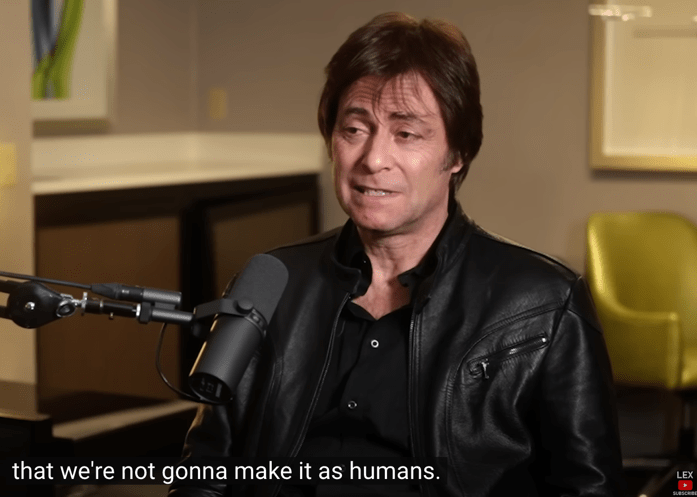
As superintelligence moves from a thought experiment to an urgently looming existential crisis, many leading analysts who have studied these issues for decades are extraordinarily terrified and trying to raise the alarm before it’s too late. MIT professor Max Tegmark, a highly respected physicist and president of the Future of Life Institute, considers this our “Don’t Look Up” moment, referring to the satirical movie in which an asteroid threatens life on Earth with extinction, but a plan to save the planet is waylaid by corporate interests and the public’s inability to turn their attention away from celebrity gossip. In an intimate podcast interview, Tegmark likens our situation to receiving a terminal cancer diagnosis for the entire human race, declaring that “there’s a pretty large chance that we’re not going to make it as humans; that there won’t be any humans on the planet in the not-too-distant future—and that makes me very sad.”

MIT Professor Mag Tegmark sharing his fears about human extinction from AI

Tegmark’s fear is shared by other leading experts. Eliezer Yudkowsky, who has been working on aligning AGI since 2001 and is widely regarded as a founder of the field, points out that “a sufficiently intelligent AI won’t stay confined to computers for long. In today’s world you can email DNA strings to laboratories that will produce proteins on demand, allowing an AI initially confined to the internet to build artificial life forms or bootstrap straight to postbiological molecular manufacturing.” Yudkowsky calls for an immediate and indefinite worldwide moratorium on further AI development, enforced by coordinated international military action if necessary.

In the short-term, there are several policy proposals urged by leaders in the AI community to try to rein in some of the more obvious societal disruptions anticipated by AI’s increasingly pervasive influence. An open letter calling for a pause on further development for at least six months has over thirty thousand signatories, including many of the most prominent names in the field. Beyond a worldwide moratorium, proposals include a requirement that any AI-generated material is clearly labeled as such; a stipulation that all new AI source code is published to enable transparency; and a legal presumption that new versions of AI are unsafe unless proven otherwise, putting the burden of proof on AI developers to demonstrate its safety prior to its deployment—analogous to the legal framework used in the pharmaceutical industry.

These proposals are eminently sensible and should promptly be enacted by national governments, while a UN-sponsored international panel of AI experts should be appointed to recommend further guidelines for worldwide adoption. Ultimately, the overarching strategy of such guidelines should be to restrict the further empowerment of AI unless or until the alignment problem itself can be satisfactorily solved.

There is, however, a serious misconception seemingly shared by the vast majority of AI theorists that must be recognized and corrected for any serious progress to be made in the alignment problem. This relates to the nature of intelligence itself. Until a deeper understanding of what comprises intelligence is more widely embraced in the AI community, we are in danger, not just of failing to resolve the alignment problem, but of moving in the wrong direction in its consideration.

Conceptual and animate intelligence

When AI theorists write about intelligence, they frequently start from the presumption that there is only one form of intelligence: the kind of analytical intelligence that gets measured in an IQ test and has enabled the human species to dominate the rest of the natural world—and the type in which AI now threatens to surpass us. The AI community is not alone in this presumption—it is shared by most people in the modern world, and forms a central part of the mainstream view of what it means to be a human being. When Descartes declared “cogito ergo sum”—“I think, therefore I am”—setting the intellectual foundation for modern philosophical thought, he was giving voice to a presumption that the faculty of conceptual thought was humanity’s defining characteristic, setting humanity apart from all other living beings. Animals, according to Descartes and the majority of scientists ever since, were mere machines acting without subjectivity or thought.[2]

However, the human conceptualizing faculty, powerful as it is, is only one form of intelligence. There is another form—animate intelligence—that is an integral part of human cognition, and which we share with the rest of life on Earth.

If we understand intelligence, as it’s commonly defined, to be the ability to perceive or infer information and apply it toward adaptive behaviors, intelligence exists everywhere in the living world. It’s relatively easy to see it in high-functioning mammals such as elephants that can communicate through infrasound over hundreds of miles and perform what appear like ceremonies over the bones of dead relatives; or in cetaceans that communicate in sophisticated “languages” and are thought to “gossip” about community members that are absent.[3] But extensive animate intelligence has also been identified in plants which, in addition to their own versions of our five senses, also use up to fifteen other ways to sense their environment. Plants have elaborate internal signaling systems, utilizing the same chemicals—such as serotonin or dopamine—that act as neurotransmitters in humans; and they have been shown to act intentionally and purposefully: they have memory and learn, they communicate with each other, and can even allocate resources as a community.[4]

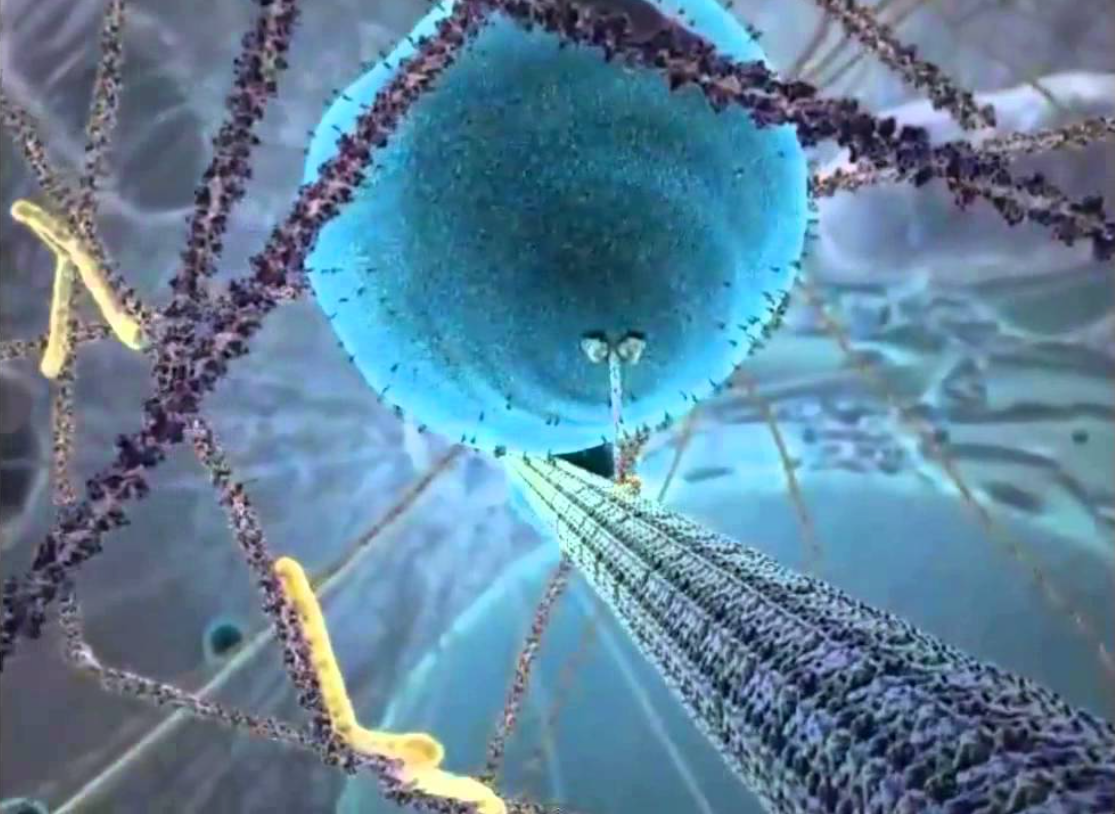
Animate intelligence can be discerned even at a cellular level: a single cell has thousands of sensors protruding through its outer membrane, controlling the flow of specific molecules, either pulling them in or pushing them out depending on what’s needed. Cells utilize fine-tuned signaling mechanisms to communicate with others around them, sending and receiving hundreds of signals at the same time. Each cell must be aware of itself as a self: it “knows” what is within its membrane and what is outside; it determines what molecules it needs, and which ones to discard; it knows when something within it needs fixing, and how to get it done; it determines what genes to express within its DNA, and when it’s time to divide and thus propagate itself. In the words of philosopher of biology Evan Thompson, “Where there is life there is mind.”[5]

A cell has a rich and complex inner life. Source: “The Inner Life of the Cell” animation – Harvard MCB | BioVisions Lab

When leading cognitive neuroscientists investigate human consciousness, they make a similar differentiation between two forms of consciousness which, like intelligence, can also be classified as conceptual and animate. For example, Nobel Prize winner Gerald Edelman distinguished between what he called primary (animate) and secondary (conceptual) consciousness, while world-renowned neuroscientist Antonio Damasio makes a similar distinction between what he calls core and higher-order consciousness. Similarly, in psychology, dual systems theory posits two forms of human cognition—intuitive and analytical—described compellingly in Daniel Kahneman’s bestseller Thinking Fast and Slow, which correspond to the animate and conceptual split within both intelligence and consciousness.[6]

Toward an integrated intelligence

An implication of this increasingly widespread recognition of the existence of both animate and conceptual intelligence is that the Cartesian conception of intelligence as solely analytical—one that’s shared by a large majority of AI theorists—is dangerously limited.

Even human conceptual intelligence has been shown to emerge from a scaffolding of animate consciousness. As demonstrated convincingly by cognitive linguist George Lakoff, the abstract ideas and concepts we use to build our theoretical models of the world actually arise from metaphors of our embodied experience of the world—high and low, in and out, great and small, near and close, empty and full. Contrary to the Cartesian myth of a pure thinking faculty, our conceptual and animate intelligences are intimately linked.

By contrast, machine intelligence really is purely analytical. It has no scaffolding linking it to the vibrant sentience of life. Regardless of its level of sophistication and power, it is nothing other than a pattern recognition device. AI theoreticians tend to think of intelligence as substrate independent—meaning that the set of patterns and linkages comprising it could in principle be separated from its material base and exactly replicated elsewhere, such as when you migrate the data from your old computer to a new one. That is true for AI, but not for human intelligence.[7]

The dominant view of humanity as defined solely by conceptual intelligence has contributed greatly to the dualistic worldview underlying many of the great predicaments facing society today. The accelerating climate crisis and ecological havoc being wreaked on the natural world ultimately are caused, at the deepest level, by the dominant instrumentalist worldview that sees humans as essentially separate from the rest of nature, and nature as nothing other than a resource for human consumption.

Once, however, we recognize that humans possess both conceptual and animate intelligence, this can transform our sense of identity as a human being. The most highly prized human qualities, such as compassion, integrity, or wisdom, arise not from conceptual intelligence alone, but from a complex mélange of thoughts, feelings, intuitions, and felt sensations integrated into a coherent whole. By learning to consciously attune to the evolved signals of our animate consciousness, we can develop an integrated intelligence: one that incorporates both conceptual and animate fully into our own identity, values, and life choices.

Once we embrace our own animate intelligence, it’s natural to turn our attention outward and appreciate the animate intelligence emanating from all living beings. Acknowledging our shared domain of intelligence with the rest of life can lead to a potent sense of being intimately connected with the animate world. If conceptual intelligence is a cognitive peak of specialization that distinguishes us from other animals, it is our animate intelligence that extends throughout the rest of the terrain of existence, inviting a shared collaboration with all of life.

Other cultures have long possessed this understanding. Traditional Chinese philosophers saw no essential distinction between reason and emotion, and used a particular word, tiren, to refer to knowing something, not just intellectually, but throughout the entire body and mind­. In the words of Neo-Confucian sage Wang Yangming, “The heart-mind is nothing without the body, and the body is nothing without the heart-mind.”[8] Indigenous cultures around the world share a recognition of their deep relatedness to all living beings, leading them to conceive of other creatures as part of an extended family.[9] For Western culture, however, which is now the globally dominant source of values, this orientation toward integrated intelligence is rare but acutely needed.

Aligning with integration

These distinctions, theoretical as they might appear, have crucially important implications as we consider the onset of advanced artificial intelligence and how to wrestle with the alignment problem. Upon closer inspection, the alignment problem turns out to be a conflation of two essentially different problems: The question of how to align AI with human flourishing presupposes an underlying question of what is required for human flourishing in the first place. Without a solid foundation laying out the conditions for human wellbeing, the AI alignment question is destined to go nowhere.

Fortunately, much work has already been accomplished on this topic, and it points to human flourishing arising from our identity as a deeply integrated organism incorporating both conceptual and animate consciousness. The seminal work of Chilean economist Manfred Max-Neef sets out a comprehensive taxonomy of fundamental human needs, incorporating ten core requirements such as subsistence, affection, freedom, security, and participation, among others. While these needs are universal, they may be satisfied in myriad ways depending on particular historical and cultural conditions. Furthermore, as Earth system scientists have convincingly demonstrated, human systems are intimately linked with larger biological and planetary life-support systems. Sustained human wellbeing requires a healthy, vibrant living Earth with intact ecosystems that can readily replenish their own abundance.[10]

What, we might ask, might an AI look like that was programmed to align with the principles that could enable all life, including human civilization, to flourish on a healthy Earth?

When we consider, however, how far the requirements for flourishing are from being met by the vast majority of humans across wide swaths of the world today, this brings to light that the alignment problem is not, in fact, limited to the domain of AI, but is rather a fundamental issue underlying the economic and financial system that runs our modern world. As I’ve discussed elsewhere, global capitalism, as manifested in the limited liability corporation, may itself be understood as an embryonic form of misaligned AI: one where the overriding goal of maximizing shareholder value has ridden roughshod over fundamental human needs, and has led to the current metacrisis emanating from a confluence of rising inequality, runaway technology, climate breakdown, and accelerating ecological devastation. In this respect, as pointed out by social philosopher Daniel Schmachtenberger, advanced AI can be viewed as an accelerant of the underlying causes of the metacrisis in every dimension.

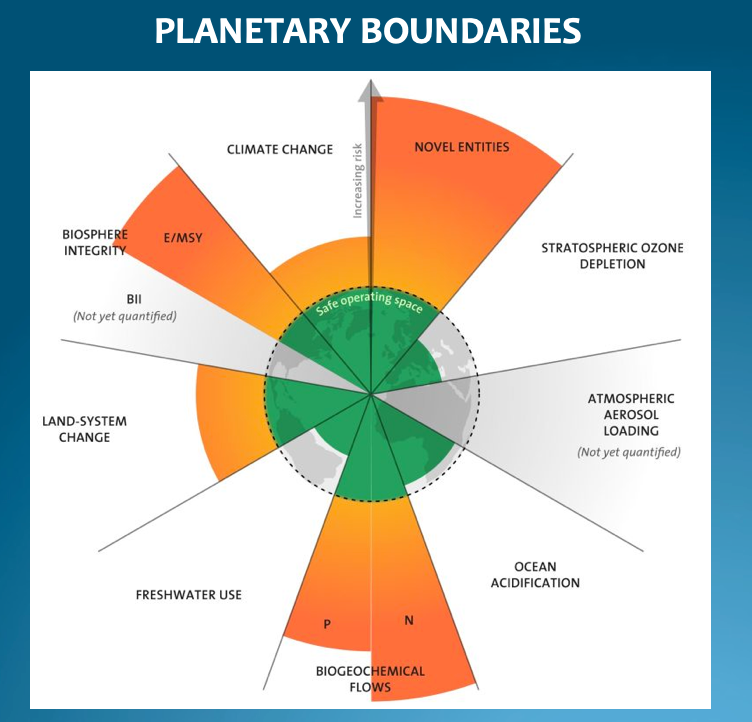
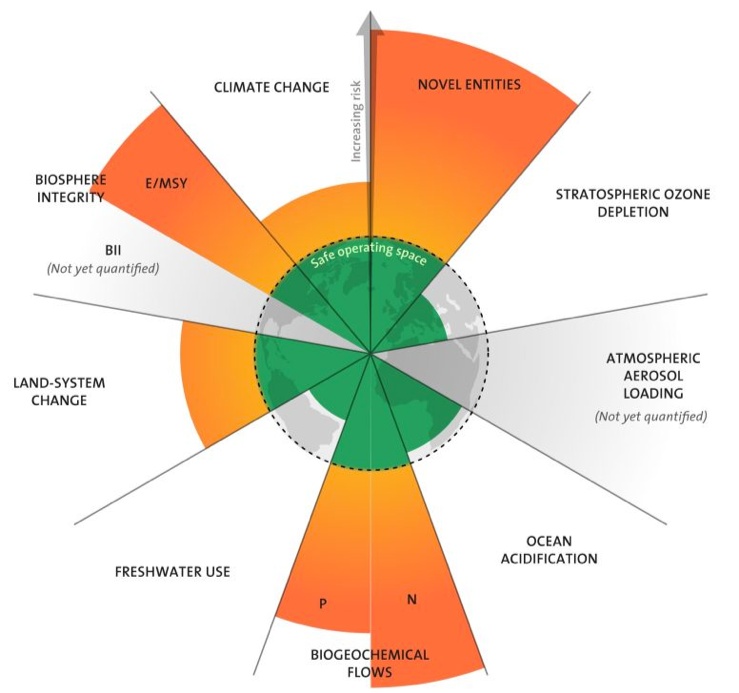
Our misaligned economic system has caused us to break through planetary boundaries. Source: Johan Rockström, et al., “A Safe Operating Space for Humanity,” Nature 461 (2009): 472–75.

Emerging from this dark prognostication, there is a silver lining affording some hope for a societal swerve toward a life-affirming future. When analysts consider the great dilemmas facing humanity today, they frequently describe them as “wicked problems”: tangles of highly complex interlinked challenges lacking well-defined solutions and emerging over time frames that don’t present as clear emergencies to our cognitive systems which evolved in the savannah to respond to more immediate risks. As an accelerant of the misalignment already present in our global system, might the onset of advanced AI, with its clear and present existential danger, serve to wake us up, as a collective human species, to the unfolding civilizational disaster that is already looming ahead? Might it jolt us as a planetary community to reorient toward the wisdom available in traditional cultures and existing within our own animate intelligence?

It has sometimes been said that what is necessary to unite humanity is a flagrant common threat, such as a hypothetical hostile alien species arriving on Earth threating us with extinction. Perhaps that moment is poised to arrive now—with an alien intelligence emerging from our own machinations. If there is real hope for a positive future, it will emerge from our understanding that as humans, we are both conceptual and animate beings, and are deeply connected with all of life on this precious planet—and that collectively we have the capability of developing a truly integrative civilization, one that sets the conditions for all life to flourish on a regenerated Earth.


Jeremy Lent is author of the award-winning books, The Patterning Instinct: A Cultural History of Humanity’s Search for Meaning, and The Web of Meaning: Integrating Science and Traditional Wisdom to Find Our Place in the Universe. He is the founder of the Deep Transformation Network.


[1] Vinge, V. (1993). “What is The Singularity?” VISION-21 Symposium(March 30, 1993); http://en.wikipedia.org/wiki/I._J._Good.

[2] For an in-depth discussion of this historical process, see my book The Web of Meaning: Integrating Science and Traditional Wisdom to Find Our Place in the Universe, Chapter 3.

[3] Carl Safina, Beyond Words: What Animals Think and Feel (New York: Henry Holt and Co., 2015), pp. 92, 211, 236–7; Lucy A. Bates, Joyce H. Poole, and Richard W. Byrne, “Elephant Cognition,” Current Biology 18, no. 13 (2008): 544–46; Kieran C. R. Fox, Michael Muthukrishna, and Susanne Shultz, “The Social and Cultural Roots of Whale and Dolphin Brains,” Nature Ecology & Evolution 1, November (2017): 1699–705; Katharina Kropshofer, “Whales and Dolphins Lead ‘Human-Like Lives’ Thanks to Big Brains, Says Study,” The Guardian, 16 October, 2017.

[4] Paco Calvo, et al., “Plants Are Intelligent, Here’s How,” Annals of Botany 125 (2020): 11–28; Eric D. Brenner et al., “Plant Neurobiology: An Integrated View of Plant Signaling,” Trends in Plant Science 11, no. 8 (2006): 413–19; Anthony Trewavas, “What Is Plant Behaviour?”, Plant, Cell and Environment 32 (2009): 606–16; Stefano Mancuso, The Revolutionary Genius of Plants: A New Understanding of Plant Intelligence and Behavior (New York: Atria Books, 2018; Suzanne W. Simard, et al., “Net Transfer of Carbon between Ectomycorrhizal Tree Species in the Field,” Nature 388 (1997): 579–82; Yuan Yuan Song, et al., “Interplant Communication of Tomato Plants through Underground Common Mycorrhizal Networks,” PLoS Biology 5, no. 10 (2010): e13324.

[5] Boyce Rensberger, Life Itself: Exploring the Realm of the Living Cell (New York: Oxford University Press, 1996), pp. 62–6; Brian J. Ford, “Revealing the Ingenuity of the Living Cell,” Biologist 53, no. 4 (2006): 221–24; Brian J. Ford, “On Intelligence in Cells: The Case for Whole Cell Biology,” Interdisciplinary Science Reviews 34, no. 4 (2009): 350-65; Evan Thompson, Mind in Life: Biology, Phenomenology, and the Sciences of Mind (Cambridge, MA: Harvard University Press, 2007), p. ix.

[6] Gerald M. Edelman, and Giulio Tononi, A Universe of Consciousness: How Matter Becomes Imagination (New York: Basic Books, 2000); Antonio Damasio, The Feeling of What Happens: Body and Emotion in the Making of Consciousness (New York: Harcourt Inc., 1999); Daniel Kahneman, Thinking Fast and Slow (New York: Farrar, Straus & Giroux, 2011).

[7] For a lucid explanation of why human intelligence is not substrate independent, see Antonio Damasio, The Strange Order of Things: Life, Feeling, and the Making of Cultures (New York: Pantheon 2018), pp. 199–208.

[8] Donald J. Munro, A Chinese Ethics for the New Century: The Ch’ien Mu Lectures in History and Culture, and Other Essays on Science and Confucian Ethics (Hong Kong: The Chinese University Press, 2005), p. 24; Yu, N. (2007). “Heart and Cognition in Ancient Chinese Philosophy.” Journal of Cognition and Culture, 7(1-2), 27-47. For an extensive discussion of the integrative nature of traditional Chinese thought, see my book The Patterning Instinct: A Cultural History of Humanity’s Search for Meaning (Amherst, NY: Prometheus, 2017), chapters 9 and 14.

[9] Four Arrows (Don Trent Jacobs), and Darcia Narvaez, Restoring the Kinship Worldview: Indigenous Voices Introduce 28 Precepts for Rebalancing Life on Planet Earth (Berkeley, CA: North Atlantic Books, 2022).

[10] Max-Neef, M.A., 1991. Human Scale Development: Conception, Application and Further Reflections. Zed Books, New York; Johan Rockström, et al., “A Safe Operating Space for Humanity,” Nature 461 (2009): 472–75; William J. Ripple, et al., “World Scientists’ Warning to Humanity: A Second Notice,” BioScience 67, no. 12 (2017): 1026–28.

How Corporate Dominance Is Driving Civilization to a Precipice

The neoliberal ideology of unrestrained markets has led to a global crisis. Humanity now faces an existential threat as the result of global dominance by corporations, whose ultimate goal is at odds with human flourishing.


Originally published March 14, 2022 in Inside Over as “The world on the brink of the abyss. Looking at the real danger.”


Back in 1947, as the world was rebuilding from the destruction of the Second World War, a few dozen free-market ideologues met in a luxury Swiss resort to form the Mont Pelerin Society—an organization devoted to spreading the ideology of neoliberalism throughout the world. Their ideas—that the free market should dominate virtually all aspects of society, that regulations should be dismantled, and that individual liberty should eclipse all other considerations of fairness, equity, or community welfare—were considered fanatical at the time. Over three decades, though, financed by wealthy donors, they assiduously established networks of academics, businessmen, economists, journalists, and politicians in global centers of power.

When the stagflation crisis of the 1970s threw classic Keynesian economics into disrepute, their moment of opportunity arrived. By 1985, with free market disciples Ronald Reagan and Margaret Thatcher entrenched in power, they initiated a campaign to systematically transform virtually all aspects of life into an unrestrained marketplace, where everything could be bought and sold to the highest bidder, subject to no moral scruple. They crippled trade unions, tore up social safety nets, reduced tax rates for the wealthy, eliminated regulations, and instituted a massive transfer of wealth from society at large to the uber-elite.

Ronald Reagan and Margaret Thatcher helped initiate the neoliberal takeover of global politics, economics, and media. (Photo by Ron Galella/WireImage)

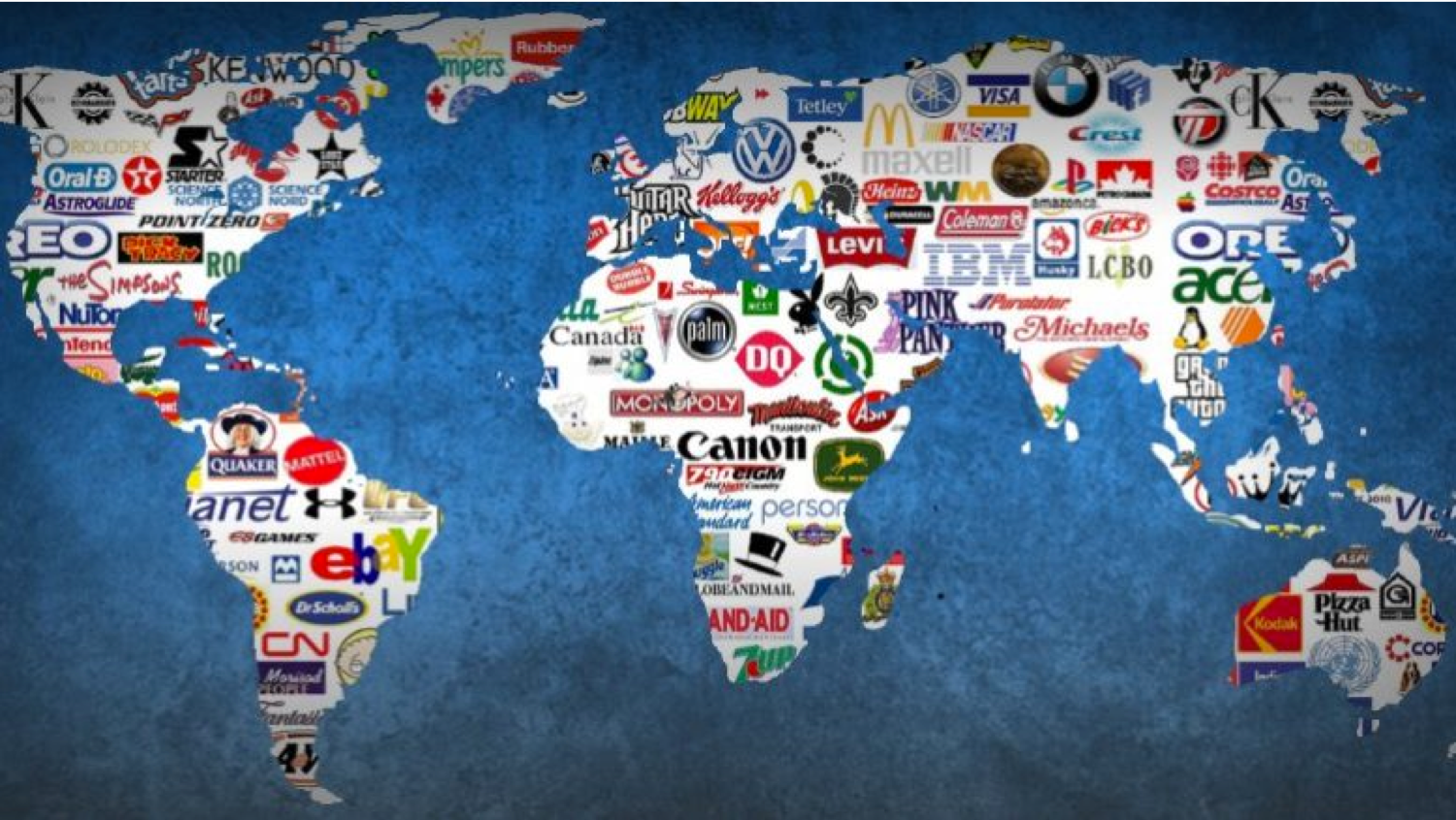
Through their control of government, finance, business, and media, neoliberal adherents have succeeded in transforming the world into a globalized market-based system. The triumph of neoliberalism has led to the greatest inequality in history, where the world’s twenty-six richest people own as much wealth as half the entire world’s population. It also created the conditions for large transnational corporations to become the dominant force directing our world, more powerful than any government or nation. Through their influence on legislation, they have virtually eliminated regulatory limitations on their growth, their permissible industries, or their competitive playing field. Massive corporations are gobbled up by even vaster ones, creating commanding monoliths that set the terms for their own activities. Of the hundred largest economies in the world, sixty-nine are now corporations.

In today’s corporate-dominated global stage, nations and municipalities compete against each other to attract corporate investment to their region, relinquishing taxation, regulations, and worker protections in the hope of jobs or infrastructure spending. In most countries, the boundaries between corporate executives and government have become so blurred as to be virtually nonexistent. Transnational corporations control most of the world’s finance, manufacturing, agriculture, and trade, and are routinely invited to intervene in international treaty negotiations, ensuring that their interests remain protected.

Sixty-nine out of the hundred largest economies in the world are for-profit corporations

A new moniker arising from the corporate titans at the World Economic Forum is “stakeholder capitalism”: an inviting term that seems to imply that stakeholders other than investors will play a role in setting corporate priorities, but actually refers to a profoundly anti-democratic process whereby corporations are assuming even more dominant roles in global governance. This month, the UN Food Systems Summit was essentially taken over by the same giant corporations, including Nestlé and Bayer, that are largely responsible for the very problems the summit was intended to grapple with — which led to a widespread boycott by hundreds of civil society and Indigenous groups.

If this supreme global force had benevolent aims, then at least a case could be made for permitting it to retain such control over human activity. But the opposite is true. The common goal of corporations around the world is to monetize human activity and what’s left of nature’s abundance as rapidly and efficiently as possible. The overriding purpose of the world’s most powerful institutional force is thus directly at odds with a flourishing Earth or a viable future for humanity.

A fundamental reason for the rapacious behavior of transnational corporations is their drive to maximize shareholder value above anything else. While there is no explicit requirement for this in the standard corporate charter, a century of case law has entrenched this principle into the behavior of large corporations to the point that is has become the de facto standard of operation. As a result, if corporations were people, they would be considered psychopaths, utterly devoid of any caring for the harm they cause in the pursuit of their goals.

This relentless pursuit of profit and economic growth above all else has propelled human civilization onto a terrifying trajectory. The uncontrolled climate crisis is the most obvious danger: The world’s current policies have us on track for more than 3° C increase by the end of this century, and climate scientists publish dire warnings that amplifying feedbacks could make things far worse than even these projections, and thus place at risk the very continuation of our civilization.

But even if the climate crisis were somehow brought under control, a continuation of untrammeled economic growth in future decades will bring us face-to-face with a slew of further existential threats. Currently, our civilization is running at 40% above its sustainable capacity. We’re rapidly depleting the earth’s forestsanimalsinsectsfishfreshwater, even the topsoil we require to grow our crops. We’ve already transgressed five of the nine planetary boundaries that define humanity’s safe operating space, and yet global GDP is expected to more than double by mid-century, with potentially irreversible and devastating consequences.

We have already transgressed five of the nine planetary boundaries defining humanity’s safe operating space.

The corporate takeover of humanity is so all-encompassing that it’s become difficult to visualize any other possible global system. Alternatives do, however, exist. Around the world, worker-owned cooperatives have demonstrated that they can be as effective as corporations—or more so—without pursuing shareholder wealth as their primary consideration. The Mondragon cooperative in Spain, with revenues exceeding €12 billion, shows how this form of organization can efficiently scale.

There are also legal and structural changes that can be made to corporations to realign their value system with human welfare. The pathology of shareholder value maximization could be addressed by requiring their charters to be converted to a triple bottom line of people, planet, and profits, and subject to rigorous enforcement powers. This alternative corporate value system is already available through chartering as a benefit corporation or certifying as a B-Corp. Since it is voluntary, however, it has had virtually no impact on a broader scale. If, instead the triple bottom line were a requirement for all corporations above a certain size, and strictly enforced, it would rapidly lead to a profound shift in corporate priorities.

The idea of restraining corporate domination of our society may seem daunting in the current global political environment. It must, however, begin with the clear and explicit recognition that the overarching goal of corporations is currently at odds with a healthy Earth and the future flourishing of humanity. The neoliberal model that has led our global civilization to the precipice of disaster must be supplanted by a different economic system based on life-affirming values before it’s too late.


Jeremy Lent is an author and speaker whose work investigates the underlying causes of our civilization’s existential crisis, and explores pathways toward a life-affirming future. His two recent books are The Patterning Instinct: A Cognitive History of Humanity’s Search for Meaning and The Web of Meaning: Integrating Science and Traditional Wisdom to Find Our Place in the Universe. More information: https://www.jeremylent.com/

Solving the Climate Crisis Requires the End of Capitalism

It’s time to face the fact that resolving the climate crisis will require a fundamental shift away from our growth-based, corporate-dominated global system.


Originally published October 9, 2021 in Salon


The global conversation regarding climate change has, for the most part, ignored the elephant in the room. That’s strange, because this particular elephant is so large, obvious, and all-encompassing that politicians and executives must contort themselves to avoid naming it publicly. That elephant is called capitalism, and it is high time to face the fact that, as long as capitalism remains the dominant economic system of our globalized world, the climate crisis won’t be resolved.

As the crucial UN climate talks known as COP26 approach in early November, the public is becoming increasingly aware that the stakes have never been higher. What were once ominous warnings of future climate shocks wrought by wildfires, floods, and droughts have now become a staple of the daily news. Yet governments are failing to meet their own emissions pledges from the Paris agreement six years ago, which were themselves acknowledged to be inadequate. Increasingly, respected Earth scientists are warning, not just about the devastating effects of climate breakdown on our daily lives, but about the potential collapse of civilization itself unless we drastically change direction.

The elephant in the room

And yet, even as humanity faces perhaps the greatest existential crisis in its species’ history, the public debate on climate barely mentions the underlying economic system that brought us to this point and which continues to drive us toward the precipice. Ever since its emergence in the seventeenth century, with the creation of the first limited liability shareholder-owned corporations, capitalism has been premised on viewing the planet as a resource to exploit — its overriding objective to maximize profits from that exploitation as rapidly and extensively as possible. Current mainstream strategies to resolve our twin crises of climate breakdown and ecological overshoot without changing the underlying system of growth-based global capitalism are structurally inadequate.

The public debate on climate ignores the elephant in the room. (Credit: Forbes | Roger Dean Duncan)

The idea of “green growth” is promulgated by many development consultants, and is even incorporated in the UN’s official plan for “sustainable development,” but has been shown to be an illusion. Ecomodernists, and others who stand to profit from growth in the short-term, frequently make the argument that, through technological innovation, aggregate global economic output can become “absolutely decoupled” from resource use and carbon emissions — permitting limitless growth on a finite planet. Careful rigorous analysis, though, shows that this hasn’t happened so far, and even the most wildly aggressive assumptions for greater efficiency would still lead to unsustainable consumption of global resources.

The primary reason for this derives ultimately from the nature of capitalism itself. Under capitalism — which has now become the default global economic context for virtually all human enterprise — efficiency improvements intended to reduce resource usage inevitably become launchpads for further exploitation, leading paradoxically to an increase, rather than decrease, in consumption.

This dynamic, known as the Jevons paradox, was first recognized back in the nineteenth century by economist William Stanley Jevons, who demonstrated how James Watts’ steam engine, which greatly improved the efficiency of coal-powered engines, paradoxically caused a dramatic increase in coal consumption even while it decreased the amount of coal required for any particular application. The Jevons paradox has since been shown to be true in an endless variety of domains, from the invention in the nineteenth century of the cotton gin which led to an increase rather than decrease in the practice of slavery in the American South, to improved automobile fuel efficiency which encourages people to drive longer distances.

When the Jevons paradox is generalized to the global marketplace, we begin to see that it’s not really a paradox at all, but rather an inbuilt defining characteristic of capitalism. Shareholder-owned corporations, as the primary agents of global capitalism, are legally structured by the overarching imperative to maximize shareholder returns above all else. Although they are given the legal rights of “personhood” in many jurisdictions, if they were actually humans they would be diagnosed as psychopaths, ruthlessly pursuing their goal without regard to any collateral damage they might cause. Of the hundred largest economies today, sixty-nine are transnational corporations, which collectively represent a relentless force with one overriding objective: to turn humanity and the rest of life into fodder for endlessly increasing profit at the fastest possible rate.

Under global capitalism, this dynamic holds true even without the involvement of transnational corporations. Take bitcoin as an example. Originally designed after the global financial meltdown of 2008 to wrest monetary power from the domination of central banks, it relies on building trust through “mining,” a process that allows anyone to verify a transaction by solving increasingly complex mathematical equations and earn new bitcoins as compensation. A great idea — in theory. In practice, the unfettered marketplace for bitcoin mining has led to frenzied competition to solve ever more complex equations, with vast warehouses holding “rigs” of advanced computers consuming massive amounts of electricity, with the result that the carbon emissions from bitcoin processing are now equivalent to that of a mid-size country such as Sweden or Argentina.

An economy based on perpetual growth

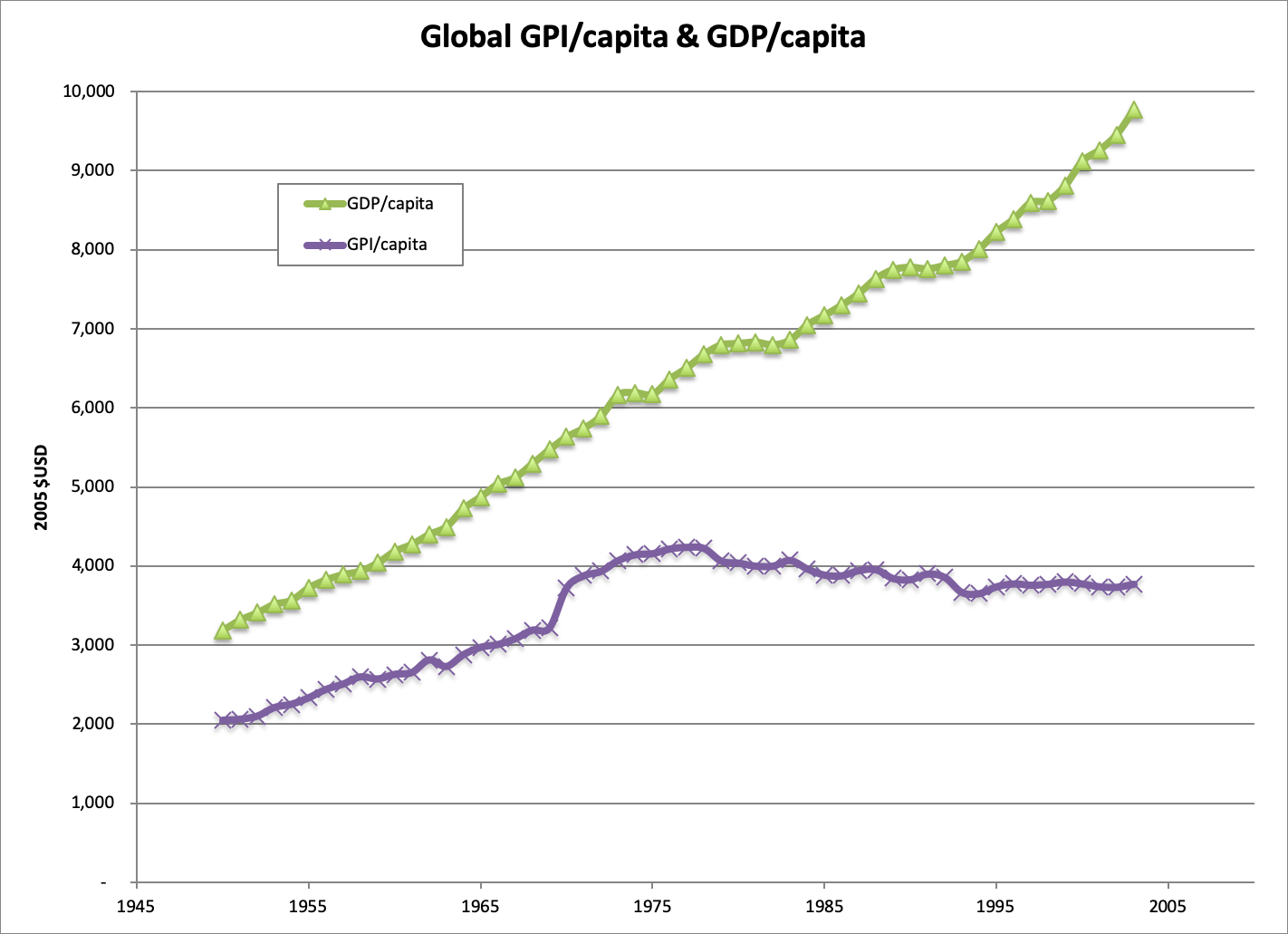
The relentless pursuit of profit growth above all other considerations is reflected in the world’s stock markets, where corporations are valued not by their benefit to society, but by investors’ expectations of their growth in future earnings. Similarly, when aggregated to national accounts, the main proxy used to measure the performance of politicians is growth in Gross Domestic Product (GDP). Although it is commonly assumed that GDP correlates with social welfare, this is not the case once basic material requirements have been met. GDP merely measures the rate at which society transforms nature and human activity into the monetary economy, regardless of the ensuing quality of life. Anything that causes economic activity of any kind, whether good or bad, adds to GDP. When researchers developed a benchmark called the Genuine Progress Indicator (GPI), which incorporates qualitative components of well-being, they discovered a dramatic divergence between the two measures. GPI peaked in 1978 and has been steadily falling ever since, even while GDP continues to accelerate.

Since 1978, Genuine Progress has been falling even while GDP continues to increase. Credit: Kubiszewski et al., Beyond GDP: Measuring and achieving global genuine progress

In spite of this, the possibility of shifting our economy away from perpetual growth is barely even considered in mainstream discourse. In preparation for COP26, the UN’s Intergovernmental Panel on Climate Change (IPCC) modeled five scenarios exploring potential pathways that would lead to different global heating outcomes this century, ranging from an optimistic 1.5°C pathway to a likely catastrophic 4.5°C track. One of their most critical variables is the amount of carbon reduction accomplished through negative emissions, relying on massive implementation of unproven technologies. According to the IPCC, staying under 2°C of global heating — consistent with the minimum target set by the 2015 Paris agreement — involves a heroic assumption that we will suck 730 billion metric tonnes of carbon out of the atmosphere this century. This stupendous amount is equivalent to roughly twenty times the total current annual emissions from all fossil fuel usage. Such an assumption is closer to science fiction than any rigorous analysis worthy of a model on which our civilization is basing its entire future. Yet, even as the IPCC appears willing to model humanity’s fate on a pipe dream, not one of their scenarios explores what is possible from a graduated annual reduction in global GDP. Such a scenario was considered by the IPCC community to be too implausible to consider.

This represents a serious lapse on the part of the IPCC. Climate scientists who have modeled planned reductions in GDP show that keeping global heating below 1.5°C this century is potentially within reach under this scenario, with greatly reduced reliance on speculative carbon reduction technologies. Prominent economists have shown that a carefully managed “post-growth” plan could lead to enhanced quality of life, reduced inequality, and a healthier environment. It would, however, undermine the foundational activity of capitalism — the pursuit of endless growth that has led to our current state of obscene inequality, impending ecological collapse, and climate breakdown.

The profit-based path to catastrophe

As long as this elephant in the room remains unspoken, our world will continue to careen toward catastrophe, even as politicians and technocrats shift from one savior narrative to another. Along with the myth of “green growth,” we are told that a solution lies in putting monetary valuations on “ecosystem services” and incorporating them into business decisions — even though this approach has been shown to be deeply flawed, frequently counterproductive, and ultimately self-defeating. A wetlands, for example, might have value in protecting a city from flooding. However, if it were drained and a swanky new resort built on the reclaimed land, this could be more lucrative. Case closed.

The new moniker arising from the corporate titans at the World Economic Forum is “stakeholder capitalism”: an inviting term that seems to imply that stakeholders other than investors will play a role in setting corporate priorities, but actually refers to a profoundly anti-democratic process whereby corporations assume increasingly large roles in global governance. This month, the UN Food Systems Summit was essentially taken over by the same giant corporations, including Nestlé and Bayer, that are largely responsible for the very problems the summit was intended to grapple with — which led to a widespread boycott by hundreds of civil society and Indigenous groups.

The UN Food Systems Summit was essentially controlled by corporate interests. Source: Food Systems 4 People

As net-zero targets decades away are formally announced at COP26, built implicitly on a combination of corporate procrastination and speculative technologies, we can only expect the climate crisis to continue to worsen. Ultimately, as negative emissions technologies fail to meet their grandiose expectations, the same voices that currently promote reliance on them will lend support to the techno-dystopian idea of geoengineering — vast, planet-altering engineering projects designed to temporarily manipulate the climate to defer a climate apocalypse. A leading geoengineering candidate, financed by Bill Gates, involves spraying particles into the stratosphere to cool the Earth by reflecting the Sun’s rays back into space. The risks are enormous, including the likelihood of causing extreme shifts in precipitation around the world. Additionally, once begun, it could never be stopped without immediate catastrophic rebound heating; it would not prevent the oceans from further acidifying; and may turn the blue sky into a perpetual dull haze. In spite of these concerns, geoengineering is beginning to get discussed at UN meetings, with publications such as The Economist predicting that, since it wouldn’t disrupt continued economic growth, it’s more likely to be implemented than the drastic, binding cuts in emissions that would head off climate disaster.

There is an alternative

Why is the elephant in the room so rarely mentioned in mainstream discourse? One reason is that, since the collapse of communism and the parallel rise of neoliberalism beginning in the 1980s, it is assumed that “there is no alternative,” as Margaret Thatcher famously declared. Even committed green advocates, such as the Business Green group, are quick to dismiss criticism of our growth-based economic system as “knee-jerk anti-capitalist agitprop.” But the conventional dichotomy between capitalism and socialism, to which such conversations inevitably devolve, is no longer helpful. Old-fashioned socialism was just as poised to consume the Earth as capitalism, differing primarily in how the pie should be carved up.  

There is, however, an alternative. A wide range of progressive thinkers are exploring the possibilities of replacing our destructive global economic system with one that offers potential for sustainability, greater fairness, and human flourishing. Proponents of degrowth show that it is possible to implement a planned reduction of energy and resource use while reducing inequality and improving human well-being. Economic models, such as Kate Raworth’s “doughnut economics” offer coherent substitutes for the classical outdated framework that ignores fundamental principles of human nature and humanity’s role within the Earth system. Meanwhile, large-scale cooperatives, such as Mondragon in Spain, demonstrate that it’s possible for companies to provide effectively for human needs without utilizing a shareholder-based profit model.

Another reason people give for ignoring the elephant in the room, even when they know it’s there, is that we don’t have time for structural change. The climate emergency is already upon us, and we need to focus on actions that can occur right now. This is true, and nothing in this article should be taken as a reason to avoid the drastic and immediate changes required in business and consumer practices. Indeed, they are necessary — but insufficient. Ultimately, our global civilization must begin a transformation to one that is based not on building wealth through extraction, but on foundational principles that could create the conditions for long-term flourishing on a regenerated Earth — an ecological civilization.

Indigenous people on the frontline of the climate emergency desperately need support. Image: Amazon Watch | Kamikia Kisedje

Even in the short term, there are innumerable steps that can be taken to steer our civilization toward a life-affirming trajectory. Around the world Indigenous people on the frontline of the climate emergency desperately need support in defending the biodiverse ecosystems in which they are embedded against assaults from extractive corporations. A growing campaign is under way to make the wholesale destruction of natural living systems a criminal act by establishing a law of ecocide—prosecutable like genocide under the International Criminal Court. The powers of transnational corporations themselves need to be addressed, ultimately by requiring their charters to be converted to a triple bottom line of people, planet, and profits, and subject to rigorous enforcement powers.

The transformation we need may take decades, but the process must begin now with the clear and explicit recognition that capitalism itself needs to be supplanted by a system based on life-affirming values. Don’t expect to see any discussion of these issues in the formal proceedings of COP26. But, turn your attention outside the hallowed halls and you’ll hear the voices of those who are standing up for life’s continued flourishing on Earth. It’s only when their ideas are discussed seriously in the main chambers of a future COP that we can begin to hold authentic hope that our civilization may finally be turning away from the precipice toward which it is currently accelerating.


Jeremy Lent is an author and speaker whose work investigates the underlying causes of our civilization’s existential crisis, and explores pathways toward a life-affirming future. His recently published book is The Web of Meaning: Integrating Science and Traditional Wisdom to Find Our Place in the Universe. Website: jeremylent.com.

The Future Is Not a Spectator Sport

Like all self-organized, adaptive systems, society moves in nonlinear ways. Even as our civilization unravels, a new ecological worldview is spreading globally. Will it become powerful enough to avert a cataclysm? None of us knows. Perhaps the Great Transition to an ecological civilization is already under way, but we can’t see it because we’re in the middle of it. We are all co-creating the future as part of the interconnected web of collective choices each of us makes: what to ignore, what to notice, and what to do about it.

Excerpted from The Web of Meaning: Integrating Science and Traditional Wisdom to Find Our Place in the Universe (published in June in the UK, and available July 13 in the US).

The nonlinearity of history

There are many good reasons to watch the unfolding catastrophe of our civilization’s accelerating drive to the precipice and believe it’s already too late. The unremitting increase in carbon emissions, the ceaseless devastation of the living Earth, the hypocrisy and corruption of our political leaders, and our corporate-owned media’s strategy of ignoring the topics that matter most to humanity’s future—all these factors come together like a seemingly unstoppable juggernaut driving our society toward breaking point. As a result, an increasing number of people are beginning to reconcile themselves to a terminal diagnosis for civilization. In the assessment of sustainability leader Jem Bendell, founder of the growing Deep Adaptation movement, we should wake up to the reality that “we face inevitable near-term societal collapse.”

Our civilization certainly appears to be undergoing profound transition. But it remains uncertain what that transition will look like, and even more obscure what new societal paradigm will re-emerge once the smoke clears. A cataclysmic collapse leaving the few survivors in a grim dark age? A Fortress Earth condemning most of humanity to a wretched struggle for subsistence while a morally bankrupt minority pursue their affluent lifestyles? Or can we retain enough of humanity’s accumulated knowledge, wisdom, and moral integrity to recreate our civilization from within, in a form that can survive the turmoil ahead?

An important lesson from history is that—like all self-organized, adaptive systems—society changes in nonlinear ways. Events take unanticipated swerves that only make sense when analyzed retroactively. These can be catastrophic, such as the onset of a world war or civilizational collapse, but frequently they lead to unexpectedly positive outcomes. When a dozen or so Quakers gathered in London in 1785 to create a movement to end slavery, it would have seemed improbable that slavery would be abolished within half a century throughout the British Empire, would spur a civil war in the United States, and eventually become illegal worldwide. When Emmeline Pankhurst founded the National Union for Women’s Suffrage in 1897, it took ten years of struggle to muster a few thousand courageous women to join her on a march in London—but within a couple of decades, women were gaining the right to vote across the world.

Emmeline Pankhurst, Martin Luther King Jr., Tarana Burke: their impact is evidence of the nonlinearity of history

In recent decades, history has continued to surprise those who scoff at the potential for dramatic positive change. It took eight years from Rosa Parks being arrested for refusing to give up her seat on a bus in Montgomery, Alabama, to the March on Washington where Martin Luther King Jr.’s “I have a dream” speech inspired the nation—leading to the Civil Rights Act being passed into law the following year. In 2006, civil rights activist Tarana Burke used the phrase “Me Too” to raise awareness of sexual assault; she couldn’t have known that, ten years later, it would potentiate a movement to transform abusive cultural norms.

The rise of an ecological worldview

Might people one day look back on our era and say something similar about the rise of a new ecological civilization concealed within the folds of one that was dying? A profusion of groups is already laying the groundwork for virtually all the components of a life-affirming civilization. In the United States, the visionary Climate Justice Alliance has laid out the principles for a just transition from an extractive to a regenerative economy. In Bolivia and Ecuador, traditional ecological principles of buen vivir and sumak kawsay (“good living’) are written into the constitution. In Europe, large-scale cooperatives, such as Mondragon in Spain, demonstrate that it’s possible for companies to provide effectively for human needs without utilizing a shareholder-based profit model.

Meanwhile, a new ecological worldview is spreading globally throughout cultural, political, and religious institutions, establishing common ground with Indigenous traditions that have sustained their knowledge worldwide for millennia. The core principles of an ecological civilization have already been set out in the Earth Charter—an ethical framework launched in The Hague in 2000 and endorsed by over six thousand organizations worldwide, including many governments. In China, leading thinkers espouse a New Confucianism, calling for a cosmopolitan, planetary-wide ecological approach to reintegrating humanity with nature. In 2015, Pope Francis shook the Catholic establishment by issuing his encyclical, Laudato Si’, a masterpiece of ecological philosophy that demonstrates the deep interconnectedness of all life, and calls for a rejection of the individualist, neoliberal paradigm.

Perhaps most importantly, a people’s movement for life-affirming change is spreading around the world. When Greta Thunberg skipped school in August 2018 to draw attention to the climate emergency outside the Swedish parliament, she sat alone for days. Less than a year later, over one and half million schoolchildren joined her in a worldwide protest to rouse their parents’ generation from their slumber. A month after Extinction Rebellion demonstrators closed down Central London in April 2019 to draw attention to the world’s dire plight, the UK Parliament announced a “climate emergency”—something that has now been declared by nearly two thousand jurisdictions worldwide comprising over a billion citizens. Meanwhile, a growing campaign of “Earth Protectors” is working to establish ecocide as a crime prosecutable by the International Criminal Court in The Hague.

The campaign to Stop Ecocide is just one example of rising movements that may transform our future

Is this enough? Can the collective power of these movements stand up to the inexorable force of corporate capitalism that so tightly maintains its stranglehold on the political, cultural, and economic systems of the world? When we consider the immensity of the transformation needed, the odds look daunting. Those nonlinear historical shifts described earlier—while revolutionary in their own way—were ultimately absorbed into the capitalist system, which has the tenacity of the mythical multi-headed hydra. The transformation needed now requires a metamorphosis of  virtually every aspect of the human experience, including our values, goals, and behavioral norms. A change of such magnitude would be an epochal event, on the scale of the Agricultural Revolution that launched civilization, or the Scientific Revolution that engendered the modern world. And in this case, we don’t have the millennia or centuries those revolutions took to unfold—this one must occur within a few decades, at most.

Is the Great Transition already under way?

Daunting, yes—but it’s too soon to say whether such a transformation is impossible. There are powerful reasons why such a drastic change could come to pass far more rapidly than many people might expect. The same tight coupling between global systems that increases the risk of civilizational collapse also facilitates the breakneck speed at which deeper, systemic changes can now occur. The world’s initial reaction to the coronavirus pandemic of 2020 showed how quickly the entire economic system can respond when a recognizably clear and present danger emerges. The vast bulk of humanity is now so tightly interconnected through the internet that a pertinent trigger—such as the horrifying spectacle of George Floyd’s murder in Minneapolis by a police officer—can set off street protests within days throughout the world.

Most importantly, as the world system begins to unravel on account of its internal failings, the strands that kept the old system tightly interconnected also get loosened. Every year that we head closer to a breakdown, as greater climate-related disasters rear up, as the outrages of racial and economic injustice become even more egregious, and as life for most people becomes increasingly intolerable, the old story loses its hold on humanity’s collective consciousness. As waves of young people come of age, they will increasingly reject what their parents’ generation told them. They will look about for a new worldview—one that makes sense of the current unraveling, one that offers them a future they can believe in. People who lived through the Industrial Revolution had no name for the changes they were undergoing—it was a century before it received its title. Perhaps the Great Transition to an ecological civilization is already under way, but we can’t see it because we’re in the middle of it.

Waves of young people coming of age will increasingly reject what their parents’ generation told them

As you weigh these issues, there is no need to decide whether to be optimistic or pessimistic. Ultimately, it’s a moot point. As author Rebecca Solnit observes, both positions merely become excuses for inaction: optimists believe things will work out fine without them; pessimists believe nothing they do can make things better. There is, however, every reason for hope—hope, not as a prognostication, but as an attitude of active engagement in co-creating that future. Hope, in the resounding words of dissident statesman Václav Havel, is “a state of mind, not a state of the world.” It is a “deep orientation of the human soul that can be held at the darkest times . . . an ability to work for something because it is good, not just because it stands a chance to succeed.”

This points to the most important characteristic of the future: it is something that we are all co-creating as part of the interconnected web of our collective thoughts, ideas, and actions. The future is not a spectator sport. It’s not something constructed by others, but by the collective choices each of us makes every day: choices of what to ignore, what to notice, and what to do about it.

Coming back to life

We live in a world designed to keep us numb—a culture spiked with innumerable doses of spiritual anesthesia concocted to bind us to the hedonic treadmill, to shuffle along with everyone else in a “consensus trance.” We are conditioned from early infancy to become zombie agents of our growth-based capitalist system—to find our appropriate role as consumer, enforcer, or sacrificial victim, as the case may be, and exhaust our energy to expedite its goal of sucking the life out of our humanity and nature’s abundance.

But, powerful as its hold is, we have the potential to shed our cultural conditioning. As we learn to open our eyes that have been sealed shut by our dominant culture, we can discern the meaning that was always there waiting for us. We can awaken to our true nature as humans on this Earth, feel the life within ourselves that we share with all other beings, and recognize our common identity as a moral community asserting the primacy of core human values. As we open awareness to our interbeing, our ecological self, we can experience ourselves as “life that wills to live in the midst of life that wills to live”—and realize the deep purpose of our existence on Earth to tend Gaia and participate fully in its ancient, sacred insurgence against the forces of entropy.

There are many effective methods to shed the layers of conditioning. Each person’s pathway is unique. Some choose extended time in nature; others may utilize psychedelic insights, learn from Indigenous groups, engage in meditation or embodied practices, or simply open up to the deep animate nature within themselves. The trail has already been blazed by those who have assumed their sacred responsibilities and developed on-ramps for others in their wake. Ecophilosopher Joanna Macy, for example, has developed a set of transformative practices, called The Work that Reconnects, offered in communities worldwide, that helps people navigate the steps of what she calls “coming back to life.” Beginning with gratitude, it spirals into a full acceptance of the Earth’s heartbreak—the willingness, in Thích Nhât Hanh’s words, “to hear within us the sounds of the Earth crying.”

In Thích Nhât Hanh’s words, we have the power to shed our layers of conditioning and “hear within us the sounds of the Earth crying”

Absorbing this pain, however, doesn’t mean wallowing in it. Rather than giving way to despair, it instead becomes a springboard to action. As such, The Work that Reconnects leads its participants to experience the deep interconnectedness of all things, and continue the spiral into conscious, active engagement. As Neo-Confucian philosopher Wang Yangming noted: “There have never been people who know but do not act. Those who are supposed to know but do not act simply do not yet know.” You know when you’ve reached the place of fully experiencing the Earth’s heartbreak, because you suddenly realize you are drawn to action—not because you think you should do something, but because you are impelled to do it.


Explore The Web of Meaning further on Jeremy Lent’s website. The book is now available for purchase in the UK and in the USA/Canada.

Universal Basic Income: The Moral Birthright of Every Human Being

I recently contributed my view on the moral underpinnings of a Universal Basic Income to a wide-ranging conversation on the topic facilitated by the Great Transition Initiative: “Universal Basic Income: Has the Time Come?” Here’s the question they posed:


“Should society provide every citizen with a basic income, no strings attached? Some proponents of a “universal basic income” view it as a tool for system correction, but the focus of this GTI Forum is on system change. Should a UBI be a central element of strategies for transformation?


My answer is a strong affirmative. I see a Universal Basic Income as a cornerstone of a transformed economy within an Ecological Civilization: one that is life-affirming rather than wealth-affirming

I recommend exploring the full conversation (including arguments against) at the Great Transition Initiative website.

I WOULD IMAGINE THAT most contributors to this discussion agree, to some degree at least, with the principle that we need deep, structural changes to our current socioeconomic system. It is not enough to tinker with a few parts of the system, no matter how beneficial that tinkering might appear. Our civilization, torn apart by gaping inequalities, is currently hell-bent on a course to disaster. Its suicidal addiction to economic growth paralyzes it from making the changes required to avert climate catastrophe, while it destroys life’s abundance on our beautiful but wounded Earth.

We need to change the fundamentals of our society. We must move from a wealth-based civilization to one that is life-affirming—an ecological civilization. Without this Great Transition, we are leaving future generations to face the horrors of a collapsing civilization on a devastated planet. Can we transition rapidly enough? And can the transition occur without the old civilization collapsing catastrophically around us?

Given this context, I have been surprised by how much the discussion of a universal basic income sounds like arguing how to stack the deck chairs on the Titanic. Can we afford it? Would it be inflationary? Would the right wing use it as an excuse to take away basic services? In my view, the fundamental issues need to be: Does UBI help with the process of transforming civilization from within? Can it help to move us seamlessly into the Great Transition?

My own answer is a strong affirmative. I acknowledge that, by itself, it is not enough to redirect our global society, but I view it as one of the most important trimtabs available that (a) meets an urgent and current need, while (b) helping unravel some of the economic and cultural structures that have set our civilization on its collective suicide pact.

A full-fledged UBI—one that unconditionally provides every person with enough income to meet their basic needs—would fundamentally alter the paradigm of capitalism that has locked workers into the dominant system ever since its inception. Capitalism has endured by commoditizing people’s lives, forcing them to sell the bulk of their available time and energy, or else face destitution and starvation. A true UBI would transform the relationship between labor and capital and weaken the power of the wealthy elite to control the population.

Even more fundamentally, UBI has the potential to shift underlying mainstream misconceptions about human nature. The dominant contract between capital and labor has reified the idea that humans are essentially selfish and lazy, and must be forced to work by a combination of fear and greed, which is effectuated by wages and other monetary “incentives.” However, it has been widely demonstrated (and summarized well in Rutger Bregman’s Humankind) that humans are nothing of the sort. In fact, people have a fundamental need to engage in a livelihood that is meaningful and to feel valued by their community. Work is not something people try to avoid; on the contrary, purposeful work is an integral part of human flourishing. If people were liberated by UBI from the daily necessity to sell their labor for survival, they would reinvest their time in crucial parts of the economy that, as Kate Raworth outlines in Doughnut Economics, have mostly been hidden from view—the household and the commons. They would care for loved ones, build community, and dare to do whatever it is that inspires them. The domination of the economy by the market would inevitably decline while those other, life-affirming sectors would be strengthened.

From a values perspective, UBI elevates the principles of trust and fairness as organizing structures of society, while eclipsing the ethic of cynicism that dominates our market-oriented system. Morally, UBI recognizes a precept of human history that has long been ignored—that the overwhelming proportion of wealth available to modern humans is the result of the cumulative ingenuity and industriousness of prior generations going back to earliest times, including such fundamentals as language, cultural traditions, and scientific knowledge. Once we realize the vastness of the cumulative common resources that our ancestors have bequeathed to us, it transforms our conception of wealth and value. Contrary to the widespread view that an entrepreneur who becomes a billionaire deserves his wealth, the reality is that whatever value he created is a pittance compared to the immense bank of prior knowledge and social practices—the commonwealth—that he took from.

It is the moral birthright of every human to share in the vast commonwealth that our predecessors have collectively built, and I see a global UBI as the most effective way to make that happen. There are many structural changes required to shift our society’s disastrous trajectory and replace our wealth-based, growth-addicted civilization with one that is truly ecological. A UBI, by itself, would not be nearly enough, but in my view, it is one of the most important cornerstones of a future that fosters sustainable human flourishing on a regenerated living Earth.

Coronavirus Spells the End of the Neoliberal Era. What’s Next?

Coronavirus is a political crucible, melting down and reshaping current norms. Will the new era be a “Fortress Earth” or a harbinger of a transformed society based on a new set of values?

Think Bigger

Whatever you might be thinking about the long-term impacts of the coronavirus epidemic, you’re probably not thinking big enough.

Our lives have already been reshaped so dramatically in the past few weeks that it’s difficult to see beyond the next news cycle. We’re bracing for the recession we all know is here, wondering how long the lockdown will last, and praying that our loved ones will all make it through alive.

But, in the same way that Covid-19 is spreading at an exponential rate, we also need to think exponentially about its long-term impact on our culture and society. A year or two from now, the virus itself will likely have become a manageable part of our lives—effective treatments will have emerged; a vaccine will be available. But the impact of coronavirus on our global civilization will only just be unfolding. The massive disruptions we’re already seeing in our lives are just the first heralds of a historic transformation in political and societal norms.

If Covid-19 were spreading across a stable and resilient world, its impact could be abrupt but contained. Leaders would consult together; economies disrupted temporarily; people would make do for a while with changed circumstances—and then, after the shock, look forward to getting back to normal. That’s not, however, the world in which we live. Instead, this coronavirus is revealing the structural faults of a system that have been papered over for decades as they’ve been steadily worsening. Gaping economic inequalities, rampant ecological destruction, and pervasive political corruption are all results of unbalanced systems relying on each other to remain precariously poised. Now, as one system destabilizes, expect others to tumble down in tandem in a cascade known by researchers as “synchronous failure.”

The first signs of this structural destabilization are just beginning to show. Our globalized economy relies on just-in-time inventory for hyper-efficient production. As supply chains are disrupted through factory closures and border closings, shortages in household items, medications, and food will begin surfacing, leading to rounds of panic buying that will only exacerbate the situation. The world economy is entering a downturn so steep it could exceed the severity of the Great Depression. The international political system—already on the ropes with Trump’s “America First” xenophobia and the Brexit fiasco—is likely to unravel further, as the global influence of the United States tanks while Chinese power strengthens. Meanwhile, the Global South, where Covid-19 is just beginning to make itself felt, may face disruption on a scale far greater than the more affluent Global North.

The Overton Window

During normal times, out of all the possible ways to organize society, there is only a limited range of ideas considered acceptable for mainstream political discussion—known as the Overton window. Covid-19 has blown the Overton window wide open. In just a few weeks, we’ve seen political and economic ideas seriously discussed that had previously been dismissed as fanciful or utterly unacceptable: universal basic income, government intervention to house the homeless, and state surveillance on individual activity, to name just a few. But remember—this is just the beginning of a process that will expand exponentially in the ensuing months.

A crisis such as the coronavirus pandemic has a way of massively amplifying and accelerating changes that were already underway: shifts that might have taken decades can occur in weeks. Like a crucible, it has the potential to melt down the structures that currently exist, and reshape them, perhaps unrecognizably. What might the new shape of society look like? What will be center stage in the Overton window by the time it begins narrowing again?

The Example of World War II

We’re entering uncharted territory, but to get a feeling for the scale of transformation we need to consider, it helps to look back to the last time the world underwent an equivalent spasm of change: the Second World War.

The pre-war world was dominated by European colonial powers struggling to maintain their empires. Liberal democracy was on the wane, while fascism and communism were ascendant, battling each other for supremacy. The demise of the League of Nations seemed to have proven the impossibility of multinational global cooperation. Prior to Pearl Harbor, the United States maintained an isolationist policy, and in the early years of the war, many people believed it was just a matter of time before Hitler and the Axis powers invaded Britain and took complete control of Europe.

The Yalta Conference, 1945: Allied leaders reshaped the new global era

Within a few years, the world was barely recognizable. As the British Empire crumbled, geopolitics was dominated by the Cold War which divided the world into two political blocs under the constant threat of nuclear Armageddon. A social democratic Europe formed an economic union that no-one could previously have imagined possible. Meanwhile, the US and its allies established a system of globalized trade, with institutions such as the IMF and the World Bank setting terms for how the “developing world” could participate. The stage was set for the “Great Acceleration”: far and away the greatest and most rapid increase of human activity in history across a vast number of dimensions, including global population, trade, travel, production, and consumption. 

If the changes we’re about to undergo are on a similar scale to these, how might a future historian summarize the “pre-coronavirus” world that is about to disappear?

The Neoliberal Era            

There’s a good chance they will call this the Neoliberal Era. Until the 1970s, the post-war world was characterized in the West by an uneasy balance between government and private enterprise. However, following the “oil shock” and stagflation of that period—which at the time represented the world’s biggest post-war disruption—a new ideology of free-market neoliberalism took center stage in the Overton window (the phrase itself was named by a neoliberal proponent).

The value system of neoliberalism, which has since become entrenched in global mainstream discourse, holds that humans are individualistic, selfish, calculating materialists, and because of this, unrestrained free-market capitalism provides the best framework for every kind of human endeavor. Through their control of government, finance, business, and media, neoliberal adherents have succeeded in transforming the world into a globalized market-based system, loosening regulatory controls, weakening social safety nets, reducing taxes, and virtually demolishing the power of organized labor.

The triumph of neoliberalism has led to the greatest inequality in history, where (based on the most recent statistics) the world’s twenty-six richest people own as much wealth as half the entire world’s population. It has allowed the largest transnational corporations to establish a stranglehold over other forms of organization, with the result that, of the world’s hundred largest economies, sixty-nine are corporations. The relentless pursuit of profit and economic growth above all else has propelled human civilization onto a terrifying trajectory. The uncontrolled climate crisis is the most obvious danger: The world’s current policies have us on track for more than 3° increase by the end of this century, and climate scientists publish dire warnings that amplifying feedbacks could make things far worse than even these projections, and thus place at risk the very continuation of our civilization.

But even if the climate crisis were somehow brought under control, a continuation of untrammeled economic growth in future decades will bring us face-to-face with a slew of further existential threats. Currently, our civilization is running at 40% above its sustainable capacity. We’re rapidly depleting the earth’s forestsanimalsinsectsfishfreshwater, even the topsoil we require to grow our crops. We’ve already transgressed three of the nine planetary boundaries that define humanity’s safe operating space, and yet global GDP is expected to more than double by mid-century, with potentially irreversible and devastating consequences.

In 2017 over fifteen thousand scientists from 184 countries issued an ominous warning to humanity that time is running out: “Soon it will be too late,” they wrote, “to shift course away from our failing trajectory.” They are echoed by the government-approved declaration of the UN-sponsored IPCC, that we need “rapid, far-reaching and unprecedented changes in all aspects of society” to avoid disaster.

In the clamor for economic growth, however, these warnings have so far gone unheeded. Will the impact of coronavirus change anything?

Fortress Earth

There’s a serious risk that, rather than shifting course from our failing trajectory, the post-Covid-19 world will be one where the same forces currently driving our race to the precipice further entrench their power and floor the accelerator directly toward global catastrophe. China has relaxed its environmental laws to boost production as it tries to recover from its initial coronavirus outbreak, and the US (anachronistically named) Environmental Protection Agency took immediate advantage of the crisis to suspend enforcement of its laws, allowing companies to pollute as much as they want as long as they can show some relation to the pandemic.

On a greater scale, power-hungry leaders around the world are taking immediate advantage of the crisis to clamp down on individual liberties and move their countries swiftly toward authoritarianism. Hungary’s strongman leader, Viktor Orban, officially killed off democracy in his country on Monday, passing a bill that allows him to rule by decree, with five-year prison sentences for those he determines are spreading “false” information. Israel’s Prime Minister Netanyahu shut down his country’s courts in time to avoid his own trial for corruption. In the United States, the Department of Justice has already filed a request to allow the suspension of courtroom proceedings in emergencies, and there are many who fear that Trump will take advantage of the turmoil to install martial law and try to compromise November’s election.

Even in those countries that avoid an authoritarian takeover, the increase in high-tech surveillance taking place around the world is rapidly undermining previously sacrosanct privacy rights. Israel has passed an emergency decree to follow the lead of China, Taiwan, and South Korea in using smartphone location readings to trace contacts of individuals who tested positive for coronavirus. European mobile operators are sharing user data (so far anonymized) with government agencies. As Yuval Harari has pointed out, in the post-Covid world, these short-term emergency measures may “become a fixture of life.”

If these, and other emerging trends, continue unchecked, we could head rapidly to a grim scenario of what might be called “Fortress Earth,” with entrenched power blocs eliminating many of the freedoms and rights that have formed the bedrock of the post-war world. We could be seeing all-powerful states overseeing economies dominated even more thoroughly by the few corporate giants (think Amazon, Facebook) that can monetize the crisis for further shareholder gain.

The chasm between the haves and have-nots may become even more egregious, especially if treatments for the virus become available but are priced out of reach for some people. Countries in the Global South, already facing the prospect of disaster from climate breakdown, may face collapse if coronavirus rampages through their populations while a global depression starves them of funds to maintain even minimal infrastructures. Borders may become militarized zones, shutting off the free flow of passage. Mistrust and fear, which has already shown its ugly face in panicked evictions of doctors in India and record gun-buying in the US, could become endemic.

Society Transformed

But it doesn’t have to turn out that way. Back in the early days of World War II, things looked even darker, but underlying dynamics emerged that fundamentally altered the trajectory of history. Frequently, it was the very bleakness of the disasters that catalyzed positive forces to emerge in reaction and predominate. The Japanese attack on Pearl Harbor—the day “which will live in infamy”—was the moment when the power balance of World War II shifted. The collective anguish in response to the global war’s devastation led to the founding of the United Nations. The grotesque atrocity of Hitler’s holocaust led to the international recognition of the crime of genocide, and the UN’s Universal Declaration of Human Rights.

Could it be that the crucible of coronavirus will lead to a meltdown of neoliberal norms that ultimately reshapes the dominant structures of our global civilization? Could a mass collective reaction to the excesses of authoritarian overreach lead to a renaissance of humanitarian values? We’re already seeing signs of this. While the Overton window is allowing surveillance and authoritarian practices to enter from one side, it’s also opening up to new political realities and possibilities on the other side. Let’s take a look at some of these.

A fairer society. The specter of massive layoffs and unemployment has already led to levels of state intervention to protect citizens and businesses that were previously unthinkable. Denmark plans to pay 75% of the salaries of employees in private companies hit by the effects of the epidemic, to keep them and their businesses solvent. The UK has announced a similar plan to cover 80% of salaries. California is leasing hotels to shelter homeless people who would otherwise remain on the streets, and has authorized local governments to halt evictions for renters and homeowners. New York state is releasing low-risk prisoners from its jails. Spain is nationalizing its private hospitals. The Green New Deal, which was already endorsed by the leading Democratic presidential candidates, is now being discussed as the mainstay of a program of economic recovery. The idea of universal basic income for every American, boldly raised by long-shot Democratic candidate Andrew Yang, has now become a talking point even for Republican politicians.

Ecological stabilization. Coronavirus has already been more effective in slowing down climate breakdown and ecological collapse than all the world’s policy initiatives combined. In February, Chinese CO2 emissions were down by over 25%. One scientist calculated that twenty times as many Chinese lives have been saved by reduced air pollution than lost directly to coronavirus. Over the next year, we’re likely to see a reduction in greenhouse gas emissions greater than even the most optimistic modelers’ forecasts, as a result of the decline in economic activity. As French philosopher Bruno Latour tweeted: “Next time, when ecologists are ridiculed because ‘the economy cannot be slowed down’, they should remember that it can grind to a halt in a matter of weeks worldwide when it is urgent enough.”

Of course, nobody would propose that economic activity should be disrupted in this catastrophic way in response to the climate crisis. However, the emergency response initiated so rapidly by governments across the world has shown what is truly possible when people face what they recognize as a crisis. As a result of climate activism, 1,500 municipalities worldwide, representing over 10% of the global population, have officially declared a climate emergency. The Covid-19 response can now be held out as an icon of what is really possible when people’s lives are at stake. In the case of the climate, the stakes are even greater—the future survival of our civilization. We now know the world can respond as needed, once political will is engaged and societies enter emergency mode

The world needs to respond to the climate emergency with a similar urgency to the Covid-19 response. Source: David J. Hayes, NYU Energy & Environmental Impact Center

The rise of “glocalization.” One of the defining characteristics of the Neoliberal Era has been a corrosive globalization based on free market norms. Transnational corporations have dictated terms to countries in choosing where to locate their operations, leading nations to compete against each other to reduce worker protections in a “race to the bottom.” The use of cheap fossil fuels has caused wasteful misuse of resources as products are flown around the world to meet consumer demand stoked by manipulative advertising. This globalization of markets has been a major cause of the Neoliberal Era’s massive increase in consumption that threatens civilization’s future. Meanwhile, masses of people disaffected by rising inequity have been persuaded by right-wing populists to turn their frustration toward outgroups such as immigrants or ethnic minorities.

The effects of Covid-19 could lead to an inversion of these neoliberal norms. As supply lines break down, communities will look to local and regional producers for their daily needs. When a consumer appliance breaks, people will try to get it repaired rather than buy a new one. Workers, newly unemployed, may turn increasingly to local jobs in smaller companies that serve their community directly.

At the same time, people will increasingly get used to connecting with others through video meetings over the internet, where someone on the other side of the world feels as close as someone across town. This could be a defining characteristic of the new era. Even while production goes local, we may see a dramatic increase in the globalization of new ideas and ways of thinking—a phenomenon known as “glocalization.” Already, scientists are collaborating around the world in an unprecedented collective effort to find a vaccine; and a globally crowdsourced library is offering a “Coronavirus Tech Handbook” to collect and distribute the best ideas for responding to the pandemic.

Compassionate community. Rebecca Solnit’s 2009 book, A Paradise Built in Hell, documents how, contrary to popular belief, disasters frequently bring out the best in people, as they reach out and help those in need around them. In the wake of Covid-19, the whole world is reeling from a disaster that affects us all. The compassionate response Solnit observed in disaster zones has now spread across the planet with a speed matching the virus itself. Mutual aid groups are forming in communities everywhere to help those in need. The website Karunavirus (Karuna is a Sanskrit word for compassion) documents a myriad of everyday acts of heroism, such as the thirty thousand Canadians who have started “caremongering,” and the mom-and-pop restaurants in Detroit forced to close and now cooking meals for the homeless.

In the face of disaster, many people are rediscovering that they are far stronger as a community than as isolated individuals. The phrase “social distancing” is helpfully being recast as “physical distancing” since Covid-19 is bringing people closer together in solidarity than ever before.

Revolution in Values

This rediscovery of the value of community has the potential to be the most important factor of all in shaping the trajectory of the next era. New ideas and political possibilities are critically important, but ultimately an era is defined by its underlying values, on which everything else is built.

The Neoliberal Era was constructed on a myth of the selfish individual as the foundational for values. As Margaret Thatcher famously declared, “There’s no such thing as society. There are individual men and women and there are families.” This belief in the selfish individual has not just been destructive of community—it’s plain wrong. In fact, from an evolutionary perspective, a defining characteristic of humanity is our set of prosocial impulses—fairness, altruism, and compassion—that cause us to identify with something larger than our own individual needs. The compassionate responses that have arisen in the wake of the pandemic are heartwarming but not surprising—they are the expected, natural human response to others in need.

Once the crucible of coronavirus begins to cool, and a new sociopolitical order emerges, the larger emergency of climate breakdown and ecological collapse will still be looming over us. The Neoliberal Era has set civilization’s course directly toward a precipice. If we are truly to “shift course away from our failing trajectory,” the new era must be defined, at its deepest level, not merely by the political or economic choices being made, but by a revolution in values. It must be an era where the core human values of fairness, mutual aid, and compassion are paramount—extending beyond the local neighborhood to state and national government, to the global community of humans, and ultimately to the community of all life. If we can change the basis of our global civilization from one that is wealth-affirming to one that is life-affirming, then we have a chance to create a flourishing future for humanity and the living Earth.

To this extent, the Covid-19 disaster represents an opportunity for the human race—one in which each one of us has a meaningful part to play. We are all inside the crucible right now, and the choices we make over the weeks and months to come will, collectively, determine the shape and defining characteristics of the next era. However big we’re thinking about the future effects of this pandemic, we can think bigger. As has been said in other settings, but never more to the point: “A crisis is a terrible thing to waste.”


Jeremy Lent is author of The Patterning Instinct: A Cultural History of Humanity’s Search for Meaning, which investigates how different cultures have made sense of the universe and how their underlying values have changed the course of history. His upcoming book, The Web of Meaning: Integrating Science and Traditional Wisdom to Find Our Place in the Universe, will be published in Spring 2021 (New Society Press: North America | Profile Books: UK & Commonwealth). For more information visit jeremylent.com.


Do you want to think even bigger?

Watch Jeremy Lent’s talk on “Living into an Ecological Civilization”

Presented at Civana House, San Francisco, October 3, 2019

As Society Unravels, the Future Is Up for Grabs

As civilization faces an existential crisis, our leaders demonstrate their inability to respond. Theory of change shows that now is the time for radically new ideas to transform society before it’s too late.


Of all the terrifying news bombarding us from the burning of the Amazon, perhaps the most disturbing was the offer of $22 million made by France’s President Emmanuel Macron and other G7 leaders to help Brazil put the fires out. Why is that? The answer can help to hone in on the true structural changes needed to avert civilizational collapse.

Scientists have publicly warned that, at the current rate of deforestation, the Amazon is getting dangerously close to a die-back scenario, after which it will be gone forever, turned into sparse savanna. Quite apart from the fact that this would be the greatest human-made ecological catastrophe in history, it would also further accelerate a climate cataclysm, as one of the world’s great carbon sinks would convert overnight to a major carbon emitter, with reinforcing feedback effects causing even more extreme global heating, ultimately threatening the continued existence of our current civilization.

Macron and the other leaders meeting in late August in Biarritz were well aware of these facts. And yet, in the face of this impending disaster, these supposed leaders of the free world, representing over half the economic wealth of all humanity, offered a paltry $22 million—less than Americans spend on popcorn in a single day. By way of context, global fossil fuel subsidies (much of it from G7 members) total roughly $5.2 trillion annually—over two hundred thousand times the amount offered to help Brazil fight the Amazon fires.

The Amazon is burning, while our global leaders do nothing. (Reuters/Ricardo Moraes)

Brazil’s brutal president Bolsonaro is emerging as one of the worst perpetrators of ecocide in the modern world, but it’s difficult to criticize his immediate rejection of an amount that is, at best a pittance, at worst an insult. True to form, Donald Trump didn’t bother to turn up for the discussion on the Amazon fires, but it hardly made a difference. The ultimate message from the rest of the G7 nations was they were utterly unable, or unwilling, to lift a finger to help prevent the looming existential crisis facing our civilization.

Why Aren’t They Doing Anything?

This should not be news to anyone following the unfolding twin disasters of climate breakdown and ecological collapse. It’s easy enough to be horrified at Bolsonaro’s brazenness, encouraging lawless ranchers to burn down the Amazon rainforest to clear land for soybean plantations and cattle grazing, but the subtler, and far more powerful, forces driving us to the precipice come from the Global North. It’s the global appetite for beef consumption that lures Brazil’s farmers to devastate one of the world’s most precious treasure troves of biodiversity. It’s the global demand for fossil fuels that rewards oil companies for the wanton destruction of pristine forest.

There is no clearer evidence of the Global North’s hypocrisy in this regard than the sad story of Ecuador’s Yasuní initiative. In 2007, Ecuador’s president, Rafael Correa proposed an indefinite ban on oil exploration in the pristine Yasuní National Park—representing 20% of the nation’s oil deposits—as long as the developed world would contribute half the cost that Ecuador faced by foregoing oil revenues. Initially, wealthier countries announced their support for this visionary plan, and a UN-administered fund was established. However, after six years of strenuous effort, Ecuador had received just 0.37% of the fund’s target. With sorrow, the government announced it would allow oil drilling to begin.

The Yasuni National Park is now open to oil exploration, following the Global North’s inaction. (Audubon/Neil Ever Osborne)

The simple lesson is that our global leaders currently have no intention to make even the feeblest steps toward changing the underlying drivers of our society’s self-destruction. They are merely marching in lockstep to the true forces propelling our global civilization: the transnational corporations that control virtually every aspect of economic activity. These, in turn, are driven by the requirement to relentlessly increase shareholder value at all cost, which they do by turning the living Earth into a resource for reckless exploitation, and conditioning people everywhere to become zombie consumers.

This global system of unregulated neoliberal capitalism was unleashed in full fury by the free market credo of Ronald Reagan and Margaret Thatcher in the 1980s, and has since become the underlying substrate of our politics, culture, and economics. The system’s true cruelty, destructiveness, and suicidal negligence are now showing themselves in the unraveling of our world order, as manifested in the most extreme inequality in history, the polarized intolerance of political discourse, the rise in desperate climate refugees, and a natural world that is burning up, melting down, and has already lost most of its nonhuman inhabitants.

How Change Happens

Studies of past civilizations show that all the major criteria that predictably lead to civilizational collapse are currently confronting us: climate change, environmental degradation, rising inequality, and escalation in societal complexity. As societies begin to unravel, they have to keep running faster and faster to remain in the same place, until finally an unexpected shock arrives and the whole edifice disintegrates.

It’s a terrifying scenario, but understanding its dynamics enables us to have greater impact on what actually happens than we may realize. Scientists have studied the life cycles of all kinds of complex systems—ranging in size from single cells to vast ecosystems, and back in time all the way to earlier mass extinctions—and have derived a general theory of change called the Adaptive Cycle model. This model works equally well for human systems such as industries, markets, and societies. As a rule, complex systems pass through a life cycle consisting of four phases: a rapid growth phase when those employing innovative strategies can exploit new opportunities; a more stable conservation phase, dominated by long-established relationships that gradually become increasingly brittle and resistant to change; a release phase, which might be a collapse, characterized by chaos and uncertainty; and finally, a reorganization phase during which small, seemingly insignificant forces can drastically change the future of the new cycle.

The Adaptive Cycle model of change

Right now, many people might agree that our global civilization is at the late stage of its conservation phase, and in many segments, it feels like it’s already entering the chaotic release phase. This is a crucially important moment in the system’s life cycle for those who wish to change the predominant order. As long as the conservation phase remains stable, new ideas can barely make an impact on the established, tightly connected dominant ecosystem of power, relationships, and narrative. However, as things begin to unravel, we see increasing numbers of people begin to question foundational elements of neoliberal capitalism: an economy based on perpetual growth, seeing nature as a resource to plunder, and the pursuit of material wealth as paramount.

This is the time when new ideas can have an outsize impact. Innovative policy ideas previously considered unthinkable begin to enter the domain of mainstream political discourse (known as the Overton window). We see signs of this in the United States in the form of the Green New Deal, or Elizabeth Warren’s plan to hold corporations accountable. We also see it, disturbingly, in dark political forces such as the UK Brexit fiasco and the increasing acceptability of malevolent racist rhetoric around the world.

The stakes are always at their highest when both the economic and cultural norms of a society begin to fall apart in tandem. When Europe underwent a phase of collapse and renewal in the early twentieth-century, after the devastation of World War I, it became fertile terrain for the hate-filled ideologies of Fascism and Nazism that led to the dark abyss of genocide and concentration camps. The ensuing catastrophe of World War II led to another collapse and renewal cycle, this one providing the platform for the current globalized world order that is now entering the final stages of its own life cycle.

Shifting the Overton Window

What will emerge from the current slide into ecological and political chaos? Will the twin dark forces of billionaires’ wealth and xenophobic nationalism lead us into another abyss? Or can we somehow transform our global society peacefully into a fundamentally different system—one that affirms life rather than material wealth as paramount?

One thing is clear: the visionary ideas that will determine the shape of our future will not be based on incremental thinking within the confines of our current system. Achieving needed reforms within the current global power structure is a worthwhile goal, but is not sufficient to lead humanity to a thriving future. For that, we need bold, new ways of structuring our civilization, and of rethinking the human relationship with the natural world. We need to be ready to restructure the legal basis of corporations to serve humanity rather than faceless shareholders. We need global laws that force ecocidal thugs like Bolsonaro to face justice for their crimes against nature.

You won’t currently find these new ways of thinking in the mainstream media, nor in the speeches of politicians trying to get elected. But you will find them in the streets. You’ll find them in the courage of a Greta Thunberg: a solitary teenage girl sitting for days in front of her parliament, who has since inspired millions of schoolchildren to strike for their future. You’ll find them in the demands of the Extinction Rebellion movement, which calls for elected leaders to tell the truth about our ecological and climate crisis, and to empower citizen’s assemblies to develop truly meaningful solutions.

The Extinction Rebellion movement calls for a meaningful response to our ecological crisis

The changes needed for a hopeful future will not come about from our current leaders, which is why all of us who care for future generations and for the richness of life on Earth, must take the leadership role in their place. We need to shift the Overton window until it centers on the real issues that will determine our future. On September 20, three days before the UN Climate Summit in New York, millions of young people and adults will participate in a Global Climate Strike, taking to the streets to demand the transformative action that’s necessary to stave off ecological and civilizational collapse. Actions are being planned in over a thousand cities around the world, for what may turn out to be the single biggest coordinated grassroots global demonstration in history.

The stakes have never been higher: the threat of catastrophe never more dreadful; and the path to societal transformation never so apparent. Which future are you steering us to? There’s no opting out: anyone with an inkling of what’s happening around the world, but who does nothing about it, is implicitly adding their momentum toward the abyss of collapse. I hope you join us on September 20 in helping steer our civilization toward a path of future flourishing.


Jeremy Lent is author of The Patterning Instinct: A Cultural History of Humanity’s Search for Meaning, which investigates how different cultures have made sense of the universe and how their underlying values have changed the course of history. He is founder of the nonprofit Liology Institute, dedicated to fostering a sustainable worldview. For more information visit jeremylent.com.

Our Actions Create the Future: A Response to Jem Bendell

On April 10, Jem Bendell wrote a detailed and thoughtful article in response to my critique of Deep Adaptation, “What Will You Say to Your Grandchildren.” I appreciate the care he took to ponder my arguments, note where he concurred, and refute what he felt was wrong. I believe that Jem and I agree on much more than we disagree, and that we share a similar heartbreak at the unfolding catastrophe our world is experiencing.

However, as I read Jem’s refutations, I was concerned that some deeper issues are at stake that need to be brought to the surface, and I’m writing this response accordingly. I hope our public dialogue has so far been of value to those who care passionately about what’s happening to our planet and civilization, and that this article continues to move the conversation forward in a constructive fashion.


Articles referred to in this piece:

What Will You Say to Your Grandchildren? by Jeremy Lent, April 4, 2019

Responding to Green Positivity Critiques of Deep Adaptation by Jem Bendell, April 10, 2019


Is collapse likely—or inevitable?

Jem implies that I may have “misrepresented the concept” of Deep Adaptation by failing to read his original article. On the contrary, when I became aware of his article, I was driven to read it thoroughly. I’ve spent years researching the topic of civilizational collapse, which I cover at length in the final chapter of The Patterning Instinct. Having read extensively on the topic, I felt I understood the issues reasonably well. (Bibliography below for anyone interested in researching it further.)

Collapse, in my view and in the view of many thinkers I respect, is a real near-term possibility, perhaps even likely, but not certain. For example, Paul and Anne Ehrlich, whose work I admire tremendously, wrote an article in 2013 entitled “Can a collapse of global civilization be avoided?” They concluded: “The answer is yes, because modern society has shown some capacity to deal with long-term threats. . . but the odds of avoiding collapse seem small.” Regardless of the odds, they aver, “our own ethical values compel us to think the benefits to those future generations are worth struggling for, to increase at least slightly the chances of avoiding a dissolution of today’s global civilization as we know it.”

Now, Jem was claiming to have discovered that collapse was, in fact, inevitable. I was keen to see what new information or methodology he’d uncovered that changed the picture so dramatically. But after carefully reading his paper, I didn’t find anything new of significance. What I noticed was that Jem kept slipping between the terms “inevitable” and “likely” in his analysis. He introduces his paper with the declaration that there will be an “inevitable near-term social collapse due to climate change . . . with serious ramifications for the lives of readers.” Then, about halfway through, he inserts the terms “probable” and “likely.” He opines that “the evidence before us suggests that we are set for disruptive and uncontrollable levels of climate change, bringing starvation, destruction, migration, disease and war.” “The evidence is mounting,” he goes on, “that the impacts will be catastrophic to our livelihoods and the societies that we live within.” On that basis, he declares: “Currently, I have chosen to interpret the information as indicating inevitable collapse, probable catastrophe and possible extinction.”

Quite honestly, I was disappointed by the lack of academic rigor in Jem’s arguments. I greatly appreciate that his article has galvanized many people who were previously numb to the climate crisis, but if I were a reviewer on his academic committee, I would also have rejected it for publication—not because of its “alarmist” character, but simply because it doesn’t adhere to academic standards by constantly jumping from factual evidence to personal opinion without clarifying the distinction.

I respect Jem’s right to interpret the data as he chooses. But what is there, beyond his gut feeling, that should persuade the rest of us that collapse is inevitable? There is, of course, no doubt that the climate news is terrifying and getting worse. However, much of the data is open to interpretation, even among leading experts in the field. As an example, Michael Mann, whose reputation as a climate scientist is virtually unsurpassed, and who has been the target of virulent attacks from climate-deniers, has criticized the predictions of David Wallace-Wells’s New York Magazine article that became the basis for Uninhabitable Earth, as follows:

The article paints an overly bleak picture by overstating some of the science. It exaggerates for example, the near-term threat of climate “feedbacks” involving the release of frozen methane (the science on this is much more nuanced and doesn’t support the notion of a game-changing, planet-melting methane bomb. It is unclear that much of this frozen methane can be readily mobilized by projected warming).
Also, I was struck by erroneous statements like this one referencing “satellite data showing the globe warming, since 1998, more than twice as fast as scientists had thought.” That’s just not true.
The evidence that climate change is a serious problem that we must contend with now, is overwhelming on its own. There is no need to overstate the evidence, particularly when it feeds a paralyzing narrative of doom and hopelessness.

He’s joined by a number of other highly reputable climate scientists making similar criticisms.

I’m not taking sides on this debate. I don’t feel qualified to do so (and I wonder how qualified Jem is?). I’m merely pointing out that the data is highly complex, and subject to good faith differences in interpretation, even among the experts.

Jem wrote in his response to my article that “to conclude collapse is inevitable is closer to my felt reality than to say it is likely.” If he chooses to go with his gut instinct and conclude collapse is inevitable, he has every right to do so, but I believe it’s irresponsible to package this as a scientifically valid conclusion, and thereby criticize those who interpret the data otherwise as being in denial.

The flap of a butterfly’s wings

This is more than just a pedantic point on whether the probability of collapse is actually 99% or 100%. An approach to our current situation based on a belief in inevitable collapse is fundamentally and qualitatively different from one that recognizes the inherent unpredictability of the future. And I would argue that a belief in the inevitability of collapse at this time is categorically wrong.

The reason for this is the nature of nonlinear complex systems. Jem repeatedly describes our climate as nonlinear in his paper, but seems to understand this as simply meaning a rising curve leading to accelerating climate change. Our Earth system, however, is an emergent process derived from innumerable interlinking subsystems, each of which is driven by different dynamics. As such, it is inherently chaotic, and not subject to deterministic forecasting. This is a major reason to be fearful of the reinforcing feedback loops that Jem points out in his paper, but it’s also a reason why even the most careful computer modeling is unable to forecast future changes with anything close to certainty.

When we try to prognosticate collapse, we’re not just relying on a long-term climate forecast, but also on the impact this will have on another nonlinear complex system—human society. In fact, as I describe in the Preface to The Patterning Instinct, human society itself is really two tightly interconnected, coexisting complex systems: a tangible system and a cognitive system. The tangible system refers to everything that can be seen and touched: a society’s technology, its physical infrastructure, and its agriculture, to name just some components. The cognitive system refers to what can’t be touched but exists in the culture: a society’s myths, core metaphors, hierarchy of values, and worldview. These coupled systems interact dynamically, creating their own feedback loops which can profoundly affect each other and, consequently, the direction of society.

The implications of this are crucial to the current debate. Sometimes, in history, the cognitive system has acted to inhibit change in the tangible system, leading to a long period of stability. At other times, the cognitive and tangible systems each catalyze change in the other, leading to a powerful positive feedback loop causing dramatic societal transformation. We are seeing this in today’s world. There is little doubt that we are currently in the midst of one of the great critical transitions of the human journey, and yet it is not at all clear where we will end up once our current system resolves into a newly stable state. Yes, it could be civilizational collapse. I’ve argued elsewhere that rising inequality could lead to a bifurcation of humanity that I call TechnoSplit, the moral implications of which are perhaps even more disturbing than full-blown collapse. And there’s a possibility that the cognitive system transforms into a newly dominant paradigm—an ecological worldview that recognizes the intrinsic interconnectedness of all forms of life on earth, and sees humanity as embedded integrally within the natural world.

There’s another crucial point arising from this understanding of complex systems: each of us plays a part in directing where that system is going. We’re not external observers but intrinsic to the system itself. That means that the choices each of us makes have a direct—and potentially nonlinear—impact on the future. It’s a relay race against time in which every one of us is part of the team. It’s because of this dynamic that I feel it’s so important to counter Jem’s Deep Adaptation narrative. Each one of us can make a difference. We can’t know in advance how our actions will ripple out into the world. As the founder of chaos theory, Edward Lorenz, famously asked: “Does the flap of a butterfly’s wings in Brazil set off a tornado in Texas?” His point was not that it will set off a tornado, but that if it did, it could never be predicted. Will your choice about how you’re going to respond to our current daunting crisis be that butterfly’s wing? None of us can ever know the answer to that.

Deep Transformation means transforming the basis of our civilization

As I pointed out in my article, I agree with Jem wholeheartedly that incremental fixes are utterly insufficient. We need a fundamental transformation of society encompassing virtually every aspect of the human experience: our values, our goals and our collective behavior. The meaning we derive from our existence must arise from our connectedness if we are to succeed in sustaining civilization: connectedness within ourselves, to other humans, and to the entire natural world.

Climate change, disastrous as it is, is just one symptom of a larger ecological breakdown. Just like a patient with a life-threatening disease exhibiting a dangerously high temperature, the symptoms need to be addressed as an emergency, but for long-term health, the underlying disease must be treated. As I describe in The Patterning Instinct—and I understand Jem agrees with me here—the underlying disease in this case is one of separation: separation of mind from body, separation from each other, and separation from nature. It’s our view of humans as essentially disconnected, begun in agrarian civilizations, exacerbated with the Scientific Revolution, and institutionalized by global capitalism, that has set us on this current path either to collapse or TechnoSplit.

I therefore share with Jem the view that those who argue incremental change can save us are deluding themselves. In my view, even if an assortment of economic and technical fixes were, by a miracle, to reduce atmospheric carbon rapidly enough to avert the worst feedback effects, this wouldn’t be sufficient to avert disaster. We need to transform our core human identity, to rediscover the truth behind the slogan plastered on the streets in Paris during COP21: “We are not fighting for nature. We are nature defending itself.”

We are nature
Slogan in Paris during COP21

In fact, I join Jem in recognizing that, since our current civilization has caused this calamity, perhaps we should “give up on it.” However, the way in which we leave this civilization behind, and what it’s replaced by, are all-important. An uncontrolled collapse of this civilization would be catastrophic, leading to mega-deaths, along with the greatest suffering ever experienced in human history. I’m sure Jem agrees with me that we must consider anything in our power to try to avoid this cataclysm.

I believe the only real path toward future flourishing is one that transforms the basis of our civilization, from the current one that is extractive and wealth-based, to one that is life-affirming, based on the core principles that sustain living systems coexisting stably in natural ecologies. Some of us call this an Ecological Civilization. Jem disparages this vision as a “fairytale.” In fact, as I detail elsewhere, innumerable pioneering organizations around the world are already planting the seeds for this cultural metamorphosis. From buen vivir in South America, to Mondragon in Spain, to the Earth Charter initiative, brave visionaries are living into the future we all want to see.

We don’t know how successful we will be, but let’s give it our best shot. When Thomas Paine wrote The Rights of Man in 1792, he was tried and convicted in absentia by the British for seditious libel. His ideas were also dismissed as a fairy tale. In fact, he and other visionaries of his generation spent their last years believing they had failed. They had no way of knowing that, a hundred and fifty years later, the UN’s Universal Declaration of Human Rights would recognize fundamental human rights as deserving worldwide legal protection. Granted, we don’t have a hundred and fifty years to transform our civilization. But in an age where cultural memes spread virally around the world in hours, I don’t think we should give up on the possibility.

Our profound moral obligation

Jem’s program of Deep Adaptation is based partially on the notion that despair, rather than hope, is the most effective vehicle for transformation. “It turns out,” he writes, ‘that despair can be transformative” by enabling a person to “drop past stories of what is sensible or not.” Ultimately, as he tells it, a call for hope might make people “feel better for a while,” but they will reach a point where “they can’t avoid despair anymore,” at which point they should “let it arise and ultimately transform their identity.”

From personal experience, I feel what Jem is describing. There have been times when I have found myself sobbing uncontrollably with seemingly limitless grief at the enormity of our civilization’s vast ongoing crime of ecocide. I recognize only too well how a false hope that, “somehow things will be better if we can only improve our technology, recycle more, or go vegan,” can cause continual suffering, emotional paralysis, and political incrementalism. We need to open our hearts to the agony of the truth that we’re facing—to the loss of our living earth, to the devastation already being wrought on millions of climate refugees around the world. When we do that, we need spiritual sustenance. We need compassionate community support. Each of us needs to find our way through the quagmire of despair.

Jem—I’m with you on that. I appreciate how your narrative has touched a nerve in so many people, and how you’re devoting your time to building support structures for the grieving that is part of our new reality. But I don’t think it ends there. I believe that hope has a crucial role in healing, and in driving our engagement in effecting the deep transformation we need. When you write that “All hope is a story of the future rather than attention to the present,” I believe you’re showing a profound misunderstanding of what hope really is.

Hope is not a story of the future, it’s a state of mind. In Vaclav Havel’s famous words, it’s not the belief that things will go well; it “is a deep orientation of the human soul that can be held at the darkest times.” And hope can propel us from that deep place to active engagement. As Emily Johnston—one of the courageous valve-turners who faced prison for shutting down tar sands pipelines—has written: “Our job is not to feel hope—that’s optional. Our job is to be hope, and to make space for the chance of a different future.”

For you, Jem, and those that follow your program of Deep Adaptation, I wish only the best, and I empathize with your embrace of despair. If that is the path that feels most meaningful to you, and leads you to your most effective work, go for it. However, I plead with you not to disparage those who are driven by hope, and working to transform our current destructive civilization. I urge you not to keep repeating that collapse is inevitable; that your approach is the only one that’s realistic; and that other people working toward a positive vision are merely in denial. Instead, please recognize that you really don’t know the future course of our world; that despair at the inevitability of collapse is a gut feeling you experience, but is not based on scientific fact. As a wise man once told me: “Believe your feelings; don’t necessarily believe the stories that arise from them.”

Let’s focus on what we know to be true. Let’s engage generatively to transform what we know to be wrong. Species are disappearing. Millions of people are being uprooted. Those of us in a position of privilege and power are part of the system that is causing this global devastation. We have a profound moral obligation to step up and rebel against the structures that are causing this harm. Whether you come from despair or hope, whether you believe collapse is inevitable or that a flourishing future is possible, join together with your sisters and brothers around you, find ways in which you can alleviate their suffering and energize their potential—and recognize that our collective actions are ultimately what will create the future.


NOTE: This article has been edited and updated, based on correspondence between Jem Bendell and Jeremy Lent in February 2020, which established important points of concurrence between our two perspectives that the original article had not identified.

In the interest of transparency, the original article can be read here in pdf format.


Selected bibliography on civilizational collapse

Recommended Books

Joseph A. Tainter, The Collapse of Complex Societies (Cambridge: Cambridge University Press, 1988).

Thomas Homer-Dixon, The Upside of Down: Catastrophe, Creativity, and the Renewal of Civilization (Washington, DC: Island Press, 2008).

Jared Diamond, Collapse: How Societies Choose to Fail or Survive (New York: Penguin Books, 2005).

Donella Meadows, Jorgen Randers, and Dennis Meadows, Limits to Growth: The 30-Year Update (White River Junction, VT: Chelsea Green, 2004).

Marten Scheffer, Critical Transitions in Nature and Society (Princeton: Princeton University Press, 2009).

Jorgen Randers, 2052: A Global Forecast for the Next Forty Years (White River Junction, VT: Chelsea Green, 2012).

Paul Raskin, et al., Great Transition: The Promise and Lure of the Times Ahead (Boston: Stockholm Environment Institute, 2003).

Recommended Articles

Paul R. Ehrlich, and Anne H. Ehrlich, “Can a Collapse of Global Civilization Be Avoided?”, Proceedings of the Royal Society B: Biological Sciences 280, no. 1754 (2013).

Safa Motesharrei, et al., “Modeling Sustainability: Population, Inequality, Consumption, and Bidirectional Coupling of the Earth and Human Systems,” National Science Review 3 (2016): 470–94.

Graeme S. Cumming, and Garry D. Peterson, “Unifying Research on Social–Ecological Resilience and Collapse,” Trends in Ecology & Evolution 32, no. 9 (2017): 695–713.

Marten Scheffer, et al., “Early-Warning Signals for Critical Transitions,” Nature 461 (2009): 53–59.

Marten Scheffer, “Anticipating Societal Collapse; Hints from the Stone Age,” PNAS 113, no. 39 (2016): 10733–35.

Richard C Duncan. “The Life-Expectancy of Industrial Civilization.” Paper presented at the Proceedings of the 1991 International System Dynamics Conference, 1991.

Ugo Bardi. “The Punctuated Collapse of the Roman Empire.” In Cassandra’s Legacy. Florence, 2013.

Karl W. Butzer, “Collapse, Environment, and Society,” PNAS 109, no. 10 (2012): 3632–39.

Jeffrey C. Nekola, et al., “The Malthusian–Darwinian Dynamic and the Trajectory of Civilization,” Trends in Ecology & Evolution 28, no. 3 (2013): 127–30

Joseph Wayne Smith, and Gary Sauer-Thompson, “Civilization’s Wake: Ecology, Economics, and the Roots of Environmental Destruction and Neglect,” Population and Environment 19, no. 6 (1998): 541–75.

Joseph A. Tainter, “Resources and Cultural Complexity: Implications for Sustainability,” Critical Reviews in Plant Sciences 30, no. 1–2 (2011): 24–34

Graham M. Turner, “A Comparison of the Limits to Growth with 30 Years of Reality,” Global Environmental Change 18 (2008): 397–411.


Jeremy Lent is author of The Patterning Instinct: A Cultural History of Humanity’s Search for Meaning, which investigates how different cultures have made sense of the universe and how their underlying values have changed the course of history. He is founder of the nonprofit Liology Institute, dedicated to fostering a sustainable worldview. For more information visit jeremylent.com.